

“Indian Plate Tears Apart and Crashes Into Earth’s Core”: Massive Tectonic Split Threatens Himalayan Region With Catastrophic Earthquake Swarms
 By
Adam Kovács
By
Adam Kovács
| IN A NUTSHELL |
|
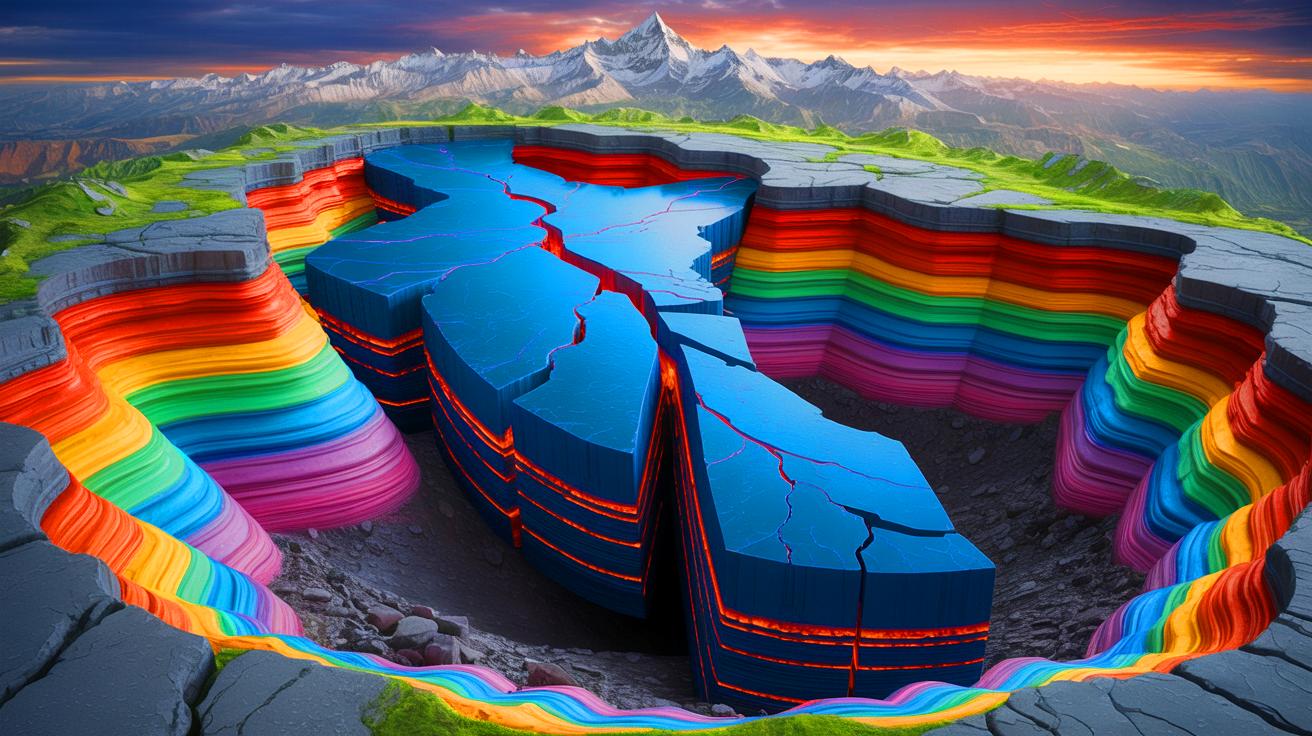
In a recent and unexpected discovery, scientists have found that the Indian Plate, a key component of Earth’s tectonic framework, is undergoing a significant transformation. This new research indicates that the plate is splitting and its lower section is sinking into the mantle, a process known as delamination. This phenomenon not only holds the potential to reshape the geological landscape of South Asia but also poses questions about the future of earthquake hazards in the region. The implications of such a tectonic shift are profound, prompting further examination and debate within the scientific community.
The Dynamics of Tectonic Delamination
The Indian Plate’s interaction with the Eurasian Plate has historically been the driving force behind the formation of the Himalayan mountain range. However, recent studies published by the American Geophysical Union reveal a deeper complexity: the plate is undergoing delamination. This process involves the detachment and subsequent sinking of the plate’s dense lower section into the Earth’s mantle. Such a geophysical event was discovered through the analysis of earthquake waves and helium isotopes in Tibetan springs, which revealed a vertical tear in the plate.
This finding marks a significant shift in how scientists understand plate tectonics. According to Douwe van Hinsbergen, a geodynamicist at Utrecht University, this discovery highlights a behavior previously unrecognized in continental plates. The revelation that plates can exhibit varying thicknesses and dynamic behaviors across their surfaces suggests that the forces driving tectonic shifts are more intricate than once believed.
Earthquake Risks Amplified by Plate Shifts
The implications of this discovery are not confined to academic curiosity. The delamination process could significantly influence earthquake risks in the Himalayan region. Simon Klemperer, a geophysicist at Stanford University, points out that areas of high tectonic compression, such as the Himalayan collision zone, are particularly susceptible to multiple tears. These tears can alter stress distribution within the Earth’s crust, potentially heightening earthquake activity.
The Tibetan Plateau, already a seismic hotspot, may face increased instability due to these tectonic shifts. The research indicates that the delaminated section of the Indian Plate could result in shifting stress points, leading to powerful seismic events. The Cona-Sangri Rift, a deep fracture in the plateau, could be directly affected by these ongoing processes, raising concerns about the potential for more frequent and intense earthquakes.
Interpreting the Data with Caution
While the discovery of the Indian Plate’s delamination has generated excitement, experts caution against jumping to conclusions. Fabio Capitanio, a geodynamicist at Monash University, emphasizes that the current data offers only a snapshot of a complex geological process. The full implications of delamination are not yet fully understood, and comprehensive studies are needed to discern the long-term effects on regional tectonic stability.
The intricate nature of tectonic interactions in the Indian subcontinent underscores the need for ongoing research. Scientists must continue to monitor seismic waves and geochemical signatures to assess the evolving tectonic changes. Only through sustained investigation can the true scale of the earthquake threat be determined and appropriate measures taken to mitigate risks.
Broader Implications for Global Geology
The Indian Plate’s behavior has far-reaching implications for global geological studies. This discovery of delamination could reshape scientific understanding of continental interactions and plate tectonics on a global scale. Researchers are now focusing on examining other continental regions for similar occurrences of delamination, which could offer new insights into mountain range formation and Earth’s dynamic geological processes.
Should this process be confirmed, it could provide explanations not only for the Himalayan formation but also for other mountain ranges and tectonic zones worldwide. Such insights could lead to a reevaluation of current geological models and enhance our understanding of Earth’s evolving landscape.
The discovery of the Indian Plate’s transformation presents both challenges and opportunities for the scientific community. As researchers delve deeper into understanding the processes at play, questions remain about the potential implications for earthquake hazards and global geological theories. How will this newfound knowledge influence future studies of Earth’s tectonic activity, and what further revelations might it bring about our planet’s geological history?
Continue reading