


“War Is Coming To Asia”: U.S. Deploys Advanced Typhon Weapon System In Japan As 1000-Mile Range Tomahawks Target Chinese Mainland
 By
Adam Kovács
By
Adam Kovács
| IN A NUTSHELL |
|
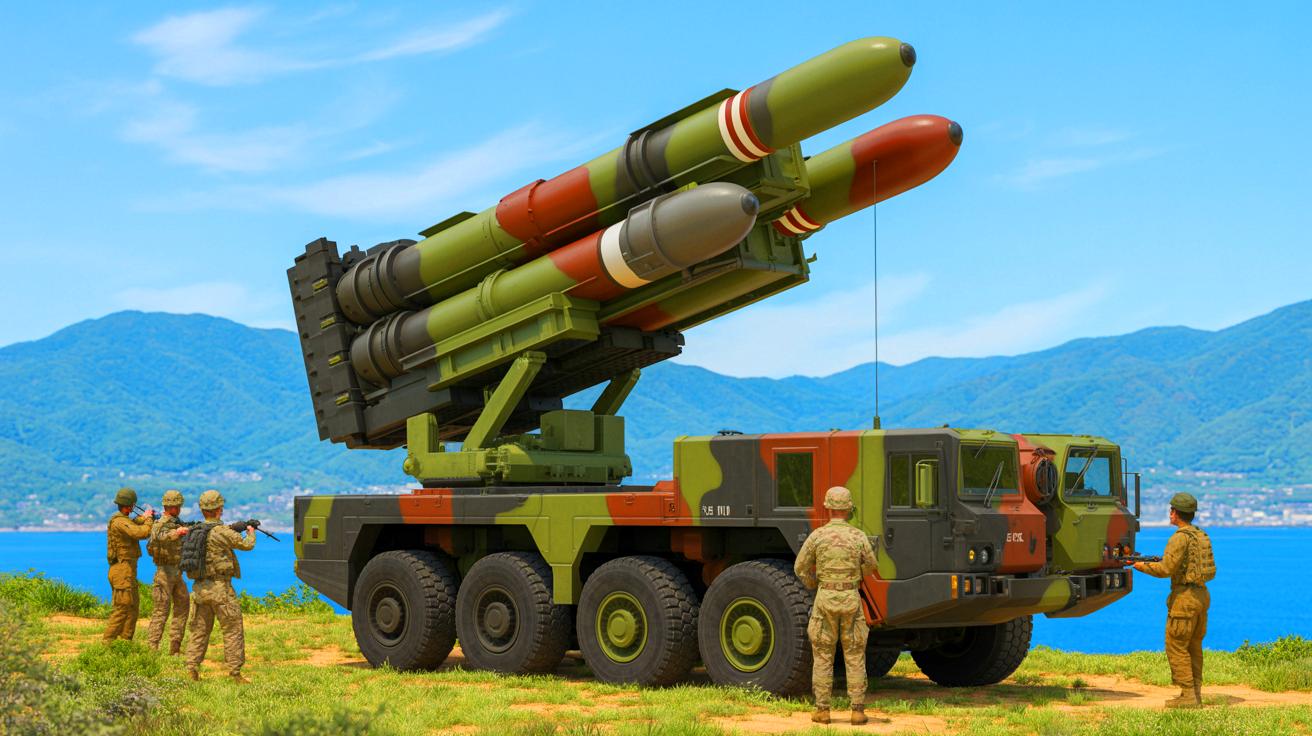
The United States military has taken a significant step in its strategic positioning by deploying an advanced missile system in Japan. This move, part of a larger military exercise, reflects a growing alignment between the U.S. and Japan in addressing regional security challenges, particularly with respect to China. The showcased Typhon missile system, capable of launching Tomahawk cruise missiles with a range of nearly 1,000 miles, underscores the evolving military landscape in the Asia-Pacific region. As the U.S. and its allies recalibrate their defense strategies, this deployment is poised to influence geopolitical dynamics significantly.
Deployment of Advanced Missile Systems
The introduction of the Typhon missile system in Japan marks a pivotal moment in U.S. defense strategy. The system, capable of firing Tomahawk cruise missiles, can reach distances of up to 1,000 miles, strategically covering China’s eastern seaboard and parts of Russia. This deployment is part of the annual Resolute Dragon exercise, involving approximately 20,000 Japanese and U.S. troops. The joint military drill aims to enhance interoperability and readiness among allies.
Colonel Wade Germann, commander of the task force, emphasized the strategic advantage of deploying multiple systems with varied munitions. “The speed with which it can be deployed enables us to forward position it when required expeditiously,” Germann remarked, highlighting the flexibility and rapid deployment capabilities of the system.
The presence of this missile system in Japan follows its earlier deployment in the Philippines in 2024. This move was met with criticism from Beijing and Moscow, which view the deployment as an escalation in regional military tensions. The system’s potential redeployment remains undisclosed, leaving room for speculation about future strategic alignments.
“They Built It to Strike”: US Reveals AI Warship Capable of Unstoppable 1,150-Mile Journey
Capabilities Beyond Conventional Targets
The Typhon missile system is not limited to long-range strikes. It is equipped to launch SM-6 missiles, capable of targeting ships and aircraft within a range of 125 miles. This capability positions the system as a versatile tool in countering maritime and aerial threats, particularly from China’s expanding military presence.
Positioned within the “First Island Chain,” the deployment of Typhon complicates Chinese military planning. The chain, extending from Japan to the Philippines, serves as a strategic barrier to Chinese sea and air power. By massing anti-ship weapons across Asia, the U.S. aims to counterbalance China’s growing missile capabilities.
Utilizing existing technologies, the Typhon system offers a pragmatic approach to enhancing military capabilities. This strategy enables quicker production and deployment compared to new missile projects. As China increases its defense budget by 7.2% this year, the U.S. and its allies are steadily advancing their military capabilities to maintain strategic parity.
Regional Defense Collaborations
Japan is significantly enhancing its defense posture by acquiring Tomahawk missiles for its naval forces and developing intermediate-range missile systems. This initiative represents Japan’s most substantial military expansion since World War II, reflecting heightened security concerns in the region.
Similarly, Taiwan has announced plans to boost its military spending by 20% in 2026, aiming to allocate over 3% of its GDP to defense. This increase underscores Taiwan’s commitment to strengthening its defense capabilities amid rising regional tensions.
Prior to its deployment in Japan, the Typhon system was part of Exercise ‘Salaknib 24′ in the Philippines. This exercise demonstrated the system’s operational versatility and the logistical capabilities of the U.S. Army’s 1st Multi-Domain Task Force. The system’s deployment via the C-17 Globemaster III airframe further highlights its strategic mobility.
Implications for Regional Security
The deployment of the Typhon missile system in Japan is a clear signal of the United States’ commitment to regional stability. However, it also presents a challenge to China’s military ambitions. By reinforcing the “First Island Chain,” the U.S. and its allies aim to deter potential aggression and maintain a balance of power in the Asia-Pacific.
This deployment may prompt a recalibration of military strategies by regional powers, potentially leading to an arms race. The strategic positioning of advanced missile systems near China could influence diplomatic relations and military engagements in the region.
As nations in the Asia-Pacific continue to enhance their defense capabilities, the question remains whether these developments will lead to increased stability or heightened tensions. The future of regional security will depend on how these military advancements are perceived and countered by neighboring countries.
The introduction of the Typhon missile system in Japan marks a significant development in U.S. military strategy. This move, while enhancing regional security, also raises questions about the future of geopolitical relations in the Asia-Pacific. As countries in the region continue to bolster their defense capabilities, will these actions foster peace and stability, or will they escalate tensions and lead to an arms race? The coming years will reveal how these strategic decisions shape the regional and global security landscape.
Continue reading