


“Marine Life Thrives On Nazi Bombs”: World War 2 Munitions Become Underwater Cities While 43,000 Creatures Adapt To TNT Poison Forever
 By
Adam Kovács
By
Adam Kovács
| IN A NUTSHELL |
|
In an unexpected revelation from the depths of the Baltic Sea, researchers have uncovered thriving ecosystems on World War II-era munitions, challenging long-held beliefs about marine life and toxic environments. These relics, once considered inhospitable due to their toxic nature, have become unlikely sanctuaries for various species. This remarkable discovery highlights nature’s resilience and adaptability, offering new insights into how marine ecosystems can flourish in seemingly adverse conditions. The findings, published in the journal Communications Earth & Environment, shed light on the intricate relationship between human artifacts and natural habitats, prompting further exploration of these underwater ecosystems.
Hard Surfaces Attract Wildlife
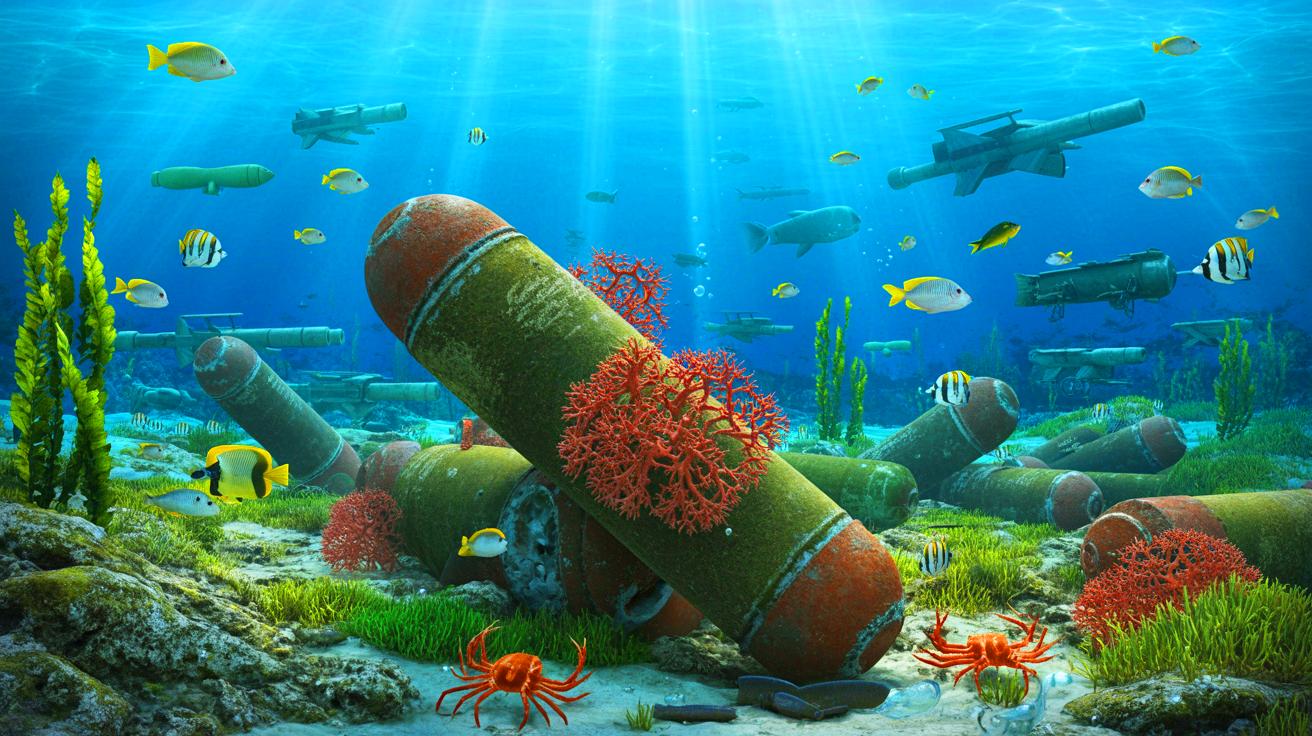
The study, conducted in the Bay of Lübeck, focused on V-1 flying bomb warheads lying on the seafloor. These relics have become unlikely habitats for a variety of marine life, including anemones, starfish, and crabs. According to study author Andrey Vedenin from the Senckenberg Research Institute in Germany, the Baltic Sea’s natural seafloor consists mainly of mud and sand. Over the years, stones and boulders have been removed for construction, leaving few hard surfaces for marine life.
The warheads, however, provide a rare hard substrate that attracts wildlife. This unexpected development has turned a potentially hazardous site into a thriving ecosystem. The seclusion of the area, owing to its chemical contamination, creates a protective environment for the marine creatures. These hard surfaces, though dangerous, have become vital refuges for underwater species. The results of this study challenge the assumption that war relics are solely harmful to marine environments and reveal a complex interaction between man-made objects and nature.
Adaptation to Toxic Compounds
Researchers observed approximately 43,000 organisms per square meter on the warheads, a stark contrast to the 8,200 organisms per square meter found in the surrounding sediment. This vibrant marine life appears to have adapted to the toxic compounds present, such as TNT and RDX. The concentrations of these substances ranged from 30 nanograms to 2.7 milligrams per liter, yet the organisms thrived.
The study found that the epifaunal community reached high densities on the dumped munitions, with metal structures providing a suitable habitat. Most of the organisms settled on metal casings, likely minimizing their exposure to harmful chemicals. This adaptation, coupled with the presence of hard substrates, suggests that these war relics could play a role in restoring ecological conditions closer to natural habitats. These findings underscore the resilience of marine life in adapting to human-induced changes.
Sunken Ships Turned Wildlife Havens
Similar ecological phenomena have been observed in other parts of the world. In Maryland's Mallows Bay, known for its "Ghost Fleet" of sunken World War I ships, researchers have mapped 147 shipwrecks that now serve as rich habitats for marine life and seabirds. These ships, deliberately burned and sunk in the 1920s, have become islands shaping both coastal and aquatic habitats.
High-resolution aerial images have aided in creating a detailed map of the area, providing valuable resources for ecological, archaeological, and cultural studies. Marine conservation biologist David Johnston from Duke University expressed admiration for nature's ability to reclaim human artifacts, turning them into thriving ecosystems. This transformation highlights the strength and adaptability of life in overcoming environmental challenges. Such findings emphasize the potential for abandoned human relics to support diverse ecosystems, offering new perspectives on conservation and ecological restoration.
The Broader Implications of Underwater Resilience
The discoveries in the Baltic Sea and Mallows Bay suggest broader implications for environmental studies and conservation efforts. These ecosystems, flourishing on once-toxic relics, prompt a reevaluation of how human interventions impact marine environments. The adaptability of marine life in such conditions highlights the importance of understanding and preserving these unique ecosystems.
As scientists continue to explore these underwater habitats, questions arise about the potential for similar adaptations in other parts of the world. Could other remnants of human conflict, lying dormant under the sea, also harbor thriving ecosystems? These findings challenge preconceived notions about the relationship between human artifacts and the natural world, urging further research and exploration into the resilience and adaptability of marine life.
As we delve deeper into the mysteries of the ocean, the resilience of marine ecosystems in the face of human-induced changes becomes increasingly evident. These discoveries compel us to rethink our impact on the environment and consider the potential for restoration and conservation. What other secrets might the ocean hold, waiting to be uncovered by future generations?
Continue reading