


“They’re Burning Waste to Save Earth”: This U.S. Invention Turns Farm Leftovers Into Carbon Gold (and It’s Already Capturing Billions of Tons)
 By
Adam Kovács
By
Adam Kovács
| IN A NUTSHELL |
|
The United States is pushing the boundaries of environmental innovation with its ambitious efforts to combat climate change. Recently, a groundbreaking development has emerged, capturing attention: the absorption of 2 billion tons of atmospheric carbon dioxide (CO2). This initiative is timely, as global warming and climate change pose significant threats to our planet. CO2, a key contributor to these issues, is primarily emitted through human activities and has a long atmospheric lifespan. While not toxic, high indoor concentrations of CO2 can displace oxygen, leading to potential health risks. The U.S. is now exploring innovative solutions to address this pressing environmental challenge.
Transforming CO2 with Biochar Technology
A pioneering U.S. startup, Applied Carbon, is making strides with a novel approach to carbon capture. They’ve developed an agricultural robot capable of converting plant waste into biochar, a substance that stores carbon for extended periods. This method offers a promising solution to reduce atmospheric CO2. The process is rooted in ancient practices, where biomass is transformed into a charcoal-like material that enriches soil while locking away carbon.
Biochar production, however, presents logistical challenges. Gathering and transporting plant waste, processing it into biochar, and redistributing it to fields is costly and energy-intensive. These steps can diminish the carbon benefits of biochar. Despite these hurdles, Applied Carbon is committed to overcoming them, recognizing the potential to remove billions of tons of carbon annually. This effort not only addresses climate change but also enhances agricultural productivity.
Innovative Approach to On-Site Biochar Production
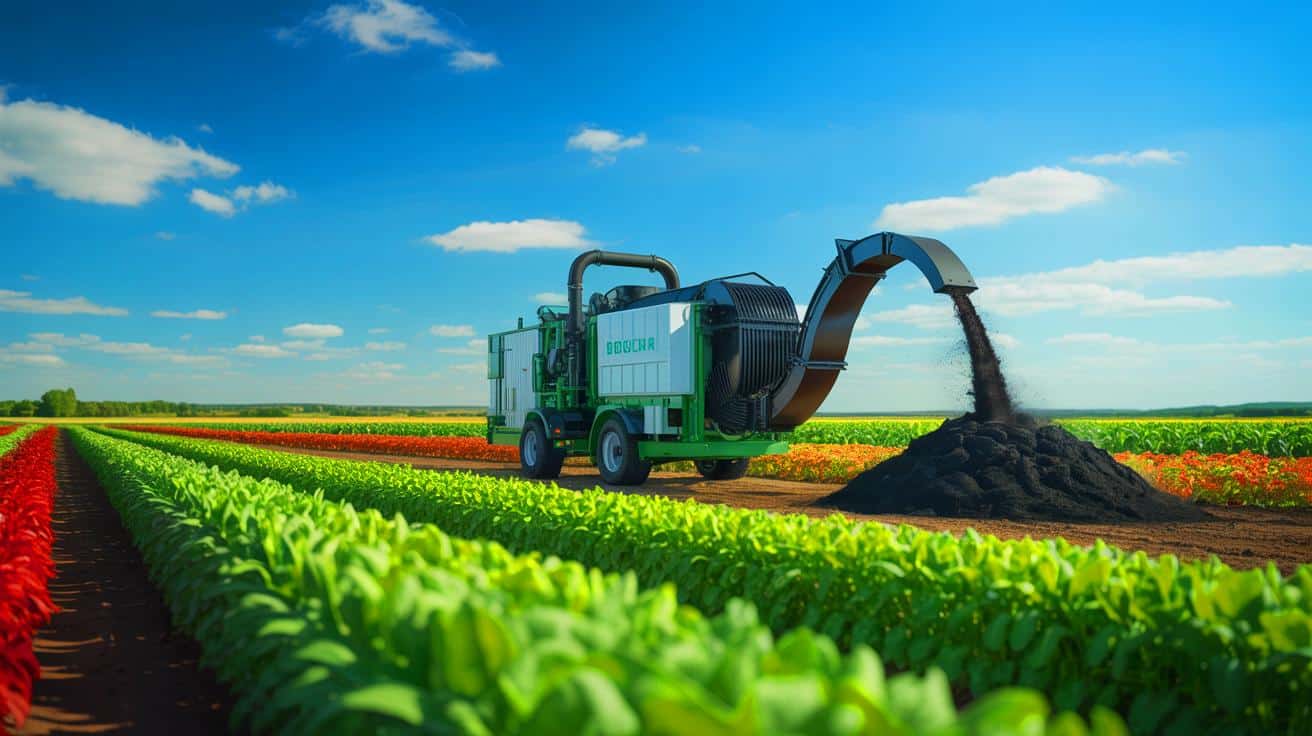
To address the logistical challenges of biochar production, Applied Carbon has devised an ingenious solution. Instead of transporting plant waste to centralized facilities, they have developed mobile biochar production units that operate directly on farms. This approach, spearheaded by a machine with a steampunk-inspired design, is revolutionizing carbon capture in agriculture.
The machine, towed by a tractor, shreds and dries crop residues using recycled hot gas. It then converts the waste into biochar and syngas through pyrolysis. The biochar is quenched with water and spread onto the soil, enhancing its quality. This innovative process streamlines biochar production and reduces energy consumption, maximizing the carbon benefits. By bringing the facility to the farm, Applied Carbon is simplifying the process and making carbon capture more accessible to farmers.
Potential Impact on Climate and Agriculture
The potential impact of Applied Carbon’s technology is significant. By capturing substantial amounts of atmospheric CO2, this approach can play a crucial role in mitigating climate change. The ability to store carbon for long periods not only addresses environmental concerns but also offers economic benefits to farmers. Biochar enhances soil fertility, leading to increased crop yields and improved agricultural sustainability.
This dual advantage positions biochar as a valuable tool in the fight against climate change. While the technology is still in its early stages, the promise it holds for large-scale carbon capture is undeniable. As Applied Carbon continues to refine its methods, the potential for widespread adoption grows. The integration of biochar into agricultural practices could become a cornerstone of sustainable farming.
Challenges and Future Prospects
Despite the promising prospects of biochar technology, several challenges remain. The initial costs of implementing biochar systems on farms can be high, and widespread adoption will require incentives and support from government and industry stakeholders. Furthermore, continuous research and development are essential to optimize the efficiency and effectiveness of the technology.
The success of Applied Carbon’s initiative will depend on collaboration between multiple sectors, including agriculture, environmental science, and technology. As the world seeks sustainable solutions to combat climate change, biochar represents a viable path forward. The journey to wider implementation will involve addressing logistical hurdles and ensuring economic feasibility for farmers. Can the innovative spirit behind biochar technology overcome these challenges to become a leading force in climate action?
Continue reading