



“America Flaunts Unlimited Reach”: The C-5M Super Galaxy Travels 8,537 Miles As Rivals Accuse Washington Of Weaponizing Global Logistics Advantage
 By
Adam Kovács
By
Adam Kovács
| IN A NUTSHELL |
|
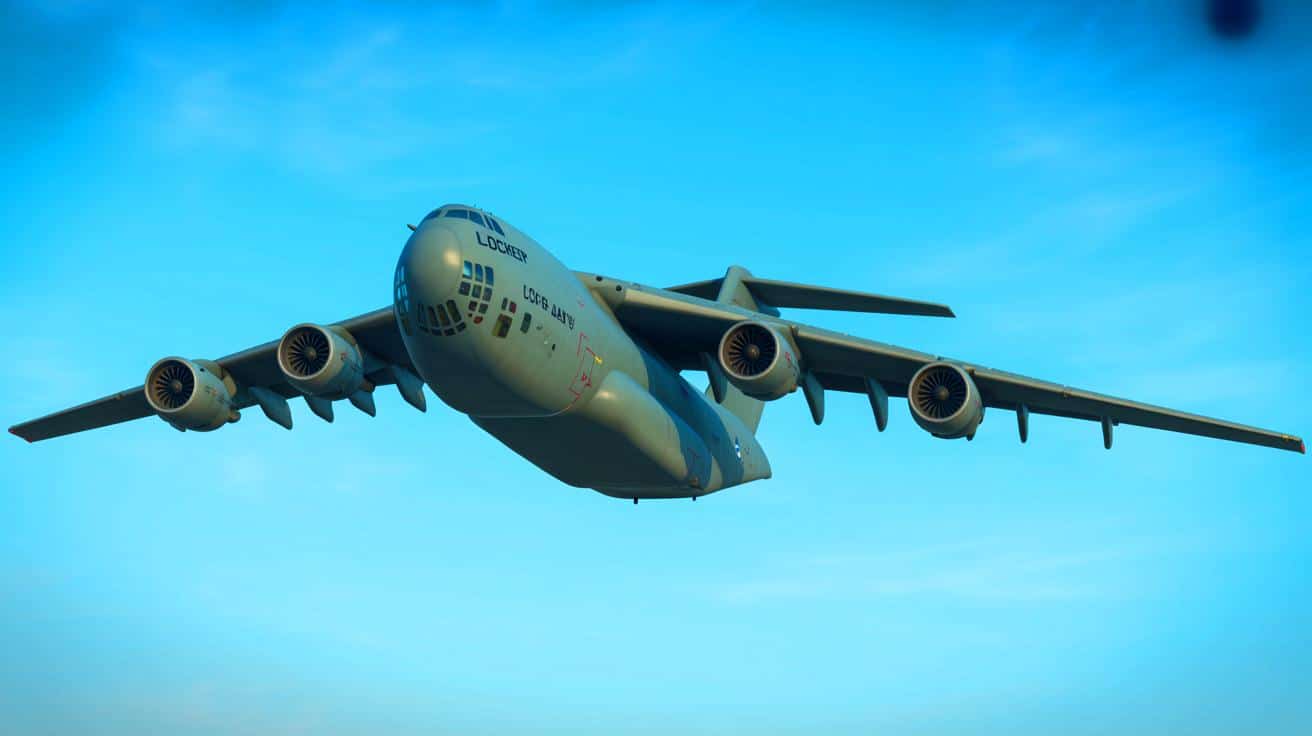
In the realm of military aviation, few aircraft have achieved the iconic status of the Lockheed C-5M Super Galaxy. This massive airlifter, a crucial asset of the United States Air Force, plays a pivotal role in global operations. From transporting helicopters to delivering heavy military equipment, the C-5M Super Galaxy stands as a testament to the power and reach of the U.S. military. First introduced in 1968, this aircraft has undergone significant modifications over the years, ensuring it remains at the forefront of military logistics. Its unique capabilities make it an indispensable tool in maintaining the global presence and capabilities of the U.S. military.
The Evolution of a Military Icon
The C-5 Galaxy was not born overnight. Its journey began in 1968 when Lockheed introduced the first model, marking a new era in military logistics. Over the decades, the aircraft has seen several iterations, each bringing enhancements and updates. The original C-5A, produced from 1968 to 1973, was followed by the C-5B in the late 1980s. The C-5C, a modified version of the C-5B, was tailored for NASA to transport satellites, showcasing its versatility beyond military use. Today, the C-5M Super Galaxy represents the pinnacle of this evolution, featuring advanced engines and avionics that ensure its relevance in modern military operations.
These enhancements have not only extended the aircraft's service life but have also expanded its operational capabilities. The C-5M can now carry more weight, travel further, and operate more efficiently than its predecessors. This continuous improvement underscores the commitment of the U.S. Air Force to maintain a robust and adaptable fleet. The aircraft's ability to evolve while retaining its core functionalities is a testament to the foresight of its designers and the dedication of those tasked with its maintenance and modernization.
Exceptional Capabilities of the C-5M Super Galaxy
The C-5M Super Galaxy is not just an aircraft; it is a logistical powerhouse. With a length of 248 feet, a wingspan of 222 feet, and a height of 65 feet, its sheer size is impressive. This behemoth can carry an astounding load, including tanks like the M1 Abrams and armored vehicles such as the M2 Bradley. Furthermore, it can transport combat helicopters, including the Apache and Black Hawk, as well as the heavy-lift CH-47 Chinook. Such capabilities make it an essential component of rapid military deployments worldwide.
The aircraft's technical specifications further highlight its prowess. With a range of 8,537 miles, it can travel further than the Earth's diameter, enabling it to reach virtually any global destination without refueling. Its maximum speed of 531 mph ensures timely delivery of critical equipment and personnel. The C-5M's ability to operate in diverse environments, from austere airstrips to well-equipped airbases, adds to its versatility and value. The aircraft's design and capabilities are a testament to the U.S. military's commitment to maintaining a strategic edge in global operations.
The Civilian Dream That Never Took Flight
While the C-5M Super Galaxy has become a mainstay in military operations, its civilian counterpart, the L-500, remained a dream unfulfilled. Lockheed had envisioned transforming the military cargo plane into a civilian airliner capable of transporting up to 1,000 passengers. However, the debut of the Boeing 747 in 1968 shifted the aviation landscape. The 747, with its cost-effectiveness and operational efficiency, quickly became the preferred choice for airlines worldwide.
Despite initial interest in the L-500, Lockheed ultimately decided to abandon the project. The focus remained on optimizing the C-5 Galaxy for military use rather than pursuing the commercial market. This decision reflects the complex interplay between military needs and commercial viability. While the L-500 never took to the skies, the C-5M Super Galaxy continues to dominate as a military logistics titan, underscoring the specialized demands of military aviation versus commercial endeavors.
The Lasting Legacy of the C-5M Super Galaxy
The Lockheed C-5M Super Galaxy remains a cornerstone of the U.S. Air Force's logistical operations. Its ability to transport vast quantities of equipment and personnel to any location on the globe ensures that the U.S. military can respond swiftly to international crises. Despite the abandonment of its civilian version, the C-5M's military legacy endures, highlighting its unmatched capabilities and strategic importance. As global dynamics continue to evolve, the question remains: How will the U.S. leverage such advanced logistics to maintain its influence and respond to future challenges?
Continue reading