



“We Watched It Move Alone”: The Army’s New Autonomous Combat Vehicle Just Replaced Human Drivers (and it’s learning faster than anyone expected)
 By
Adam Kovács
By
Adam Kovács
| IN A NUTSHELL |
|
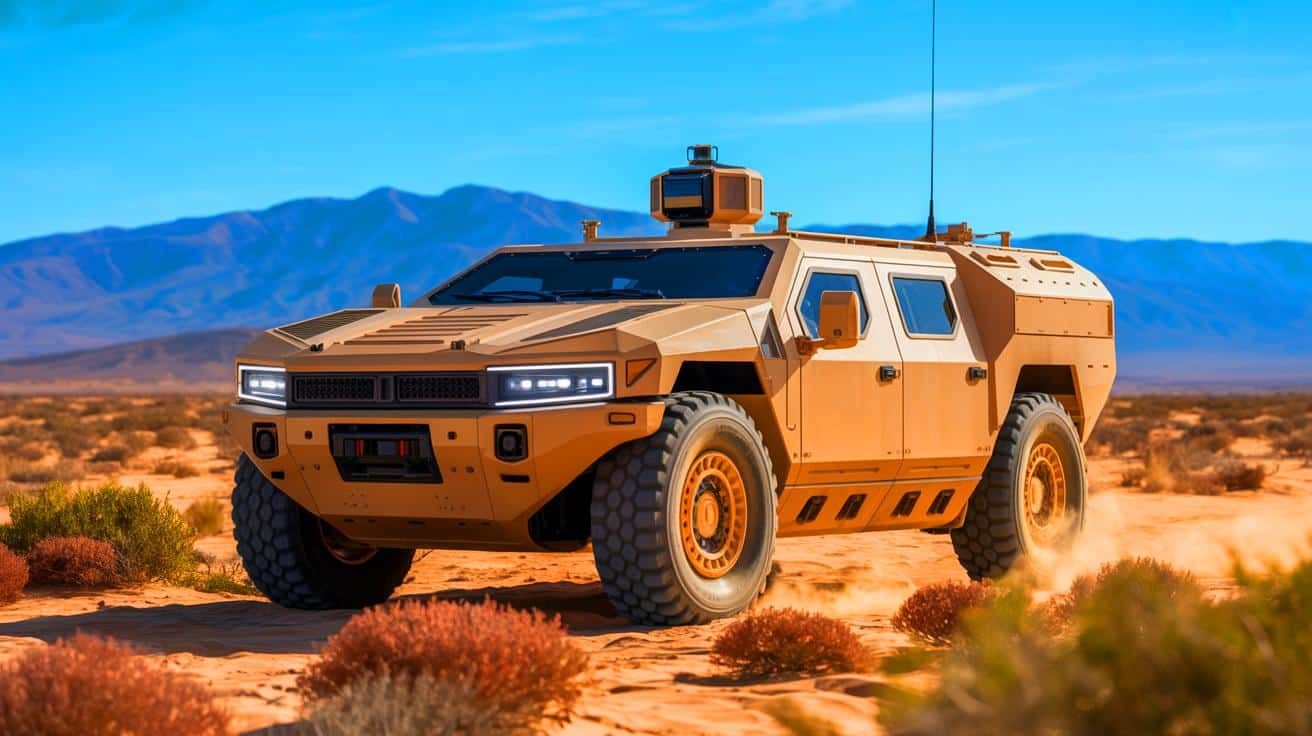
The evolution of military technology is on the brink of a significant leap forward as BAE Systems, in collaboration with Forterra, unveils a prototype for an autonomous Armored Multi-Purpose Vehicle (AMPV). This initiative, set for live demonstrations next year, aims to revolutionize the U.S. Army’s Armored Brigade Combat Team. The AMPV project began in 2020, intending to replace the outdated M113 Family of Vehicles, which served for over fifty years. The M113’s limitations in survivability, force protection, and mobility prompted the need for a modern alternative that can integrate advanced technologies and operate effectively alongside contemporary battle tanks and infantry fighting vehicles.
The Genesis of the AMPV Program
The AMPV program was initiated with the goal of phasing out the Cold War-era M113, a vehicle that has long been a staple of the U.S. Army. Over the decades, technological advancements have rendered the M113’s capabilities insufficient for modern warfare. Its lack of survivability and inability to integrate advanced systems like Size, Weight, Power, and Cooling (SWaP-C) have made it vulnerable on the battlefield.
The AMPV is designed to function in various roles, offering five distinct variants. These include general duty, medical evacuation, medical treatment, mission command, and serving as a mortar platform. This versatility is a key aspect of the AMPV’s design philosophy. The collaboration with Forterra seeks to transform the AMPV into a self-driving vehicle, enhancing its operational capabilities in challenging environments where traditional navigation systems like GPS may be compromised.
Forterra's Role in Autonomy
Formerly known as Robotic Research, Forterra is at the forefront of developing autonomous systems for military applications. Their technology will be integrated into the AMPV, enabling it to navigate hostile territories autonomously. This enhances the vehicle's capabilities in conditions where GPS signals are jammed or spoofed, and visibility is poor, ensuring mission success in diverse scenarios.
This integration is part of BAE's AMPV Capability Kit Series, which aims to introduce groundbreaking technologies to the vehicle. These include Counter-Uncrewed Aerial Systems (C-UAS) and unmanned turrets, positioning the AMPV as a formidable asset on the battlefield. The partnership represents a significant step forward in military technology, combining BAE's expertise in combat vehicle production with Forterra's pioneering work in autonomous systems.
Accelerating Defense Development
Western nations are increasingly prioritizing faster defense production and system upgrades to maintain a competitive edge. Analysts argue that the bottleneck in NATO's defense capabilities is not technological innovation but the speed of development and production. BAE Systems is addressing this challenge by emphasizing modular design in their projects.
BAE's commitment to rapid development is evident in its contract to deliver 3,000 AMPVs to the U.S. Army. This initiative will replace 30% of brigade-level tracked vehicles, underscoring the importance of quickly fielding advanced military assets. Modular design allows for faster upgrades and adaptations, ensuring that the AMPV remains relevant in the face of evolving threats.
Strategic Implications and Industry Impact
The collaboration between BAE Systems and Forterra is not just about advancing technology; it represents a strategic shift in how military assets are developed and deployed. Bill Sheehy, Ground Maneuver product line director for BAE Systems, emphasized the practical nature of this partnership. It aims to provide tangible options that empower the Army to maintain its dominance on the battlefield against both current and emerging threats.
This alliance highlights the growing trend of integrating autonomous technology into military operations. By combining expertise in combat vehicle production and autonomous technology development, BAE and Forterra are setting a new standard in military innovation. This partnership demonstrates a commitment to moving faster, thinking bigger, and equipping soldiers with the tools they need to maintain a strategic advantage.
The introduction of autonomous technology in military vehicles marks a new era in defense capabilities. The collaboration between BAE Systems and Forterra illustrates the potential of combining traditional military engineering with cutting-edge technology. As these advancements unfold, questions remain about the future role of autonomous systems in warfare. How will these innovations shape the dynamics of global military power in the coming decades?
Continue reading