

“France Unveils De Grasse”: Fourth Barracuda Nuclear Submarine Extends Patrols To 270 Days, Armed To Strike Land Targets Over 620 Miles Away
 By
Adam Kovács
By
Adam Kovács
| IN A NUTSHELL |
|
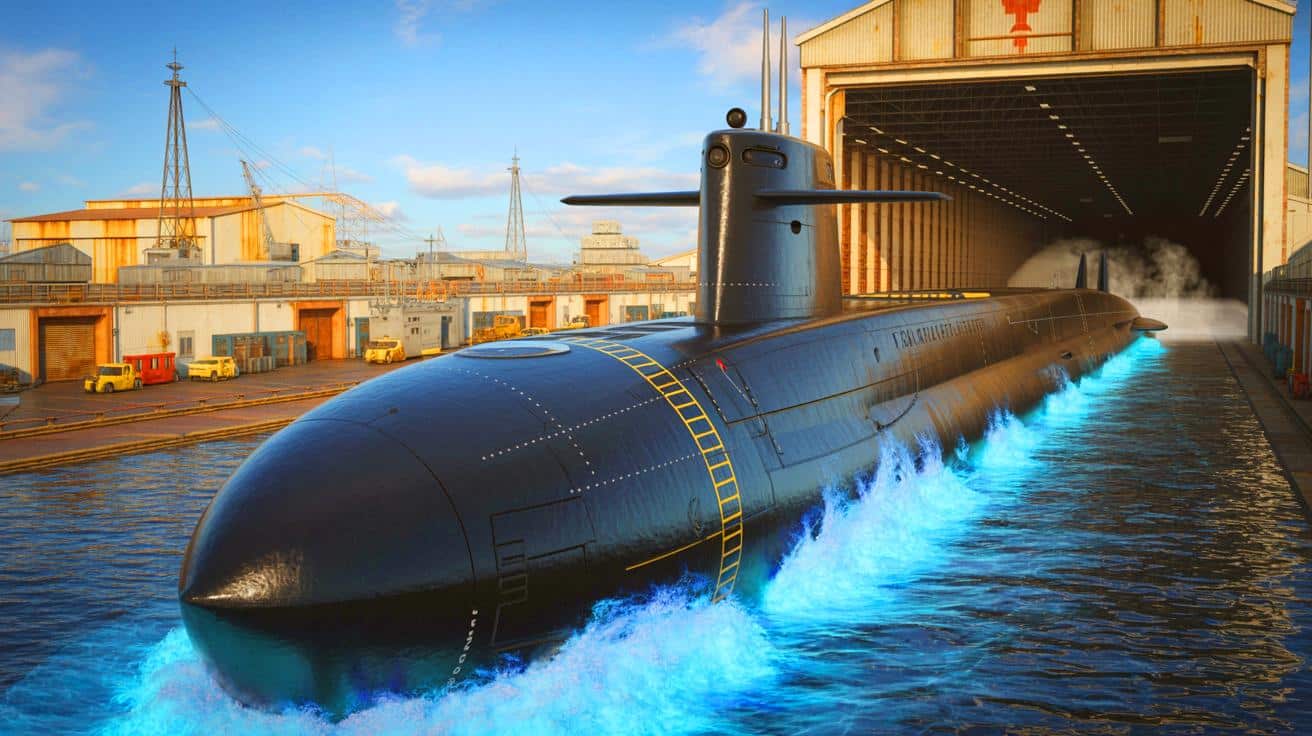
The unveiling of the De Grasse, the fourth submarine in France’s Barracuda series, marks a significant step forward in France’s naval modernization efforts. The Barracuda program is a €10 billion initiative aimed at replacing the aging Rubis-class submarines with state-of-the-art nuclear-powered attack submarines by 2030. This development underscores France’s commitment to maintaining a robust maritime defense capability. The De Grasse’s introduction into the French Navy is part of this larger strategic vision, showcasing advancements in submarine technology and highlighting France’s industrial prowess in defense manufacturing.
The Barracuda Program: A Technological Leap
The Barracuda program represents a significant investment in France’s defense infrastructure, with the aim of replacing the outdated Rubis-class submarines. This initiative, managed by the French defense procurement agency in partnership with the French Alternative Energies and Atomic Energy Commission, seeks to modernize France’s undersea warfare capabilities. The program plans to deliver six new-generation nuclear attack submarines by the end of the decade, ensuring that France maintains a cutting-edge fleet.
Naval Group, the primary contractor, is at the forefront of this endeavor, responsible for the design, construction, and maintenance of these submarines. The company collaborates with TechnicAtome to integrate the nuclear steam supply system, a crucial component of the submarine’s propulsion mechanism. This collaboration involves over 2,500 personnel, including 800 subcontractors, emphasizing the program’s industrial depth and national significance.
The rollout of the De Grasse is a testament to the excellence of France’s naval industry and its critical role in national sovereignty.
https://visegradpost.com/en/2025/09/30/the-submarine-fishermen-shouldnt-have-seen-how-a-russian-kilo-class-armed-with-kalibr-missiles-stirred-tensions-off-frances-coast/
The Barracuda submarines represent a generational leap in capabilities, featuring a displacement of up to 5,200 tons and a length of 324 feet. These submarines are designed to balance stealth, endurance, and multirole flexibility, making them a formidable addition to France’s naval arsenal.
Advanced Endurance and Armament
The De Grasse and its Barracuda counterparts boast a propulsion system rooted in a hybrid configuration centered on a pressurized water reactor. This design, derived from the technology used in the Triomphant-class SSBNs and the aircraft carrier Charles de Gaulle, allows for extended patrol durations exceeding 270 days. Such endurance is pivotal for sustained operations in diverse maritime environments.
Armed with MBDA’s naval cruise missiles, the Barracuda submarines can strike land targets over 620 miles away. Additionally, they are equipped with SM39 Exocet anti-ship missiles and advanced F21 heavyweight torpedoes, bolstering their offensive capabilities. A diver’s lockout chamber and an optional dry deck shelter enhance their ability to deploy Special Forces and underwater autonomous systems, thus expanding France’s strategic reconnaissance and covert operation capacities.
The Barracuda program, over two decades in the making, not only strengthens France’s deterrent capabilities but also reinforces its leadership in underwater warfare technology. This development plays a crucial role in maintaining France's security and strategic interests at sea.
Strategic Impact on NATO and Beyond
The addition of the Barracuda submarines to France's fleet also enhances NATO's submarine presence in the North Atlantic and Mediterranean regions. As geopolitical tensions continue to evolve, the alliance places increasing emphasis on underwater awareness and strategic deterrence. The Barracuda submarines contribute significantly to this focus, providing advanced capabilities that support NATO's objectives.
France's ability to design and construct its nuclear submarines sets it apart as one of the few nations with such capabilities. This autonomy in defense production underscores France's strategic independence and its capacity to contribute effectively to global security efforts.
With the rollout of the De Grasse, France continues to assert its influence in the realm of undersea warfare, reinforcing its position as a key player in the international defense landscape.
Future Prospects and Challenges
As the De Grasse prepares for sea trials in 2026, following extensive shore-based system tests, the focus shifts to operational readiness and integration into the fleet. The successful commissioning of previous Barracuda submarines like the Suffren, Duguay-Trouin, and Tourville sets a promising precedent for the De Grasse.
However, the program's ambitious nature is not without its challenges. Ensuring the seamless integration of advanced technologies and maintaining the stringent timelines for delivery will test the capabilities of all stakeholders involved. The need for continuous innovation and adaptation will be critical as the program progresses.
The Barracuda program is a testament to France's commitment to maintaining technological superiority and strategic autonomy in defense. As global maritime dynamics continue to shift, how will France navigate the evolving challenges and opportunities in undersea warfare?
Continue reading