



“Stealth Just Died”: China’s Quantum Radar Breakthrough Can Spot U.S. Jets Once Invisible to Detection (and It Changes Everything)
 By
Adam Kovács
By
Adam Kovács
| IN A NUTSHELL |
|
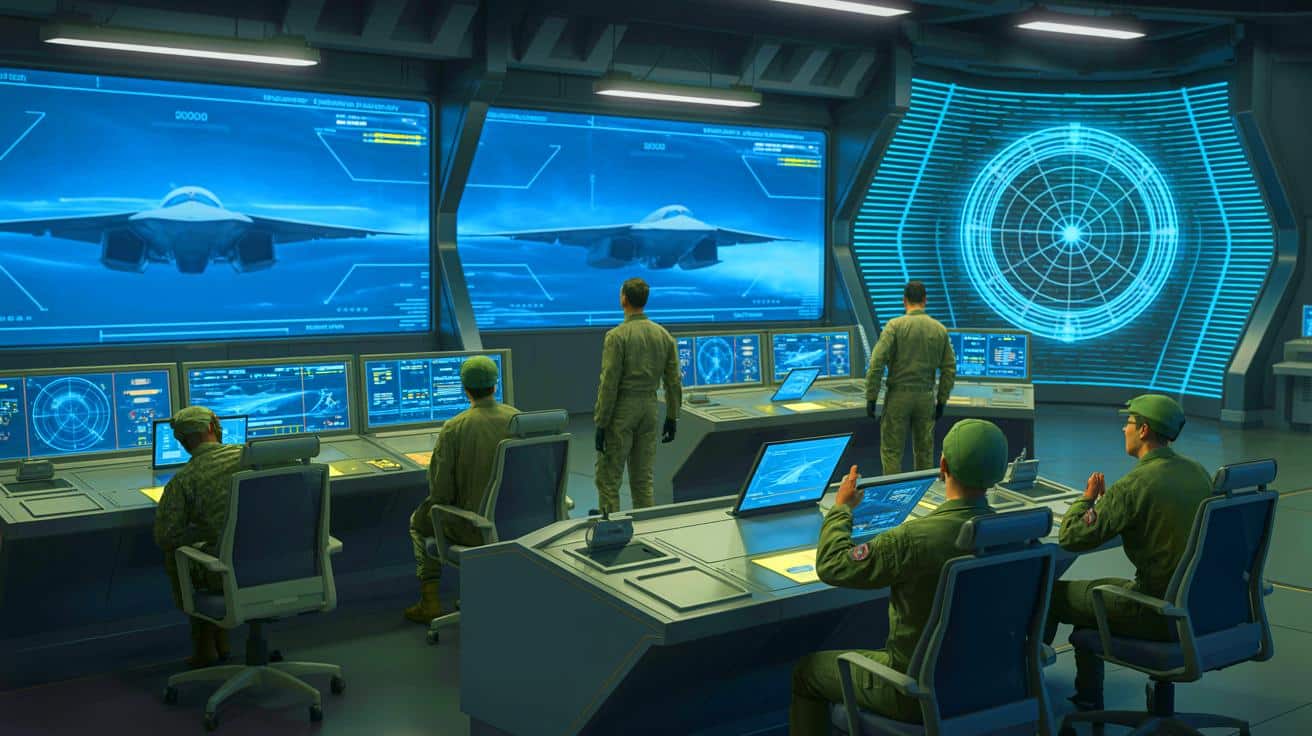
In recent years, the development of advanced military technologies has accelerated, with nations like the United States and China leading the charge. The U.S. Navy’s approval of a sixth-generation fighter jet marks a significant milestone, promising enhanced capabilities and strategic advantages. Meanwhile, China’s reported mass production of a photon detector for quantum radars introduces a potential shift in the global military balance. This technology could impact the stealth capabilities of advanced fighter jets like the U.S. F-22 Raptor. As these developments unfold, the military landscape is poised for transformation, raising questions about the future of air combat and international security.
The Significance of the Sensitive Photon Detector
China’s new photon detector is a groundbreaking development in the realm of quantum technology. Capable of detecting individual photons, the device is heralded as the “world’s first” ultra-low noise, single-photon detector with four channels. This capability is not just a technological feat; it represents a leap forward in both communication and defense.
The detector’s sensitivity allows it to discern even the faintest signals, a crucial feature for quantum communication. In practical terms, this means that the photon detector can separate the sound of a single grain of sand amidst the noise of a storm, illustrating its precision. This precision is essential for building quantum radars, which can potentially track stealth jets by detecting the altered quantum properties of photons that encounter these aircraft.
Mass production of this detector signifies China’s strategic aim to achieve self-sufficiency in quantum information technology, a move that could shift the balance of power in global military technology. As the technology matures, its applications may extend beyond military use, potentially influencing civilian sectors such as telecommunications and secure data transmission.
Quantum Radars: A New Era in Stealth Detection
The concept of quantum radars challenges traditional stealth technology. Stealth jets, like the U.S. F-22 and F-35, rely on design features such as special coatings and internal weapon bays to reduce radar visibility. However, quantum radars operate differently by using photons whose properties change upon contact with an aircraft. This allows them to detect jets that would otherwise evade conventional radar systems.
The potential of quantum radars to detect stealth aircraft could revolutionize air defense strategies. Unlike traditional radars, which can be deceived by false signals, quantum radars analyze returning photons to identify aircraft positions accurately. Moreover, these systems are expected to consume less power and offer versatility in deployment across various platforms.
China’s advancements in quantum radar technology, particularly with the new four-channel photon detector, suggest a future where the stealth advantage may be significantly diminished. The ability to cover greater distances and improve detection rates presents a formidable challenge to current stealth technologies.
Advanced Fighter Jets: The Next Generation
While China advances in quantum radar technology, the U.S. is not standing still. The approval of the Navy’s sixth-generation fighter jet underscores the country’s commitment to maintaining air superiority. These new jets promise enhanced capabilities that could redefine air combat.
Boeing is already at work on these next-generation aircraft, with the U.S. Air Force aiming to have its first F-47 operational by 2028. These jets are expected to be faster, more agile, and equipped with advanced stealth features. The focus is on integrating cutting-edge technologies to ensure dominance in future conflicts.
As countries worldwide strive to develop faster and more versatile jets, the competition in military technology is intensifying. The interplay between developing fighter jets and advancements in radar technology could dictate the future of aerial warfare.
Implications for Global Security and Strategy
The rivalry between the U.S. and China extends beyond technological advancements to broader strategic implications. As China claims significant progress in quantum radar technology, concerns arise about the effectiveness of current U.S. stealth capabilities. This development could necessitate a reevaluation of military strategies and defense investments.
For the U.S. and its allies, maintaining air dominance is crucial. The potential obsolescence of stealth technology due to quantum radars could prompt a shift in focus towards developing countermeasures, enhancing electronic warfare capabilities, and innovating new stealth technologies.
As these technological advancements unfold, the geopolitical landscape is likely to shift, influencing alliances, defense policies, and global security dynamics. The question remains: how will nations navigate these changes, and what new strategies will emerge to address these evolving threats?
The rapid pace of technological advancement in military capabilities presents both opportunities and challenges for global security. As nations like the U.S. and China push the boundaries of what is possible, the potential impact on international relations and defense strategies is profound. With the future of stealth technology in question and new fighter jets on the horizon, how will countries adapt to ensure their security and strategic interests in this fast-evolving landscape?
Continue reading