

“This Looks Straight Out of Sci-Fi”: This New Flying Taxi From China Promises to Replace Your Next City Trip (and It’s Fully Autonomous)
 By
Adam Kovács
By
Adam Kovács
| IN A NUTSHELL |
|
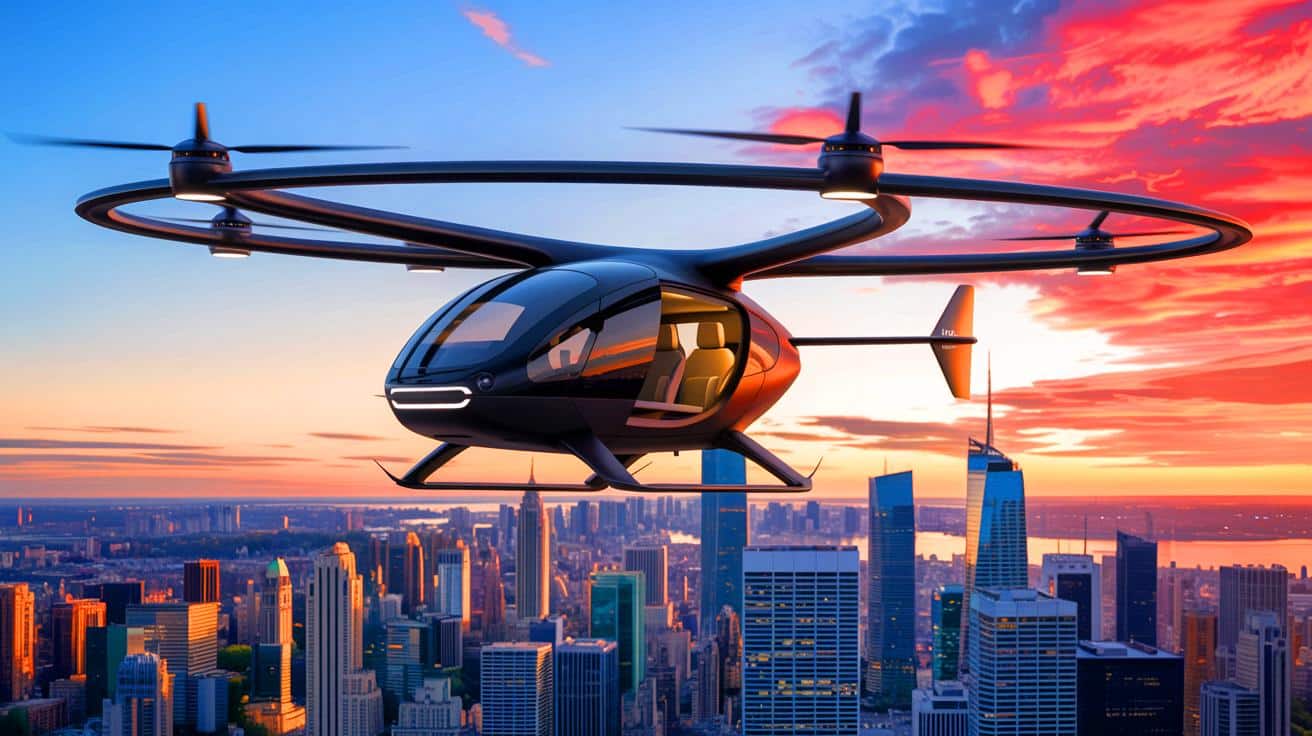
In the rapidly evolving landscape of urban air mobility, eHang, a China-based aerial vehicle company, has introduced a new contender: the VT35, an autonomous electric vertical take-off and landing (eVTOL) aircraft. This innovative vehicle promises to redefine inter-city travel with its emphasis on luxury and efficiency. By unveiling the VT35, eHang aims to set a new standard in the air taxi industry, challenging established competitors such as Joby and Archer. This new aircraft, designed to offer a seamless and futuristic travel experience, marks a significant step forward in the quest for sustainable and efficient urban transportation.
The Rise of eVTOL Aircraft
Electric vertical take-off and landing (eVTOL) aircraft represent a major shift in urban transportation. These vehicles offer a sustainable and efficient alternative to traditional modes of commuting, especially in densely populated urban areas. The concept of eVTOL has gained traction due to its potential to alleviate traffic congestion and reduce carbon emissions. Companies around the world are investing heavily in this technology, aiming to transform the way people travel.
eHang’s VT35 exemplifies the growing interest in eVTOLs. This aircraft combines cutting-edge technology with a focus on passenger comfort. By removing traditional cockpit controls, the VT35 offers a spacious and luxurious cabin. Passengers can enjoy a seamless experience with features such as large displays showing flight information and in-flight entertainment options.
The VT35’s introduction highlights the increasing demand for innovative transportation solutions. As cities continue to expand, the need for efficient and sustainable travel options becomes more pressing. eVTOLs like the VT35 promise to address these challenges by providing a faster and more environmentally friendly way to travel between urban centers.
Technical Specifications of the VT35
The eHang VT35 is designed to deliver impressive performance and range. It features eight lift propellers and one propulsion propeller, allowing it to achieve a cruising speed of 134 mph. With a range of 125 miles on a full charge, the VT35 is well-suited for inter-city travel. This range is a significant achievement for an electric aircraft, demonstrating the potential of eVTOL technology.
The aircraft measures 27 feet in length, with a wingspan of 26.7 feet. It can carry a payload of up to 440 pounds, making it suitable for transporting passengers or cargo. The VT35’s design prioritizes efficiency and comfort, offering a modern solution for urban mobility.
The technical capabilities of the VT35 position it as a strong competitor in the eVTOL market. As battery technology continues to advance, the range and performance of these aircraft are expected to improve further. This will likely lead to increased adoption of eVTOLs in cities worldwide, transforming the way people travel.
EHang’s Vision for Urban Mobility
eHang envisions the VT35 as a key player in the future of urban transportation. The company aims to connect major cities in the Guangdong-Hong Kong-Macao Greater Bay Area, providing a convenient and efficient travel option for busy businesspeople. By offering an alternative to traditional ground transportation, eHang hopes to reduce travel times and enhance connectivity between urban centers.
The VT35 is part of eHang’s broader strategy to lead the eVTOL market. The company has established a new research and development, testing, and manufacturing hub in Hefei, China, to support the production and deployment of its aircraft. This commitment to innovation and development underscores eHang’s ambition to become a leader in the urban air mobility space.
eHang’s vision for the VT35 aligns with global trends toward sustainable and efficient transportation. As cities continue to grow, the demand for innovative mobility solutions will only increase. The VT35 represents a significant step toward realizing this vision, offering a glimpse into the future of urban travel.
Challenges and Future Prospects
While the VT35 marks a significant advancement in eVTOL technology, several challenges remain. Regulatory hurdles, infrastructure development, and public acceptance are key obstacles that must be addressed before widespread adoption can occur. Companies like eHang must work closely with government agencies to establish safety standards and operational guidelines for eVTOLs.
Infrastructure development is another critical factor. Urban areas will need to invest in vertiports and charging stations to support eVTOL operations. This requires collaboration between public and private sectors to ensure the necessary infrastructure is in place.
Public acceptance is also crucial for the success of eVTOLs. Building trust in the safety and reliability of these aircraft is essential to encourage widespread use. Companies must engage with communities and stakeholders to address concerns and demonstrate the benefits of eVTOL technology.
Despite these challenges, the future of eVTOLs looks promising. As technology continues to evolve, the potential for these aircraft to transform urban transportation becomes increasingly apparent. The VT35 is a testament to the progress being made in this field, offering a glimpse into a future where air taxis are a common sight in cities around the world.
The unveiling of the eHang VT35 marks a pivotal moment in the development of urban air mobility. This innovative eVTOL aircraft offers a glimpse into the future of transportation, promising to revolutionize how people travel between cities. As companies continue to invest in this technology, the potential for eVTOLs to transform urban transportation becomes increasingly clear. How will the integration of eVTOLs shape the future of urban mobility, and what challenges must be overcome to make this vision a reality?