


“They’re Moving the Missiles”: This Secret S-400 Plan Could Bring Turkey Back Into the F-35 Program (and Russia Won’t Like It)
 By
Adam Kovács
By
Adam Kovács
| IN A NUTSHELL |
|
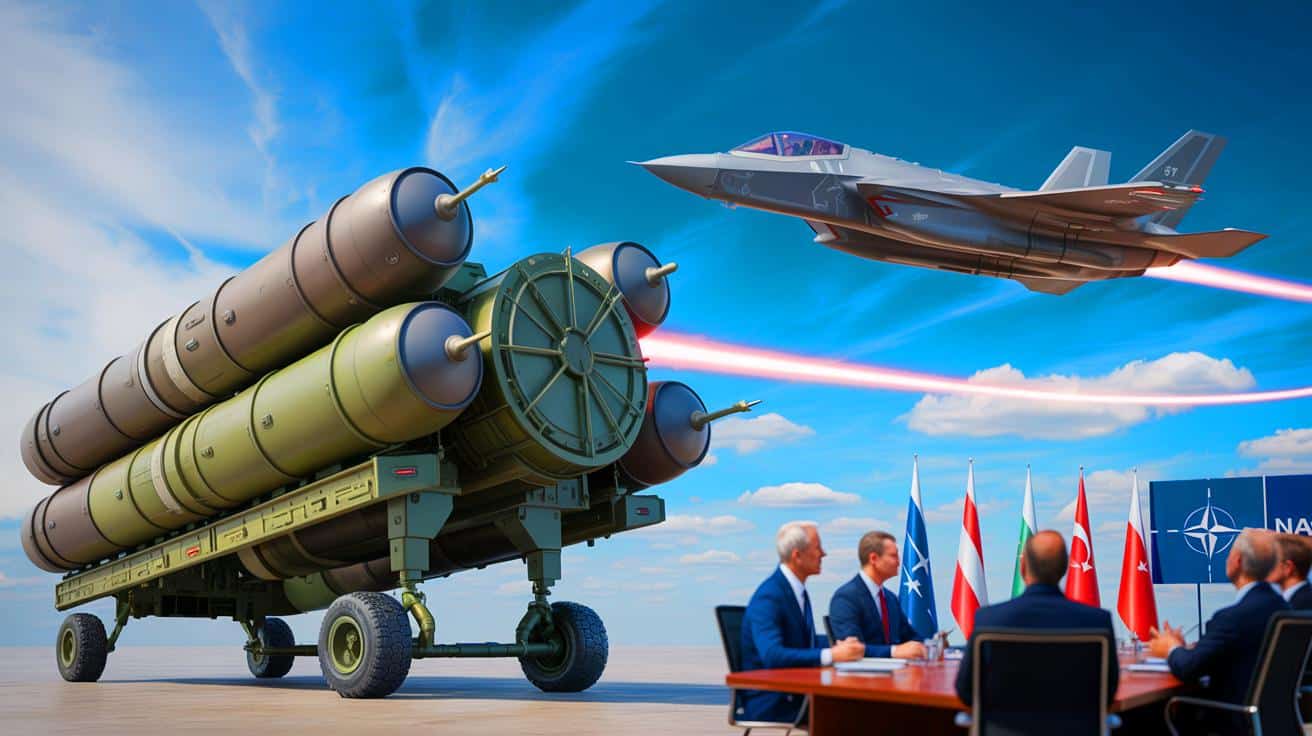
The recent meeting between President Trump and President Erdogan at the White House highlighted several critical topics, including U.S.-Turkish defense cooperation and the future of Syria. A significant focus was on Turkey’s acquisition of the Russian-made S-400 air defense system, which led to its removal from the F-35 Joint Strike Fighter program. This long-standing issue continues to hinder closer U.S.-Turkish defense relations. While several creative solutions have been proposed, a resolution remains elusive. Understanding the complexities of this situation is crucial to exploring potential avenues for resolution and improving bilateral relations.
Historical Context of the S-400 Acquisition
In 2015, Turkey faced a severe air-defense problem as the Syrian conflict threatened to spill over its borders. A critical incident occurred when Turkey shot down a Russian fighter jet that had entered its airspace. To address these threats, NATO deployed Patriot missile batteries along Turkey’s southern border. Simultaneously, Turkey sought to purchase Patriot missiles from the United States but negotiations faltered over technology transfer and licensed production, leading Turkey to seek alternatives.
By 2017, Turkey had placed an order for the Russian S-400 system, receiving delivery in 2019. This decision raised significant concerns within NATO, particularly about the compatibility of operating a Russian system alongside the alliance’s advanced fighter jet, the F-35. The primary fear was that the S-400’s radar could potentially gather sensitive data on the F-35’s performance and capabilities, compromising security. Consequently, Turkey was expelled from the F-35 program, creating a significant rift in U.S.-Turkish defense cooperation.
Exploring Creative Solutions to the S-400 Issue
The S-400 issue remains the primary obstacle to advancing U.S.-Turkish defense relations. Several potential solutions have been proposed, each with its own set of challenges. One suggestion is to emulate the arrangement for Greece’s S-300 system, which is kept in storage and not actively used for day-to-day operations. This approach could satisfy concerns while maintaining Turkey’s defense capabilities.
Another possibility is for Turkey to sell the S-400 system to another country or return it to Russia. However, such actions might provoke geopolitical tensions. A more creative solution, known as the “Nakhchivan Solution,” involves deploying the S-400 to the Nakhchivan exclave of Azerbaijan. This deployment would remove the system from Turkish territory while keeping it within a friendly nation. It offers a pragmatic approach to alleviate U.S. and NATO concerns while maintaining Turkey’s ownership of the system.
The Strategic Importance of Nakhchivan
Nakhchivan, an exclave of Azerbaijan, shares a short border with Turkey and is strategically significant in many ways. The region has historically been a point of military cooperation between Turkey and Azerbaijan, underscoring their close cultural and historical ties. Deploying the S-400 to Nakhchivan aligns with the 1921 Treaty of Kars, offering Turkey a form of protector status over the region.
This solution leverages the strong defense cooperation between Turkey and Azerbaijan, exemplified by the 2021 Shusha Declaration, which elevated bilateral ties. Deploying the S-400 to Nakhchivan provides a strategic compromise, satisfying U.S. and NATO concerns while keeping the system within a supportive ally’s borders. Such a move could significantly advance Turkey’s reintegration into the F-35 program and signal a strengthening of U.S.-Turkish defense relations.
Evaluating the Potential Impact on Regional Dynamics
Implementing the Nakhchivan Solution would likely provoke reactions from regional powers, especially Russia and Iran. However, both countries might be too preoccupied with their internal challenges to effectively counter such a move. Russia’s waning influence in the South Caucasus and its own strained relations with Azerbaijan reduce the likelihood of effective opposition to this deployment.
Moreover, recent Ukrainian military operations have highlighted vulnerabilities in the S-400 system, diminishing its perceived threat level. This realization might prompt U.S. policymakers to adopt a more relaxed stance toward the system’s presence. The deployment of the S-400 to Nakhchivan could thus serve as a diplomatic and strategic maneuver, enhancing Turkey’s standing within NATO and potentially leading to a more robust defense partnership with the United States.
The potential resolution of the S-400 issue through creative diplomacy highlights the importance of strategic flexibility in international relations. As Turkey and the United States grapple with this complex challenge, the opportunity to strengthen their defense partnership remains on the horizon. Will new approaches finally pave the way for Turkey’s return to the F-35 program and a deeper bilateral relationship?
Continue reading