



Government Shutdown Halts B-21 Bomber Talks, Raising Concerns About National Security and Defense Readiness
 By
Adam Kovács
By
Adam Kovács
| IN A NUTSHELL |
|
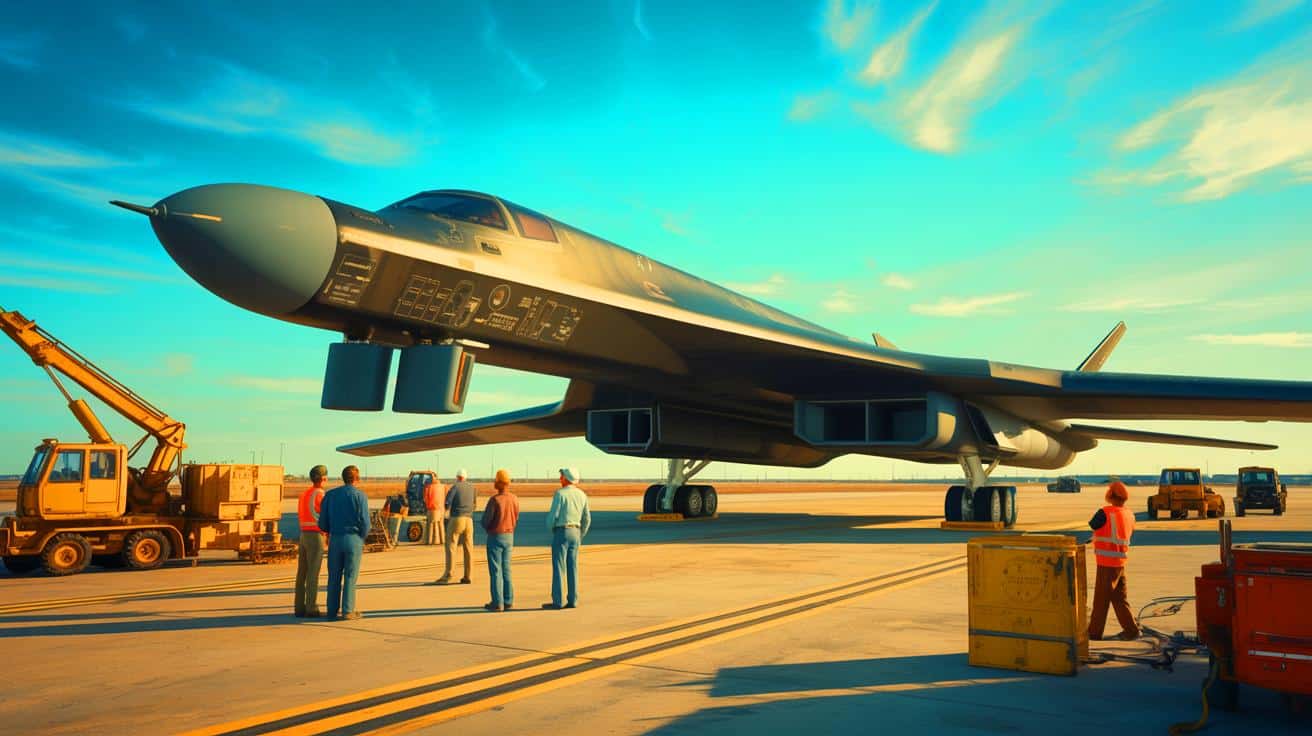
The prolonged government shutdown has brought significant challenges to the defense industry, particularly in the acceleration of the B-21 bomber program. Northrop Grumman, a key player in military aviation, has been at the forefront of discussions to expedite the production of this strategic aircraft. However, these critical conversations have been stalled due to the shutdown, affecting both the company’s strategic plans and the nation’s defense capabilities. As the shutdown drags on, the future of the B-21 bomber program and its implications for national security remain uncertain, raising questions about the impact of political impasses on military preparedness.
Impact of the Shutdown on B-21 Discussions
The ongoing federal shutdown has created hurdles in advancing the B-21 bomber program, as confirmed by Northrop Grumman CEO Kathy Warden. During a recent earnings call, Warden emphasized the disruption caused by the government shutdown, which has stalled discussions vital to accelerating the bomber’s production. The delay comes just months after the company invested nearly $500 million to speed up manufacturing efforts. The company’s strategic collaboration with the U.S. Air Force has been put on hold, awaiting the resumption of talks once government operations normalize. This pause underscores the broader implications of political gridlock on defense initiatives.
The shutdown not only affects Northrop Grumman but also impacts the Air Force’s plans to procure up to 150 B-21 bombers. With the Air Force’s communications currently limited due to the shutdown, the lack of immediate feedback further hampers the program’s progress. While there is optimism that discussions will resume swiftly after the shutdown, the delay highlights vulnerabilities in the defense sector when faced with political stalemates.
Financial Investments and Strategic Plans
In recent months, Northrop Grumman made significant financial commitments to bolster the B-21 bomber program. The defense contractor absorbed close to $500 million in costs to enhance production capacities, following the approval of a $4.5 billion funding package aimed at ramping up manufacturing. These investments are part of a broader strategy to ensure the U.S. maintains a competitive edge in military aviation. Despite the current setbacks, Warden expressed confidence in the company’s ability to continue fulfilling its commitments, anticipating clarity on production acceleration in the coming months.
The strategic importance of the B-21 program cannot be overstated. As Northrop Grumman navigates these financial and operational challenges, the company’s resilience and adaptive strategies will be critical. The defense contractor remains on track to secure awards for low-rate initial production (LRIP) in the final quarter of 2025, demonstrating a commitment to long-term objectives despite current uncertainties.
Testing and Deployment Milestones
Recent developments in the B-21 program include significant milestones in flight testing and deployment. Since November 2023, the bomber has undergone rigorous testing, with a second test aircraft taking flight last month. These tests are crucial for validating the bomber’s capabilities and ensuring readiness for future deployment. Ellsworth Air Force Base in South Dakota is poised to receive the first aircraft, marking a pivotal step in the program’s rollout.
These advancements, despite the current stagnation, highlight the program’s momentum and strategic importance. The continuation of testing and preparation for deployment underscores Northrop Grumman’s commitment to meeting the Air Force’s requirements. It also reflects the broader defense community’s dedication to maintaining operational readiness, even amidst political and financial challenges.
China Accuses NSA of Long-Term Hacking, Revealing Years of Targeted Attacks on National Time Systems
Challenges in Other Defense Programs
While the B-21 program faces hurdles, Northrop Grumman is also dealing with challenges in other defense initiatives, such as the Sentinel ICBM program. The Sentinel program, behind schedule and over budget, recently reached a significant milestone with the completion of a critical design review. This progress is essential for advancing the program, which had been temporarily paused due to escalating costs and logistical challenges.
The Sentinel program’s restructuring highlights the complexities of modern defense initiatives, where budget overruns and technical difficulties are common. Northrop Grumman’s ability to navigate these challenges, while continuing to make progress, is indicative of the resilience required in the defense sector. The company’s efforts to align with evolving military needs, despite these obstacles, reflect the broader industry’s adaptability and commitment to national security.
As the government shutdown continues to cast a shadow over defense programs, questions arise about the long-term implications for national security and military readiness. The disruption of critical defense discussions and initiatives underscores the need for political stability to ensure the effective execution of defense strategies. In light of these challenges, how can the defense industry adapt to mitigate the impact of political uncertainties on crucial military programs?