


Pacific Soldiers Transform and Modernize Forces Amid Growing Concerns Over China’s Regional Influence
 By
Adam Kovács
By
Adam Kovács
| IN A NUTSHELL |
|
In the ever-evolving geopolitical landscape of the Indo-Pacific region, the U.S. Army is undertaking significant efforts to modernize and adapt in response to emerging threats. Led by U.S. Army Pacific (USARPAC) commander Gen. Ronald Clark, this transformation is driven by the urgent need to remain agile and responsive to potential crises. The Army’s modernization initiative, known as Transformation in Contact, is a testament to this commitment. Gen. Clark emphasizes the importance of innovation and technological integration, particularly in the face of China’s growing influence and assertiveness. As the Army embraces advanced technologies and strategies, it aims to ensure that its forces are prepared for any potential challenges in this pivotal region.
Modernization and Innovation as Strategic Imperatives
At the forefront of the U.S. Army’s efforts in the Indo-Pacific is a relentless drive towards modernization. This initiative, termed Transformation in Contact, is designed to ensure that the Army remains agile and capable of responding to emerging threats. According to Gen. Ronald Clark, the risk of inaction or delayed response in a crisis is one of the greatest challenges faced by the Army in this region. As such, continuous transformation is not just desired but imperative.
Gen. Clark underscores the necessity for leaders to embrace a culture of rapid iteration and innovation. This approach involves becoming comfortable with failure as a stepping stone to developing better solutions. The Army Pacific Command has positioned itself as the “Army’s innovation testbed,” tasked with experimenting and testing new technologies and concepts. This includes the integration of artificial intelligence to streamline workflows and enhance operational efficiency.
The command is “at the forefront of testing new systems and processes that are driving the formation of an Army unified network based on zero trust principles,” said Gen. Clark.
The integration of unmanned aerial systems and other cutting-edge technologies is a critical component of this modernization effort, reflecting the Army’s commitment to maintaining a technological edge.
Confronting Geopolitical Challenges in the Indo-Pacific
The Indo-Pacific region is characterized by complex geopolitical dynamics, with China playing a central role in shaping the strategic environment. Gen. Clark identifies the “tyranny of distance” and China’s increasingly assertive actions as two major challenges for the Army in this theater. The vast expanse of the Pacific Ocean presents logistical challenges, necessitating a strategic focus on positioning and readiness.
China’s actions, particularly those of the People’s Liberation Army, are perceived as threats to the sovereignty of U.S. treaty allies and partners. This poses a significant challenge for the U.S. Army, which must be prepared to respond to any crises that may arise across multiple areas in the region. Gen. Clark emphasizes that deterrence is the Army’s highest duty, forming the cornerstone of its strategy in the Indo-Pacific.
Ensuring that the Army is in the right place, at the right time, with the right capabilities is essential to counterbalance China’s influence and maintain stability. The ability to deter aggression effectively hinges on the Army’s readiness and the strategic deployment of its resources.
Technological Integration and Unmanned Systems
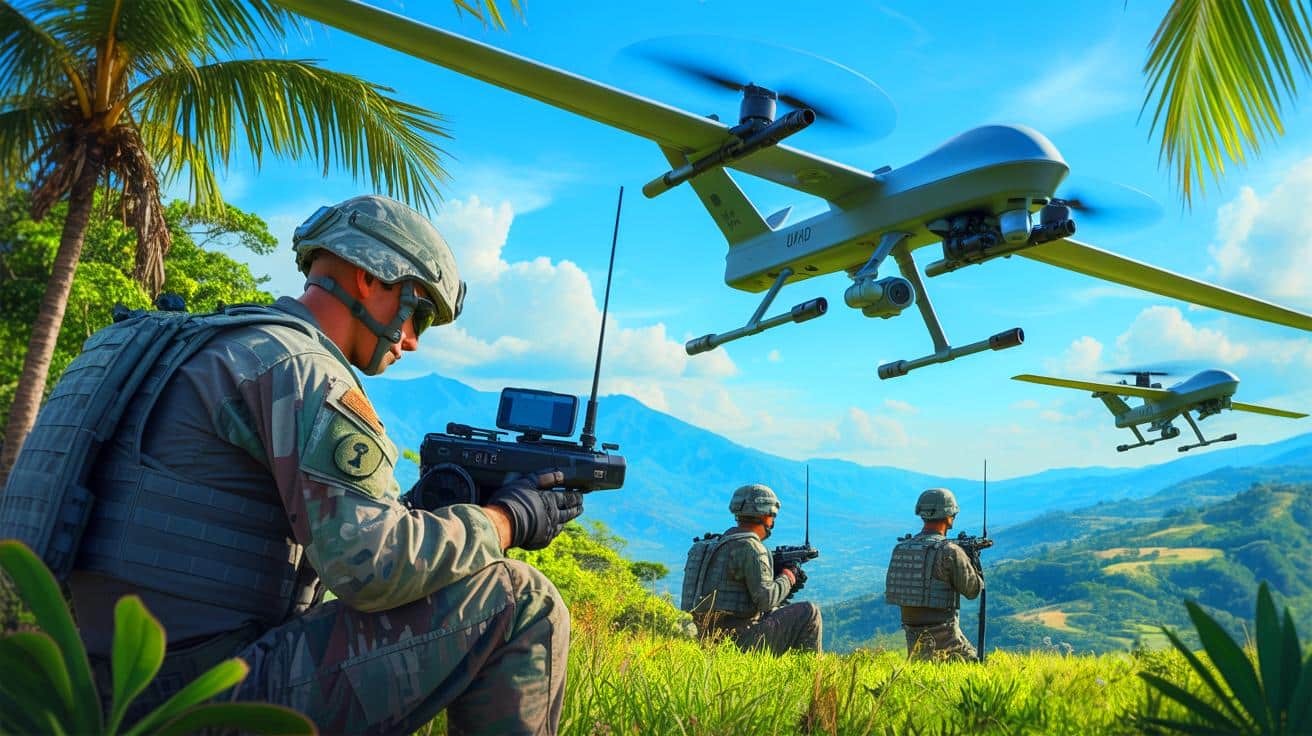
As part of its modernization efforts, the U.S. Army is increasingly integrating advanced technologies into its operations. Unmanned aerial systems (UAS) are a critical component of this strategy, providing enhanced surveillance and operational capabilities. During a recent event at the AFCEA TechNet Indo-Pacific conference, soldiers demonstrated the use of drones, highlighting their role in the Army’s evolving operational framework.
Although a planned drone demonstration was canceled due to the disruptive noise it produced, the incident underscores the Army’s commitment to exploring new technological frontiers. Gen. Clark noted that the Army is pioneering the development of an “Army unified network” based on zero trust principles, enhancing both security and efficiency.
The integration of these technologies is not solely about maintaining a technological edge; it is about ensuring that the Army can operate effectively in a rapidly changing environment. The use of AI and unmanned systems represents a shift towards more agile and responsive military operations, essential for addressing the challenges of the Indo-Pacific region.
Strategic Alliances and Regional Deterrence
In addition to technological advancements, the U.S. Army’s strategy in the Indo-Pacific is heavily reliant on strengthening alliances and partnerships. Collaborative efforts with regional allies are critical for maintaining stability and deterring potential adversaries. The Army’s ability to project power and influence in the region is significantly enhanced by these partnerships.
Gen. Clark emphasizes the importance of being prepared for any challenge, which includes fostering strong relationships with treaty allies and partners. The shared commitment to regional security and stability is a vital component of the Army’s strategy, ensuring that it can effectively counterbalance China’s influence.
As the Army continues to modernize and adapt, the role of its alliances will become increasingly important. These partnerships provide a platform for joint operations and collaborative initiatives, enhancing the Army’s ability to respond to regional threats.
As the U.S. Army Pacific continues its modernization journey, the interplay of technology, strategy, and alliances will shape its future operations. The challenges of the Indo-Pacific region demand a proactive and innovative approach, ensuring readiness and deterrence remain at the forefront. How will these efforts evolve in the face of shifting geopolitical dynamics and technological advancements?
Continue reading