



Lawmakers Push for Russian Concessions in Ukraine Deal, Aiming to Transform Regional Stability and Peace Prospects
 By
Adam Kovács
By
Adam Kovács
| IN A NUTSHELL |
|
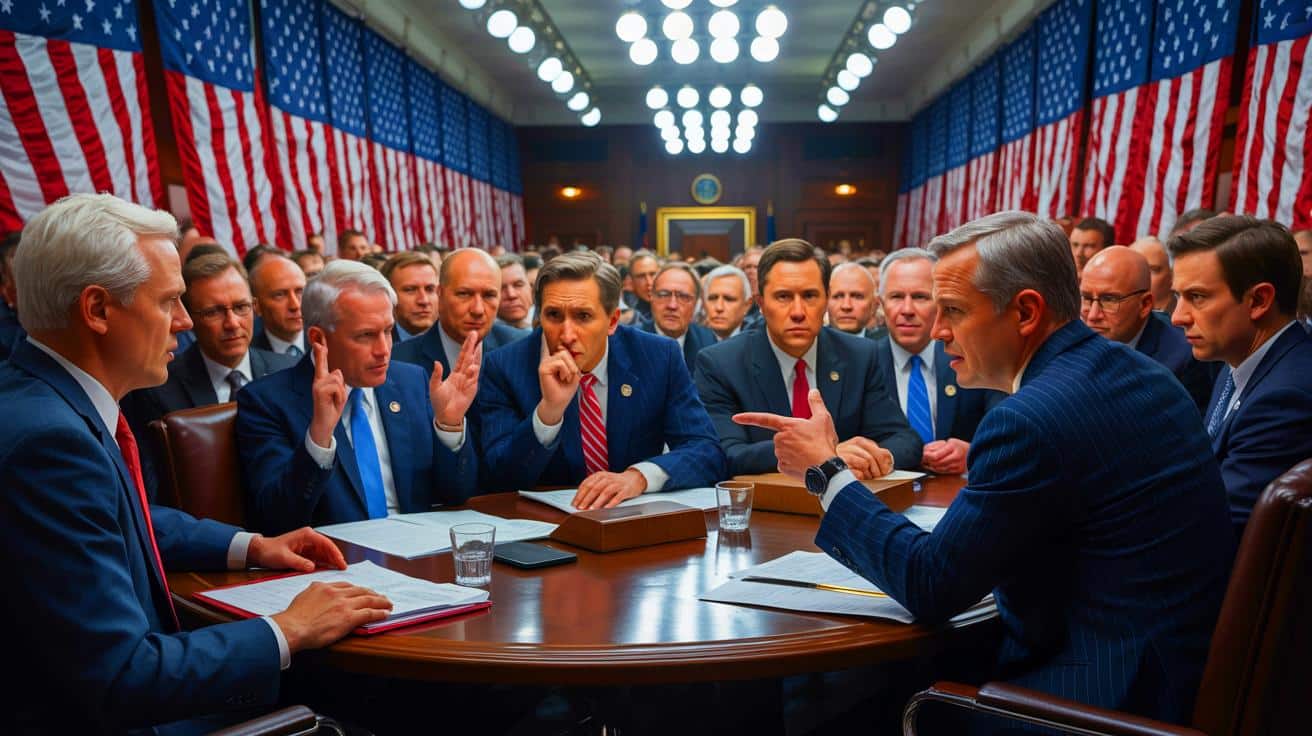
In a significant move against the Trump administration’s proposed agreement to end the conflict in Ukraine, U.S. lawmakers are gearing up to introduce a bill that would impose sanctions on Russia. The controversial deal has sparked a political firestorm, with concerns over its implications for Ukraine’s sovereignty. The agreement, reportedly leaked last week, has led to bipartisan dismay as it includes concessions that could potentially undermine Ukraine’s status as a sovereign democracy. As Congress prepares to assert its role in the negotiations, the stakes are high for both international diplomacy and regional stability.
Lawmakers Respond to Controversial Deal
Two key Republican congressmen, Rep. Brian Fitzpatrick of Pennsylvania and Rep. Don Bacon of Nebraska, have voiced strong opposition to the proposed agreement. Their discontent centers around the notion that the deal would cede Ukrainian territory to Russia and force Ukraine to reduce its military capabilities. Fitzpatrick, who chairs the Congressional Ukraine Caucus, emphasized the gravity of the situation by stating, “That is a crossing of a Rubicon where Congress now fully and wholly needs to inject itself in this debate, and that’s what we’re going to do.”
The proposed sanctions bill, which mirrors a Senate version with broad bipartisan support, aims to weaken Russia’s negotiating power. With 85 cosponsors already on board, the bill has a strong chance of advancing in Congress. Bacon, a member of the House Armed Services Committee, plans to sign the bill, underscoring the urgency of the situation. If it garners the necessary 218 signatures, a vote will be required, potentially altering the course of U.S.-Russia relations.
Canada Challenges F-35 and JAS 39 Gripen: A New Era for Fighter Jets and National Defense Strategy
Exclusion of Key Diplomats Raises Questions
One of the more perplexing aspects of the negotiations is the exclusion of Secretary of State Marco Rubio, the United States’ top diplomat. Instead, high-ranking officials from the U.S. Army have taken a prominent role in the talks. This has raised questions about the administration’s approach to diplomacy, given the Army’s traditional role in manning, training, and equipping soldiers, rather than engaging in international negotiations.
Bacon expressed concern over the apparent marginalization of the National Security Council, which has historically played a pivotal role in coordinating between various government departments. He noted that Rubio, who is also serving as Trump’s national security adviser, has been cut out of crucial discussions. This development has sparked debate over the administration’s strategic priorities and the impact on U.S. foreign policy.
The Revised Agreement and Its Implications
The original 28-point peace plan, which has since been revised and sent back to Moscow, included several controversial provisions. Among them were demands for Ukraine to relinquish more territory and abstain from joining NATO. Additionally, the plan called for Ukraine to make “good-faith demonstrations” without equivalent commitments from Russia. Critics argue that these concessions could open the door for renewed Russian aggression, posing a threat to Ukraine’s sovereignty.
Bacon described the plan as a “recipe for Russian domination of Ukraine for decades to come,” drawing parallels to historical agreements that failed to secure lasting peace. He questioned why Ukraine was being asked to make significant sacrifices while Russia faced minimal accountability. The revised agreement has not assuaged concerns, with lawmakers continuing to push for a more balanced approach to peace negotiations.
Congressional Strategies for Peace and Stability
Despite their criticisms, both Fitzpatrick and Bacon agree on the necessity of pursuing a peace agreement to break the ongoing stalemate. The lawmakers have proposed leveraging $300 billion in frozen Russian assets held in European banks to aid in Ukraine’s reconstruction. This strategy aims to incentivize Russia to engage in more constructive negotiations, while providing Ukraine with the resources needed to rebuild.
The call for a more equitable peace process underscores the complexities of international diplomacy. As the situation evolves, Congress’s involvement could significantly influence the direction of U.S. foreign policy. Lawmakers are determined to ensure that any agreement respects Ukraine’s sovereignty and promotes long-term regional stability.
As the debate over the Ukraine deal continues, the future of U.S.-Russia relations hangs in the balance. The proposed sanctions bill and calls for a more inclusive negotiation process reflect the broader challenges of balancing diplomacy with national security interests. How will these developments shape the geopolitical landscape, and what role will the United States play in fostering peace and stability in Eastern Europe?
Continue reading