


Redstone’s €25m Blue Fund Targets Early-Stage Ocean Technology in Europe
Redstone has reached a €25 million first close for Redstone Blue, a fund targeting European ocean technology startups from pre-seed to Series A across maritime systems, water, energy and marine data.
 By
Adam Kovács
By
Adam Kovács

Redstone has reached a €25 million first close for Redstone Blue, an investment fund dedicated to European ocean technology and the blue economy. The fund is aimed at startups from pre-seed to Series A, placing early-stage capital behind technologies used in maritime activity, ports, energy, water and marine observation.
In brief
- Redstone has completed a €25 million first close for its Redstone Blue ocean technology and blue economy fund.
- The fund will target European startups from pre-seed to Series A.
- Its investment areas include sustainable maritime and port systems, ocean infrastructure, clean energy, marine intelligence, blue biotechnology and water technology.
- The first-close investor group includes angel investors, family offices, foundations, institutions and maritime-related companies, including the City of Turku and Meriaura Invest.
For readers following Europe’s industrial and environmental economy, the announcement matters because it brings a dedicated investment mandate to businesses working with physical infrastructure and specialised marine markets. Redstone Blue is not limited to one technical field: its stated scope covers sustainable maritime and port systems, ocean infrastructure and clean energy, marine intelligence, and blue biotechnology and water technology.
The fund’s first-close backers include angel investors, family offices, foundations, institutions and companies connected with the maritime sector. Among those named are the City of Turku and Meriaura Invest. That mix places public, private and sector-linked investors in the same funding round, while Redstone says the vehicle is intended to pursue market-based returns as it supports the modernisation of established ocean industries.
A fund for technologies used across maritime industries
Redstone Blue’s investment remit spans several markets that are often discussed separately. Maritime operations and ports sit alongside energy systems, water technologies, and marine data and observation. The fund’s four stated areas make that breadth more specific: sustainable maritime and port systems, ocean infrastructure and clean energy, marine intelligence, and blue biotechnology and water technology.
In practical terms, this means the fund can consider companies whose products serve different parts of the ocean economy, rather than focusing on a single type of business. A startup may be developing technology for port operations, marine monitoring, water innovation or infrastructure connected to ocean activity. The common feature is the fund’s focus on technology intended for ocean-related industries.

Redstone Blue is based in the Nordics but has a European investment mandate, according to TMCnet’s report on the first close. Its pre-seed to Series A focus is significant for founders because these are stages when companies are still developing products, validating their route to market and building the operational foundations needed for growth.
Within the broader context of Europe’s economy, the fund reflects investor attention to sectors where digital products can meet longstanding industrial systems. Ocean-focused businesses often operate around assets and networks that have long service lives, including ports, vessels and infrastructure. The commercial setting can therefore differ from markets where a software product can be adopted without extensive physical integration.
Why industrial conditions shape the investment case
The report from TMCnet highlights a central constraint for young ocean technology companies: many sell into industrial markets with long procurement cycles, demanding certification requirements and infrastructure that cannot be replaced quickly. These conditions do not determine whether any individual company will succeed, but they help explain why sector knowledge can be relevant alongside capital.
Connections with maritime companies may help startups understand those constraints earlier in their development. In some cases, such relationships can also help a young business reach potential customers or technical partners sooner. That is a possibility, not a guaranteed outcome, and it depends on the company, its product and the requirements of the organisations it hopes to work with.

The investor group behind the first close includes maritime-related participants, alongside institutional and private investors. For founders, this is a notable feature of the fund’s structure: the investor base is connected to the industries in which many prospective portfolio companies will operate. It may inform how Redstone Blue assesses the practical realities surrounding certification, procurement and technical deployment.
At the same time, the fund’s stated strategy does not remove the underlying challenges of those markets. A company building for a port, vessel operator, energy site or water system must still meet the technical and commercial requirements of its prospective customers. The fund’s role is to invest in early-stage ventures, not to guarantee access to infrastructure, contracts or pilot projects.
What the first close changes, and what it does not
A first close means Redstone Blue has secured €25 million from its initial group of backers and can operate as a fund focused on early-stage European ocean technology. It gives Redstone a dedicated vehicle for investments across its stated themes, from sustainable port systems to marine intelligence and water technology.
It does not, however, establish that every technology in those fields will attract investment or deliver a commercial result. The fund has set out an investment approach centred on market-based returns and the modernisation of ocean industries. Its future portfolio, investment pace and individual company outcomes remain matters for later decisions and developments.
For the wider public, the clearest immediate change is that European founders working in the selected areas have another specialised source of early-stage capital to approach. For industrial buyers and sector participants, the announcement signals that Redstone is organising its investment activity around technologies relevant to maritime systems, ports, energy, water and marine data. The practical impact will depend on which companies the fund selects and how those technologies perform in their intended markets.
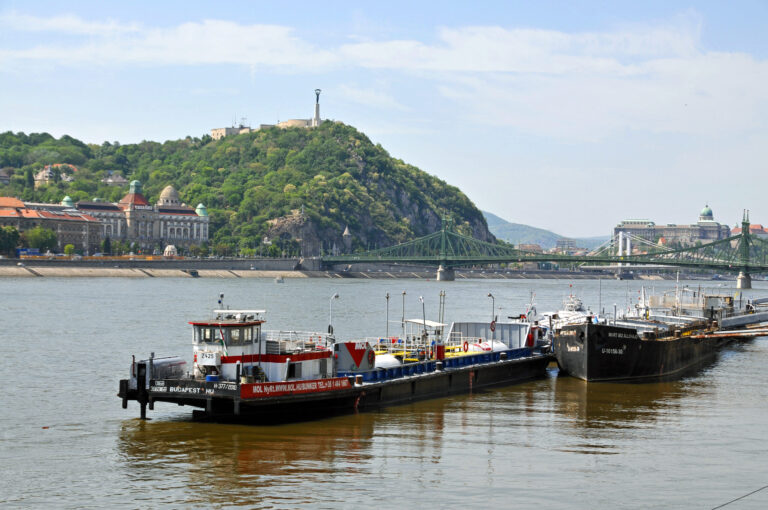
Featured image. Source: Pexels. Credit: Mathias Reding. License: Pexels License.