


Europe’s Shrinking Rivers Put Pressure on Transport, Power and Industry
Falling water levels on the Rhine and Danube are restricting inland shipping, disrupting industrial deliveries and reducing electricity production at riverside nuclear plants, with effects reported from Germany to Hungary.
 By
Adam Kovács
By
Adam Kovács
Europe’s shrinking rivers are creating practical problems for transport, power generation and industrial production. Falling water levels on the Rhine and Danube are limiting the movement of chemicals, petroleum products and other goods, while some riverside nuclear plants have had to reduce or stop operations because cooling water is insufficient. The disruption is putting pressure on the European economy through higher freight costs, interrupted deliveries and lower output at affected facilities.
In brief
- Falling levels on the Rhine and Danube have disrupted these shipments and pushed up transport costs.
- They do not establish a generalised energy crisis across Europe, but they can create additional pressure on individual power systems when a major plant is unable to operate normally.
- Low water on Europe’s main rivers has also been linked to reduced freight movements, interruptions at power plants and lower industrial output.
Lower water levels limit inland shipping
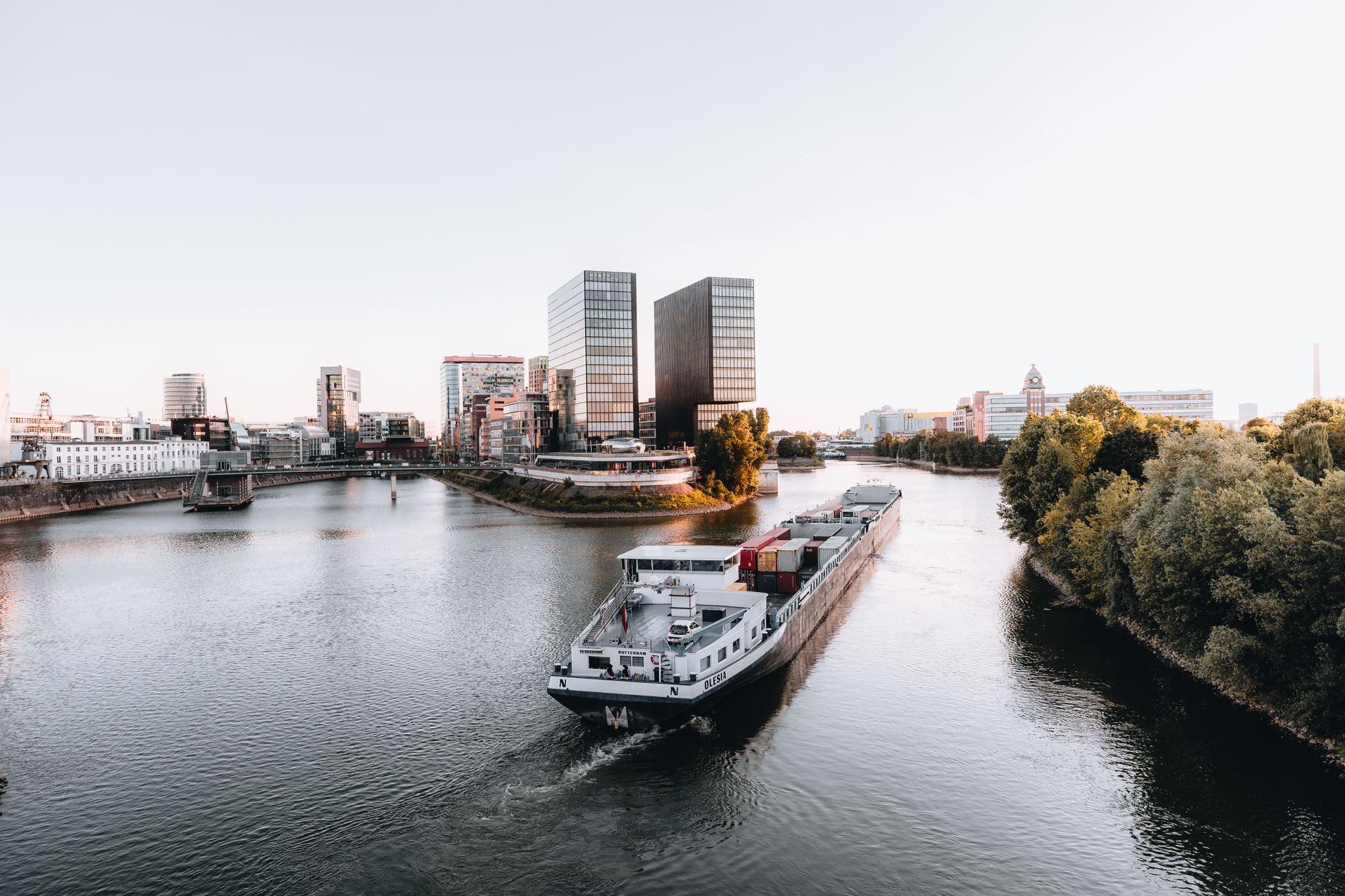
The Rhine and Danube connect major industrial areas with ports and suppliers, but their shallow stretches are making navigation more difficult. At critical points on the Rhine, vessels can carry only 20% to 30% of their usual load without risking grounding. Transporting the same quantity of goods therefore requires more journeys and vessels, increasing freight rates.
The effect is particularly significant for products that commonly move by barge, including chemicals, oil products and other industrial goods. Falling levels on the Rhine and Danube have disrupted these shipments and pushed up transport costs. Reduced capacity can also make deliveries less predictable for factories that depend on regular supplies of raw materials.
Thyssenkrupp has reduced hot metal production at its blast furnaces in Duisburg after low water levels forced the company to take its main barge fleet out of service. Smaller chartered vessels were used instead, but they did not eliminate the effect of restricted river access on raw material deliveries.
The consequences are not identical across Europe. Some stretches remain navigable, while others impose severe limits on vessel loads or prevent passage altogether. Businesses may be able to adjust individual deliveries, but using additional vessels or other transport arrangements can increase operating costs.
Riverside power plants face cooling constraints
Low river levels are also affecting electricity production. Nuclear plants from France to Hungary rely on nearby water systems for cooling, and reduced flows or difficult river conditions can limit their operations. The impact varies by facility, but the affected plants can reduce the amount of electricity available to their national grids.

In Hungary, all but one of the four reactors at the country’s only nuclear power plant were shut down because the river did not provide enough water for cooling. The plant normally accounts for about 40% of the country’s electricity production. Electricity imports from elsewhere in Europe and requests for lower consumption by businesses and households formed part of the response to the reduction in output. Al Jazeera reported that Prime Minister Péter Magyar said the plant would be powered down completely, the first full shutdown in its 44-year history, because low river levels had reduced the ability of its pumps to draw in enough cooling water.
Romania has faced a similar problem at the Cernavoda nuclear plant, where one of two reactors was shut down. Authorities used explosives beside the river as part of an effort to divert water toward the power station. In France, low flows and high river temperatures have also constrained output from parts of the nuclear fleet.
These incidents show how closely electricity production at some facilities depends on local river conditions. They do not establish a generalised energy crisis across Europe, but they can create additional pressure on individual power systems when a major plant is unable to operate normally.
River tourism is affected alongside industry
The disruption extends to passenger vessels. In Bulgaria, 186 passengers were brought ashore after a Viking cruise ship ran aground on a sandbank because of low water. Other cruise operators have cancelled or modified journeys on the Danube and elsewhere when particular stretches no longer had enough depth for navigation.
For tourism companies, changing an itinerary can be necessary to keep vessels moving safely. For manufacturers and energy producers, the problem is tied to the delivery of fuel, raw materials and finished goods, as well as to the availability of cooling water. The same reduction in river depth can therefore affect passengers, freight operators and factories in different ways.
Low water on Europe’s main rivers has also been linked to reduced freight movements, interruptions at power plants and lower industrial output. The financial effect depends on the location and activity of each company, but additional vessels, altered routes and reduced production all make operations more expensive or less efficient.
The Rhine and Danube remain usable on some sections, yet their shrinking navigable corridors are exposing the dependence of transport and industry on reliable river conditions. Where water levels fall too far, the immediate result is not a single continent-wide stoppage, but a series of local constraints that can spread through connected supply and energy networks.
Photo: Masood Aslami / Pexels