

Navigation revenue would fund embankments, heritage and public space under Budapest’s Danube plan
An equally owned company would manage the riverbed and bank together, while directing navigation revenue towards embankments, public space and built heritage.
 By
Juliette Carrel
By
Juliette Carrel
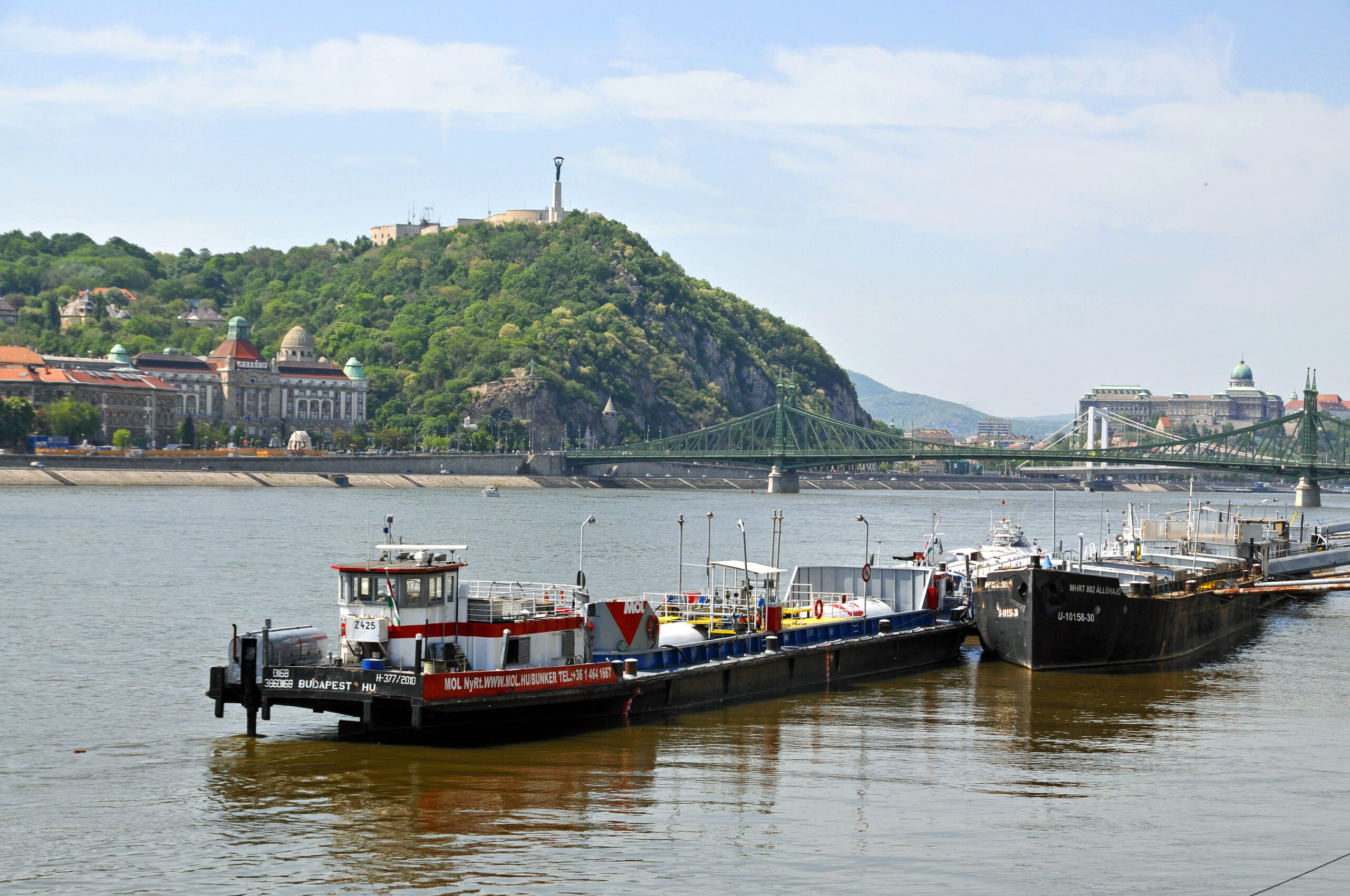
Hungary’s government and Budapest plan to create an equally owned company to manage the capital’s Danube riverbed and bank through one structure.
The proposal addresses a division at the centre of waterfront management. The state currently oversees use of the riverbed, while the capital controls the bank. Decisions concerning navigation and the adjoining urban space therefore sit with different authorities, even though the two areas form a connected waterfront.
Bringing those responsibilities together could change how river activity, public space and heritage are considered. Instead of treating the water and its edge as separate administrative areas, the planned company would provide a common operating structure. It has not yet been established, and neither a launch date nor a timetable for waterfront works has been announced.
Divided control has constrained longer-term planning
The current arrangement matters where activity on the river depends on infrastructure along the bank. A port operator may use part of the state-managed riverbed, for example, while the surrounding embankment falls under the city’s authority. Coordinated development consequently requires decisions from both sides of that boundary.
Port-use agreements have generally covered only one or two years, as reported by the Budapest Business Journal and XpatLoop. Such short terms give operators limited time to recover the cost of substantial improvements. The issue is therefore not only which authority grants permission, but whether the management framework supports decisions extending beyond the next contract.
Minister of Transport and Investment Dávid Vitézy argued that these short terms discourage investment and development, leaving unsuitable conditions along parts of the waterfront. The proposed company is intended to replace that fragmented arrangement with joint control, although no new contract lengths or rules have been specified.
This question is distinct from the wider economic importance of the river itself. The Danube forms part of a European transport system whose vulnerability to low water has affected shipping and industry, as examined in coverage of pressure on Europe’s river transport. The Budapest proposal concerns how the capital manages the local interface between navigation and the city, rather than navigability across the river corridor.
A shared company would make coordination permanent
The planned company would be owned equally by the state and the capital. Its central function would be to unify decisions affecting the riverbed and bank, replacing parallel responsibility with an operating model in which neither authority has a controlling share.

Equal ownership makes the proposal a governance change rather than a simple transfer of responsibility from one public body to another. The state would retain an equal role alongside Budapest. How that balance works in practice will depend on the company’s eventual powers and decision-making rules, which have not been detailed.
The proposal was considered through the Council of Public Development Projects, the joint forum used by the government and the capital to decide on Budapest developments. The council provides the political setting for cooperation between the two authorities, while the company would serve as the vehicle for managing their connected waterfront responsibilities.
The principal change would be a single, continuing framework for decisions about the river and its urban edge. An equally owned operator could consider navigation, port use and the adjoining public realm together rather than assembling separate decisions for each issue. That structure may allow longer planning horizons, but no individual docks, sections of embankment or construction projects have been identified.
Navigation revenue would be reinvested along the river
The proposed funding model is designed to connect the commercial use of the Danube more directly with Budapest’s urban environment. Revenue generated by river traffic would be returned to the waterfront instead of being separated from the condition of the banks and adjacent public areas.
The plan identifies three linked uses for that revenue:
- Embankments and their surroundings: funding would support the physical environment along the river and nearby areas.
- Built heritage: development would be expected to respect and enhance the historical character of Budapest’s waterfront.
- Public use: investment would support a Danube bank that functions more effectively as accessible urban space.
This would create a more direct financial relationship between navigation and the places that accommodate it. River activity would not merely occupy the waterfront. Some of the income associated with it would help finance the setting in which that activity occurs. Residents and visitors could eventually see better-maintained embankments and more usable surroundings, depending on the projects approved.
The proposal does not include a budget, expected revenue figure or investment allocation. The amount of work that navigation income could finance is therefore unknown, as is whether further state or city funding would be needed. At this stage, the plan establishes how revenue should be directed rather than setting out a costed programme.
The same limit applies to heritage and public access. Both are stated purposes of the model, but no building, monument, promenade or dock has been selected for work. The company would provide a shared mechanism for choosing and funding projects once its mandate, operating rules and priorities are defined.
Photo: Dennis G. Jarvis / Wikimedia Commons, CC BY-SA 2.0