



“US HIMARS Goes Hypersonic”: New Missiles Fly Faster Than Mach 5 and Redefine Long-Range Strike Power in Seconds
 By
Adam Kovács
By
Adam Kovács
| IN A NUTSHELL |
|
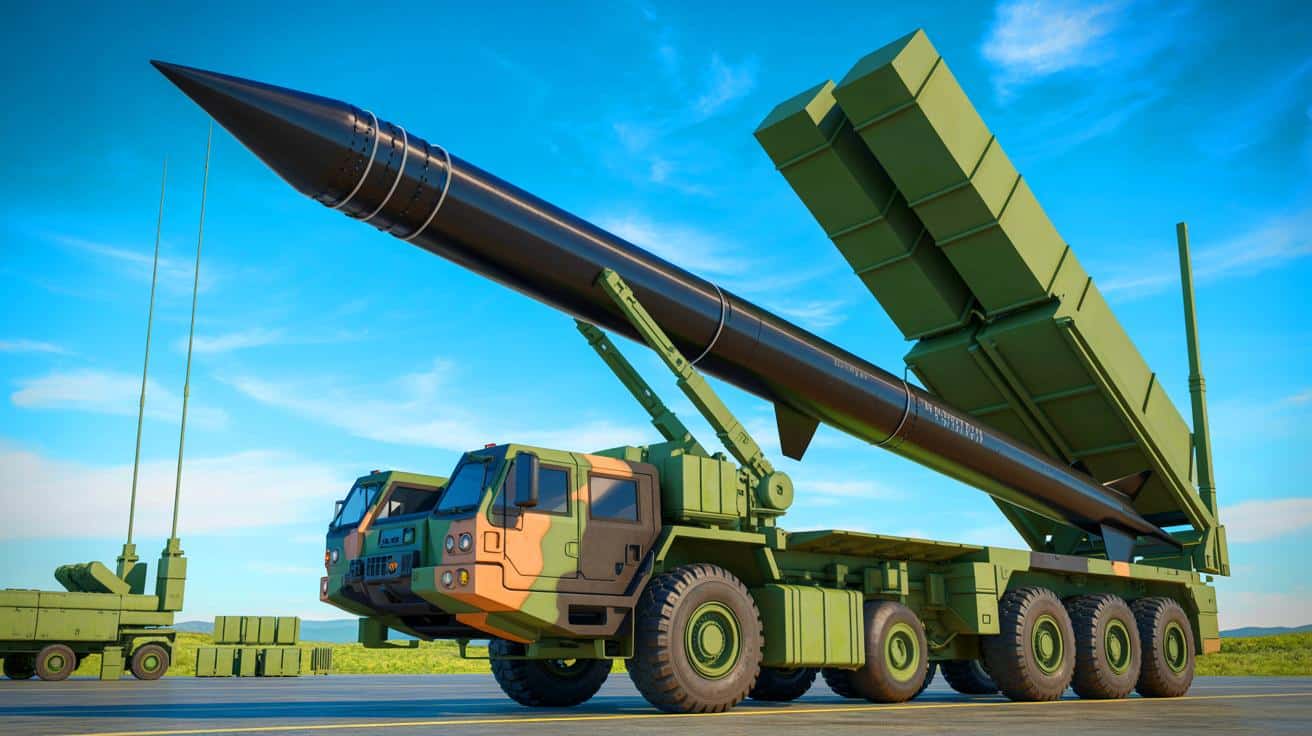
The United States Army is making significant strides in its artillery capabilities with the advancement of the Blackbeard Ground Launch (GL) hypersonic strike missile. Aimed at enhancing military precision and flexibility, this project has entered its Engineering and Manufacturing Development (EMD) phase, marking a transition from prototype demonstrations to full-scale system development. This initiative is part of a broader strategy to integrate hypersonic capabilities within existing platforms like the High Mobility Artillery Rocket System (HIMARS), offering a cost-effective solution to modern military challenges. With substantial funding allocated in the fiscal year 2026 budget, the project is set to redefine the landscape of precision strike capabilities.
HIMARS to Go Hypersonic
The Blackbeard GL missile is poised to revolutionize the battlefield by providing a mid-range hypersonic precision strike capability from existing rocket artillery platforms. Unlike the Long-Range Hypersonic Weapon (LRHW), which boasts a range exceeding 1,700 miles, Blackbeard GL is engineered for tactical flexibility. This allows it to engage mobile, time-sensitive, and hardened targets with approximately 80% of the anticipated performance of the Precision Strike Missile (PrSM) Increment 4, yet at a fraction of the cost and with a quicker deployment timeline.
Blackbeard GL’s architecture prioritizes modularity, employing existing pods from the Multiple Launch Rocket System Family of Munitions (MFOM). This enables compatibility with both current HIMARS and M270 launchers, ensuring a seamless integration process. The missile’s seeker-based terminal guidance system enhances its ability to engage maneuvering or obscured targets, even in contested environments. Key milestones for the program include a fixed-fin flight demonstration using an air-launched surrogate in early 2026 and a full-system live-fire test in 2027, with initial fielding planned for 2028.
Mach 5 Missiles
Developed by the Castelion Corporation, a defense startup founded in 2022, the Blackbeard GL missile represents a leap forward in high-speed munitions. Castelion has quickly established itself as a central player in the Army’s accelerated acquisition model, securing over $100 million in private capital and approximately $22 million in government contracts. The company’s vertically integrated design and manufacturing model supports rapid prototyping, enabling swift iteration cycles.
Oversight of the Blackbeard GL program is managed by the Army’s Rapid Capabilities and Critical Technologies Office (RCCTO), which approved the transition to EMD following an Acquisition Decision Memorandum. The missile is also designated as a principal munition for the future Common Autonomous Multi-Domain Launcher (CAML), a new family of robotic launcher platforms under development. These innovations underscore the Army’s commitment to enhancing its artillery capabilities with advanced, flexible solutions.
The Strategic Value of Blackbeard GL
The strategic value of the Blackbeard GL missile lies in its modular architecture, which leverages the MFOM framework to allow commanders to choose from different payloads. This adaptability enables the management of range, cost, and mission-specific requirements, enhancing HIMARS’ mid-range strike capabilities while maintaining its rapid deployment and air transport advantages.
The development of this hypersonic system reflects the Army’s focus on precision, survivability, and flexible firepower. By using a shared launcher for both short- and long-range missions, the Blackbeard GL missile provides a balanced approach to modern military challenges. Its backward compatibility with existing systems and forward compatibility with future technologies position it as a cornerstone of the Army’s future artillery strategy.
Future Implications and Challenges
As the Blackbeard GL missile progresses towards operational deployment, the Army faces several challenges in ensuring its successful integration into existing and future military frameworks. The emphasis on modularity and flexibility requires a robust logistical support system to maintain its effectiveness in various operational scenarios. Additionally, the development of complementary technologies, such as the Common Autonomous Multi-Domain Launcher, will be crucial in maximizing the missile’s strategic potential.
The ongoing evolution of hypersonic missile technology raises important questions about its impact on global military dynamics. As nations continue to invest in advanced capabilities, the strategic landscape will inevitably shift, prompting considerations of new defense strategies and international arms agreements. How will these developments shape future military engagements and the broader geopolitical landscape?
Continue reading