

Growing “Unprecedented Panic” Over Russian Nuclear Subs Lurking Near Epicenter of Massive 8.8 Quake: Are We on the Brink of Global Catastrophe
 By
Adam Kovács
By
Adam Kovács
| IN A NUTSHELL |
|
The recent 8.8-magnitude earthquake that struck Russia’s Kamchatka Peninsula has raised alarms beyond the immediate seismic impact. At the center of concerns is the safety of Russian nuclear submarines docked at the Rybachiy base in Avacha Bay, a hub for some of Russia’s most strategic military assets. While the Kremlin has assured the public that there are no significant damages, military analysts and geologists are closely examining the situation, wary of potential risks to global security.
Concerns Over Strategic Military Assets
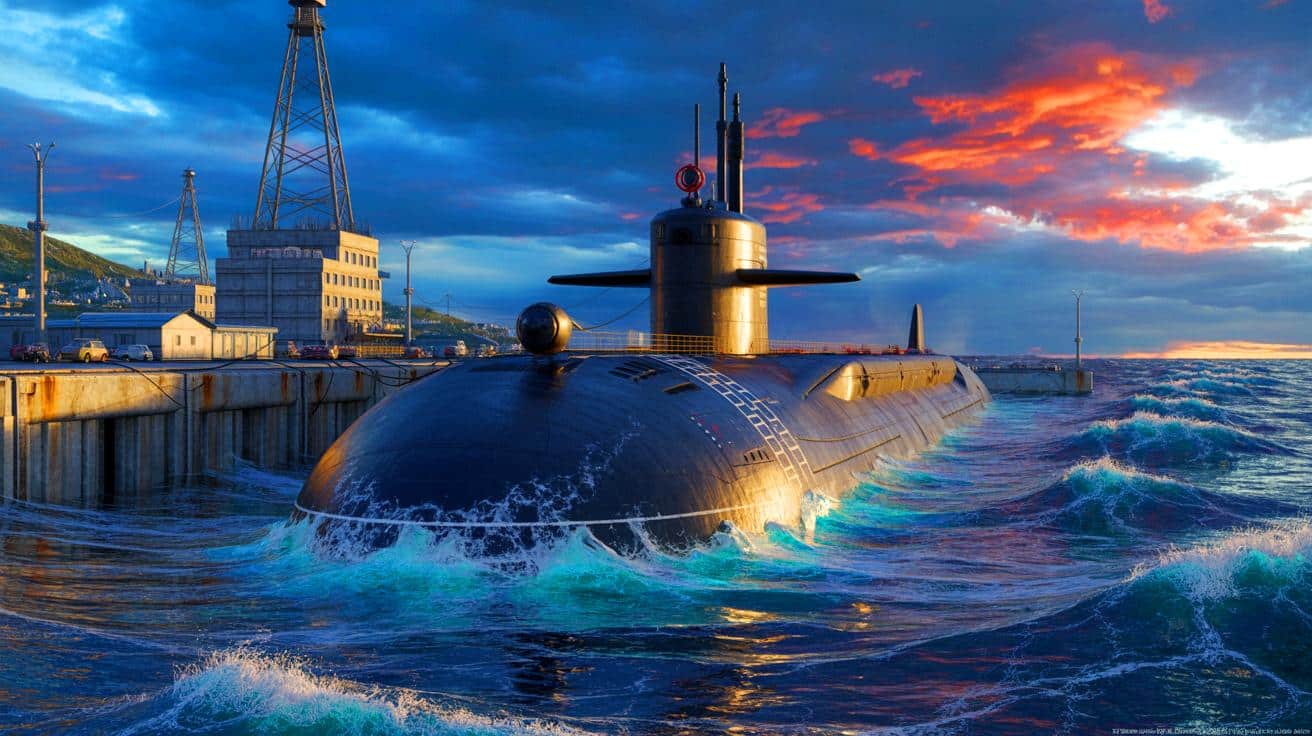
Avacha Bay, situated perilously close to the earthquake’s epicenter, houses the Rybachiy submarine base. This facility is critical for Russia as it hosts advanced Borei and Borei-A nuclear ballistic missile submarines. These submarines are integral to Russia’s nuclear deterrence strategy, forming a core component of its defense operations. The proximity of the epicenter, just 75 miles away, has raised concerns among military analysts about the potential impact on these submarines.
Initial reports from Russia claim no significant damage to the base or its assets. However, videos from local residents suggest otherwise, showing collapsed buildings and damaged infrastructure. The contrast between official statements and local evidence has fueled skepticism among international observers, who continue to monitor the situation closely.
Satellite Images Under Review to Assess Nuclear Sub Safety
Military experts are now scrutinizing satellite images to ascertain the condition of the submarines at the base during the quake. A key concern is whether the seismic activity or subsequent tsunami waves compromised the vessels, particularly those undergoing maintenance with potentially exposed hatches. The Russian government insists that all is under control, citing the base’s robust construction designed to withstand even nuclear strikes.
Nonetheless, the combination of seismic activity and the sensitive nature of the equipment housed at the base continues to worry military analysts. The potential for water intrusion into submarines or damage to power systems during maintenance could lead to long-term operational issues. The absence of immediate visible damage does not eliminate the possibility of internal harm that could disrupt operations.
Widespread Tsunami Alerts and Swift Evacuation Efforts
The earthquake, the strongest in Kamchatka since 1952, triggered tsunami alerts across the Pacific. This seismic event was compared to the 2011 Great Japan Earthquake, which resulted in significant loss of life. Authorities acted swiftly, issuing warnings from Japan to the west coast of the United States. Hawaii saw waves reaching up to five feet, and Japan evacuated nearly two million people from coastal areas.
The rapid response reflects lessons learned from past disasters, such as the 2004 Indian Ocean tsunami. Emergency teams across the affected regions moved quickly to mitigate potential damage and loss of life. Public announcements and sirens were activated promptly, ensuring residents took necessary precautions to stay safe.
Questions Remain Over Submarine Fleet Status
Despite assurances from the Russian Ministry of Defense, questions persist regarding the status of the submarines in Avacha Bay. The lack of visual confirmation or detailed reports has kept speculation alive, particularly among Western intelligence agencies. The strategic importance of the Borei and Yasen classes to Russia’s nuclear deterrence strategy makes any potential disruption a significant concern.
If the submarines were compromised, even minor flooding or power issues could lead to substantial operational delays. The absence of transparent information has left analysts and international observers on high alert, eager for more clarity on the situation.
As the world keeps a watchful eye on the developments in Kamchatka, the potential risks associated with the earthquake extend far beyond immediate structural damage. The incident underscores the delicate balance of military readiness and natural disaster preparedness. How should nations around the globe address such vulnerabilities in their strategic military assets?
Continue reading