

“25-Megawatt Gravity Battery Lights Up Shanghai”: China’s Rudong EVx Shocks Energy Sector With First Commercial Non-Pumped Storage Success
 By
Adam Kovács
By
Adam Kovács
| IN A NUTSHELL |
|
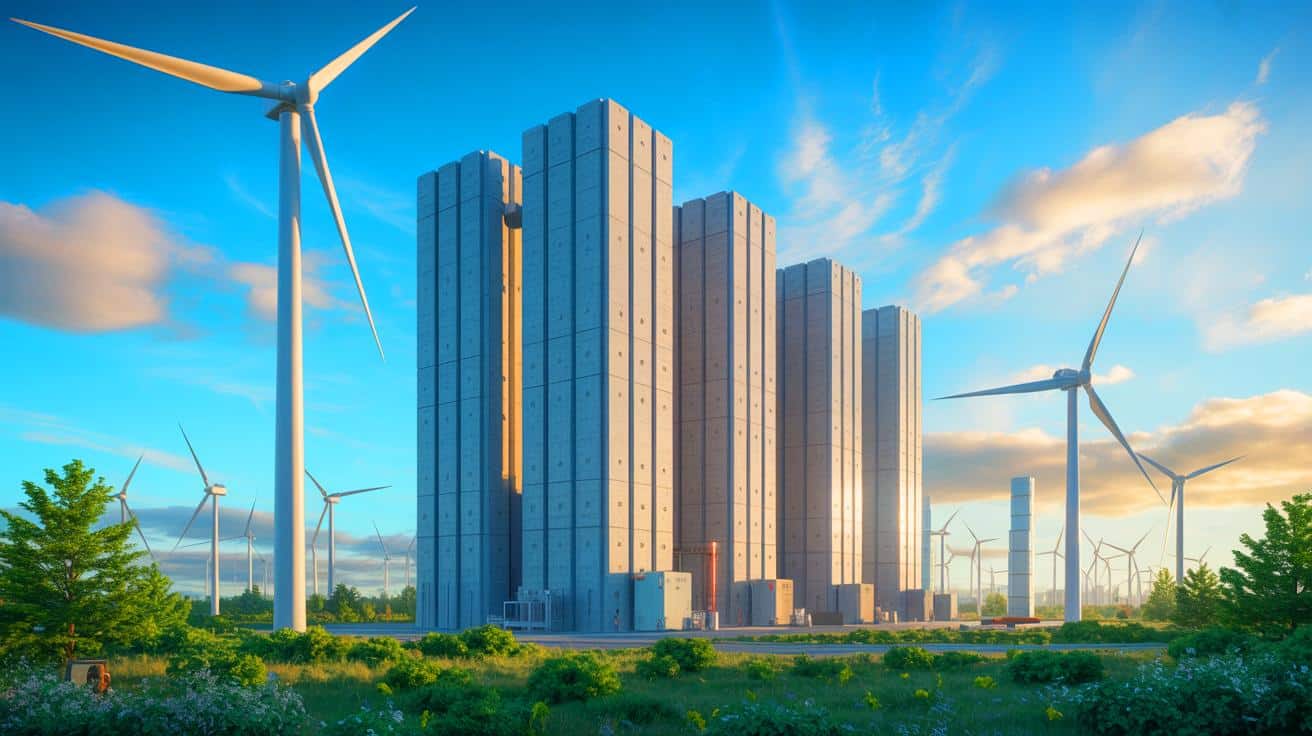
In a remarkable development for renewable energy technology, the Rudong EVx gravity energy storage project has successfully completed its commissioning phase. Located on the outskirts of Shanghai, this innovative system now operates within China’s national grid. The project represents a significant leap forward in energy storage, with the potential to revolutionize how renewable energy is stored and distributed. The EVx system, with a capacity of 25 megawatts (MW) and 100 megawatt-hours (MWh), aims to stabilize and enhance the national grid by storing energy from renewable sources like wind. This project marks the first large-scale commercial deployment of non-pumped gravity energy storage, heralding a new era for sustainable energy solutions.
How Gravity Energy Storage Works
Gravity energy storage systems are a breakthrough in the realm of renewable energy technologies. These systems harness the power of gravity to store and release energy in the form of electricity. By utilizing heavy masses, such as concrete blocks, the system lifts these masses to store gravitational potential energy. When energy demand arises, the masses are allowed to fall, converting potential energy into kinetic energy, which is then transformed into electricity.
This technology plays a crucial role in balancing electricity supply and demand, especially with the intermittent nature of renewable energy sources like wind and solar power. Gravity batteries can store large amounts of energy over extended periods without experiencing degradation. However, they require substantial space for construction and their efficiency is influenced by the height and lifting operations involved.
Despite these challenges, gravity energy storage is emerging as a promising solution for large-scale energy storage. It offers the potential to enhance the efficiency and reliability of renewable energy systems, contributing to a more sustainable and resilient power grid. Projects like the Rudong EVx illustrate that this technology is no longer a mere concept but an operational reality.
The Impact of the Rudong EVx Project
The successful integration of the Rudong EVx gravity battery into China’s national grid signifies a major advancement in energy technology. This project demonstrates that large-scale gravity energy storage is not only feasible but also commercially viable. By stabilizing the grid and optimizing the distribution of renewable energy, the EVx system contributes to a more efficient and sustainable energy infrastructure in China.
Moreover, the initiative has sparked the construction of three additional gravity energy storage facilities across the nation. With a combined capacity of 3.7 gigawatt-hours (GWh), these new projects are set to further bolster China’s renewable energy capacity. The collaboration between Energy Vault, China Tianying (CNTY), and Atlas Renewable underscores the commitment to expanding and improving energy storage solutions.
As gravity energy storage continues to gain traction, it is likely to become a cornerstone of renewable energy strategies worldwide. The Rudong EVx project has set a precedent that could inspire similar ventures globally, accelerating the transition towards a cleaner, more sustainable energy future.
Challenges and Opportunities in Gravity Energy Storage
While gravity energy storage presents numerous benefits, it also faces several challenges. The construction of these systems requires significant space and resources, which can pose logistical and financial hurdles. Additionally, the efficiency of gravity batteries depends on the height and precision of the lifting mechanisms used.
Despite these obstacles, the potential advantages of gravity energy storage are substantial. These systems offer long-term storage solutions without the degradation issues associated with chemical batteries, making them ideal for grid-scale applications. Furthermore, they can enhance the stability and reliability of renewable energy sources, paving the way for a more resilient power grid.
The ongoing development and deployment of gravity energy storage systems present a unique opportunity for innovation and growth in the renewable energy sector. As technology advances, these systems are expected to become more efficient and cost-effective, further solidifying their role in the global energy landscape.
The Future of Renewable Energy Storage
The Rudong EVx project represents a significant milestone in the evolution of renewable energy storage technologies. As gravity energy storage systems become more prevalent, they are poised to play a critical role in the global transition to sustainable energy. By enabling the efficient storage and distribution of renewable energy, these systems can help mitigate the challenges posed by intermittent power sources.
The success of the Rudong EVx project serves as a testament to the potential of gravity energy storage. It offers a glimpse into a future where renewable energy is not only abundant but also reliably integrated into the power grid. As more projects like this one come online, the question remains: How will gravity energy storage shape the future of our energy systems, and what further innovations will emerge from this groundbreaking technology?