


“China Just Built 100 New Warheads Overnight” Expert Warns of Massive Surge in Nuclear Arsenal Expansion
 By
Adam Kovács
By
Adam Kovács
| IN A NUTSHELL |
|
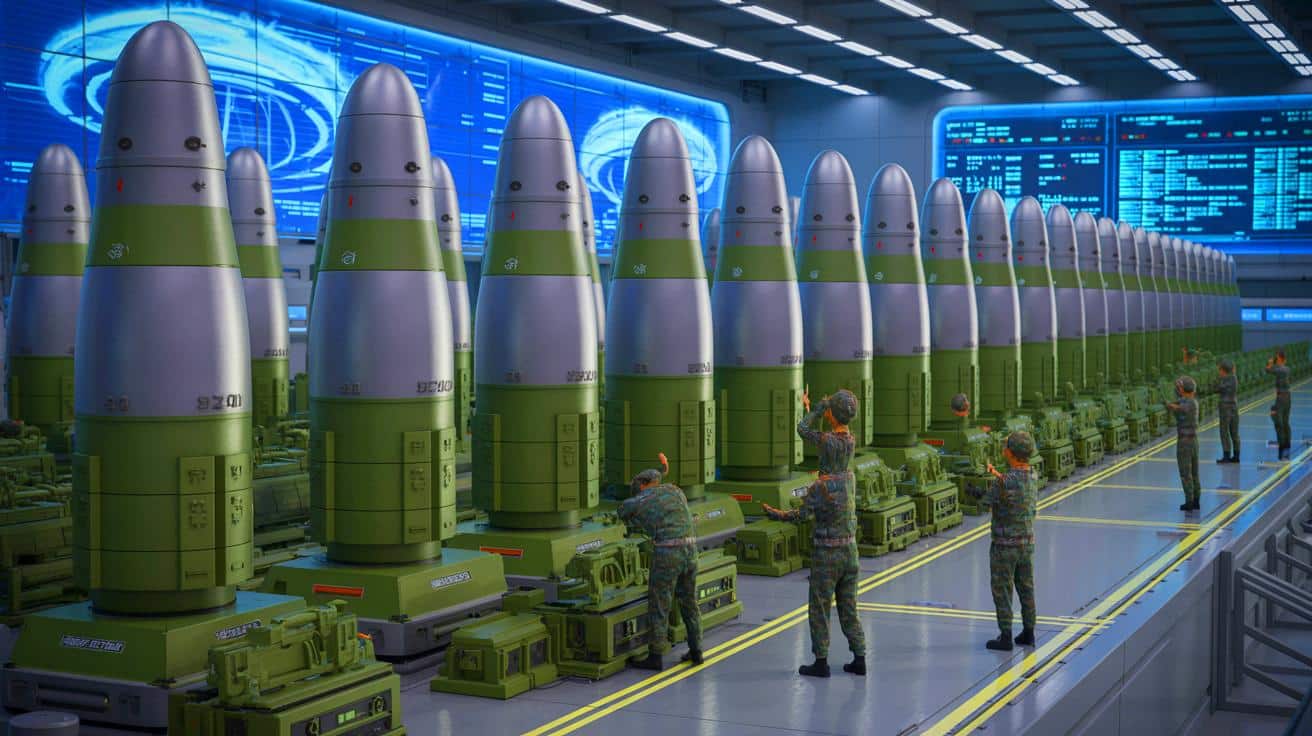
In recent years, China’s nuclear arsenal has become a focal point of international discourse. Since 2020, the nation is believed to have tripled its stockpile, amassing approximately 600 warheads. This development marks a significant shift in the strategic balance, drawing global attention. As China continues its military modernization, questions arise about the ultimate size of its nuclear arsenal. Observers are left to speculate on the potential endpoints of this buildup. By reflecting on China’s historical nuclear strategy and examining future possibilities, a clearer understanding of Beijing’s objectives may emerge. The implications for global security and the strategic responses of other nations remain a subject of intense debate.
The Historical Context of China’s Nuclear Strategy
China’s nuclear journey began in October 1964 with its first successful test. For decades, Beijing adhered to a strategy of minimal nuclear deterrence, maintaining a modest nuclear arsenal. This approach enabled China to focus on economic growth and conventional military development. The People’s Liberation Army benefited from resources that might otherwise have been allocated to nuclear proliferation. This restraint stood in stark contrast to the arms race dynamics between the United States and Russia during the Cold War.
However, recent years have seen a departure from this historical strategy. Under General Secretary Xi Jinping, China has rapidly expanded its nuclear capabilities. This shift raises questions about Beijing’s current objectives and the potential consequences for international security. The rapid increase in warhead production suggests a new phase in China’s military strategy. Nonetheless, the ultimate goal of this expansion remains unclear.
Potential Endpoints for China’s Nuclear Buildup
China’s nuclear ambitions could culminate in several ways. One possibility is that Beijing might halt expansion short of the 1,550 deployed strategic weapons that the United States and Russia maintain under the New START treaty. Achieving around 1,000 warheads could establish a regional nuclear stalemate with the U.S. This would significantly alter the strategic calculus, particularly concerning Taiwan and other regional flashpoints. However, achieving this would require a dramatic policy shift from the current trajectory.
Another potential endpoint is achieving parity with the U.S. and Russia by matching their deployed warheads. The Department of Defense projected that China could reach 1,500 warheads by 2035. This aligns with Xi’s vision for military modernization. Matching the nuclear capabilities of major powers would represent a significant milestone for China’s strategic ambitions. However, achieving this level of parity involves substantial challenges and commitments.
The Implications of Surpassing Major Nuclear Powers
Beyond parity, China could aim for nuclear supremacy, surpassing the arsenals of the United States and Russia. This scenario would involve a colossal increase in production. Historically, the U.S. produced warheads on a massive scale during the Cold War. If China were to follow a similar path, it would require an extraordinary effort. However, Beijing’s manufacturing sector has proven capable of large-scale production, as evidenced by its advancements in missile and shipbuilding.
Despite the potential for such expansion, concerns about the financial and geopolitical repercussions remain. High military expenditures contributed to the Soviet Union’s collapse, serving as a cautionary tale. China’s robust economy provides more leeway for military spending, but economic constraints still exist. The balance between military expansion and economic sustainability will be crucial in determining China’s approach.
International Reactions and Diplomatic Challenges
The international community closely monitors China’s nuclear developments. The responses of major powers, particularly the United States and Russia, could influence Beijing’s decisions. If other nations maintain or expand their arsenals, China might accelerate its own program to keep pace. Conversely, consistent adherence to arms control agreements by other powers could temper Beijing’s ambitions.
Diplomatically, Beijing maintains ambiguity about its nuclear intentions. While China has increased its nuclear signaling, official communication about its goals remains limited. This lack of transparency complicates international diplomacy and arms control negotiations. As the global security landscape evolves, China’s nuclear trajectory will necessitate careful consideration by policymakers worldwide.
As China continues its nuclear expansion, the world watches with anticipation and concern. The potential endpoints of this buildup hold significant implications for global security. Will Beijing seek parity, supremacy, or a strategic balance? The answers to these questions will shape international relations for years to come. How should global powers navigate the complexities of a rapidly changing nuclear landscape?
Continue reading