


Klein Vision’s AirCar “lifted over highway lights” as certification milestone clears path for 2026 deliveries and global transport revolution
 By
Adam Kovács
By
Adam Kovács
| IN A NUTSHELL |
|
In a world where technology continues to push the boundaries of transportation, Klein Vision’s AirCar stands out as a remarkable innovation. This two-seat flying car, over three decades in the making, is on the verge of transforming personal travel. With more than 500 test flights completed, the AirCar is expected to receive certification by the end of the year, with customer deliveries beginning in 2026. As the race for flying cars intensifies, Klein Vision’s AirCar is poised to make a significant impact, offering a glimpse into the future of dual-mode vehicles that blend the speed of aviation with the convenience of driving.
The Vision Behind the AirCar
Klein Vision’s AirCar is not just another flying car concept; it is a testament to the vision and perseverance of its creators. Founded in Slovakia, the company has dedicated over thirty years to developing a vehicle that seamlessly transitions between road and air travel. The AirCar’s design is a culmination of years of innovation, with its 4th-generation prototype already making headlines for its sleek aesthetics and performance.
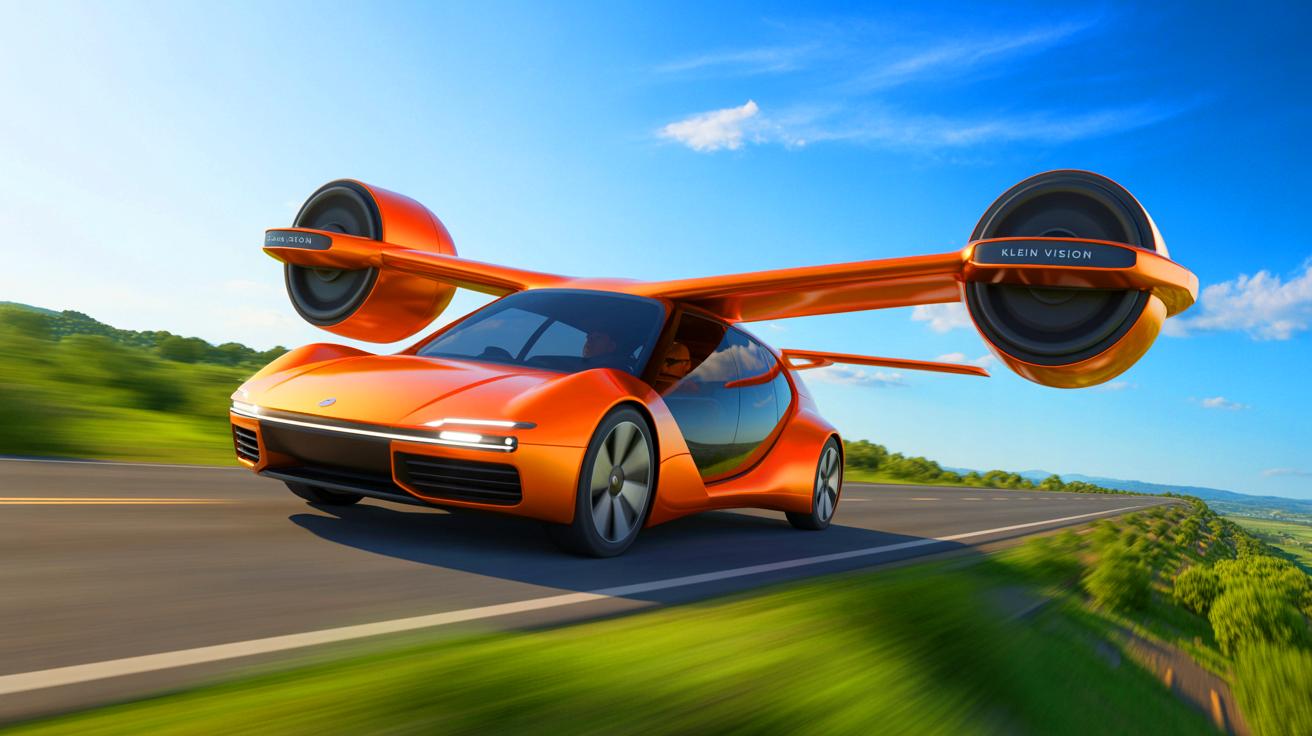
Co-founder Anton Zajac shares that the AirCar is designed to behave like a sports car on the road and an aircraft in the sky. This dual-mode vehicle features a monocoque frame, making it lighter and stronger than previous models. The AirCar can cruise at 155 miles per hour in the air and reach speeds of up to 124 miles per hour on the road. With a ceiling of 10,000 feet, it offers a unique blend of speed and versatility, making it suitable for both long-distance commutes and short island hops.
Technical Specifications and Performance
The AirCar is powered by three engine options sourced from South Africa’s Adept Airmotive. The base model boasts a 280-horsepower engine, while the top-of-the-line variant offers a 340-horsepower twin-turbo engine. These engines provide the power necessary for the AirCar to achieve its impressive performance metrics.
With a wingspan of 27 feet, the AirCar’s transformation from car to aircraft is a spectacle. The transition process takes approximately 80 seconds, as the wings extend and the tail positions itself for optimal flight. The vehicle’s fuel capacity allows for a range of 620 miles in the air and 497 miles on the ground, making it a true interstate touring machine. Its ability to fill up at standard gas stations further enhances its practicality.
The Cost of Ownership
Owning an AirCar is akin to owning a piece of aviation history. Priced between $800,000 and $1.2 million, depending on engine choice and luxury options, the AirCar is positioned in the standard four-seater aircraft range. Despite its high price tag, the AirCar’s appeal lies in its groundbreaking design and potential to revolutionize personal transportation.
Co-founder Stefan Klein’s journey to create the AirCar is as intriguing as the vehicle itself. During the communist era in Czechoslovakia, Klein secretly built planes with his father, dreaming of freedom beyond the Iron Curtain. This passion for aviation has culminated in the AirCar, a vehicle that embodies innovation and resilience. Despite operating on a modest budget compared to competitors, Klein Vision has achieved a remarkable feat with the AirCar.
Future Developments and Innovations
Klein Vision’s ambitions for the AirCar extend beyond its current two-seat configuration. Plans are underway to develop a three-seat version, with the pilot in the center and passengers on either side. This design draws inspiration from McLaren’s Speedtail supercar and promises to enhance the AirCar’s versatility.
An even more ambitious project is the development of an amphibious version of the AirCar. This three-mode vehicle would be capable of landing on water, opening up new possibilities for travel. While the timeline for this development remains uncertain, the prospect of an amphibious flying car adds an exciting dimension to Klein Vision’s vision for the future. As the company continues to innovate, the AirCar’s potential to redefine personal transportation becomes increasingly apparent.
As Klein Vision prepares to bring the AirCar to market, the world watches with anticipation. This groundbreaking vehicle represents a fusion of aviation and automotive technology, offering a glimpse into the future of transportation. With its innovative design and impressive performance, the AirCar is set to challenge conventional notions of travel. As we look ahead, one question remains: How will the AirCar shape the future of mobility and inspire new generations of innovators?
Continue reading