


Egypt Shocks Israel With 3,620 Battle Tanks While Tehran’s Secret Arsenal Threatens Regional Military Balance Forever
 By
Adam Kovács
By
Adam Kovács
| IN A NUTSHELL |
|
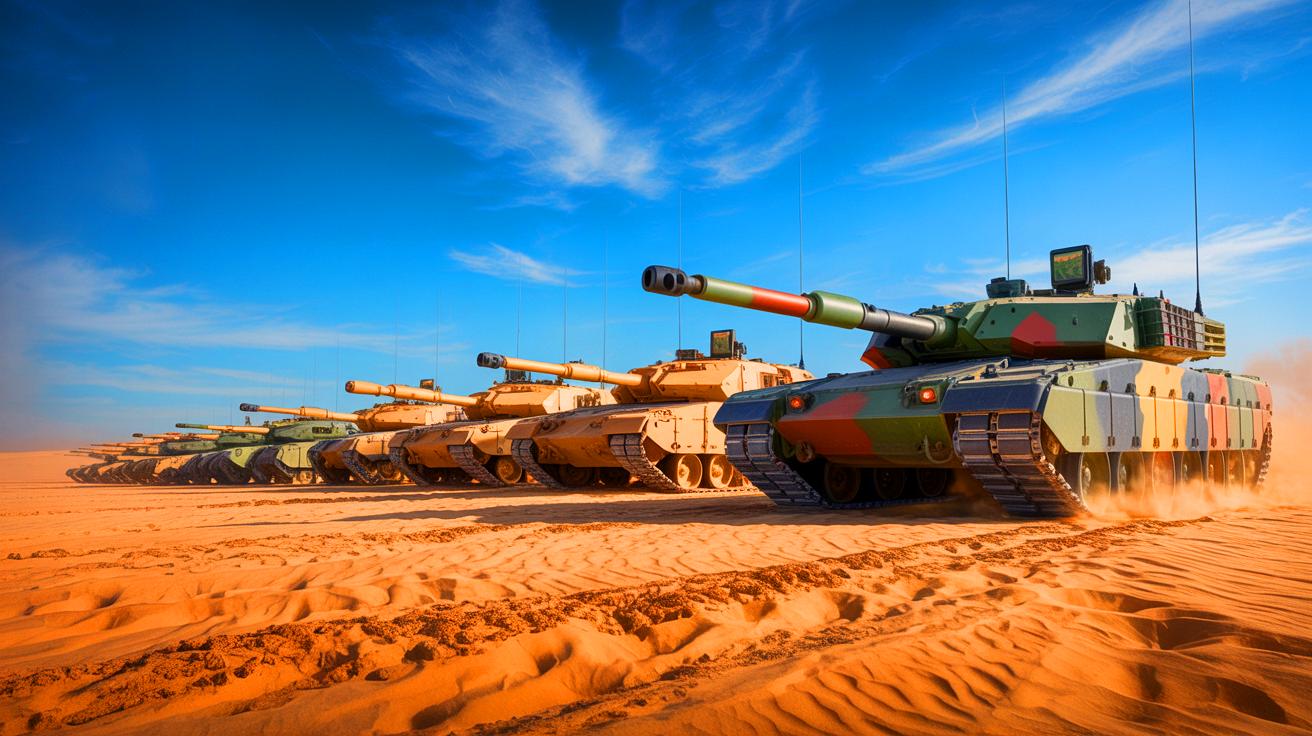
In the intricate web of Middle Eastern geopolitics, military strength plays a pivotal role. Israel, renowned for its formidable defense capabilities, maintains one of the region’s most advanced armored fleets with 1,300 tanks. Despite this impressive arsenal, Israel does not hold the top spot in the Middle East for tank numbers. This ranking sheds light on the broader military dynamics that shape the region. Nations like Egypt, Iran, and Turkey surpass Israel in sheer tank numbers, reflecting a complex balance of power. This analysis delves into the military might of various Middle Eastern nations, exploring the strategic importance of their armored forces.
The Role of Tanks in Middle Eastern Defense Strategies
The Middle East, a region rife with historical conflicts and contemporary tensions, places significant emphasis on military preparedness. Tanks, as symbols of power and strength, are integral to the defense strategies of many Middle Eastern nations. They serve not only as frontline combat vehicles but also as deterrents against potential aggressors. For countries like Israel, tanks are central to their defense doctrine, providing capabilities for swift, decisive action.
However, the number of tanks alone does not determine military superiority. Technological advancements, crew training, and strategic deployment are equally important. Israel’s Merkava tanks, for instance, are lauded for their advanced armor and firepower. Meanwhile, nations such as Egypt and Iran, with larger tank fleets, focus on maintaining a balance between quantity and quality, ensuring they can respond effectively to regional threats.
Egypt: The Middle East’s Tank Leader
Egypt stands at the forefront of tank strength in the Middle East, boasting a fleet of 3,620 tanks. This significant arsenal positions Egypt as a formidable military power in the region. Historically, Egypt has leveraged its military might to assert its influence, especially given its strategic location controlling the Suez Canal. The canal is a critical global shipping lane, making Egypt’s military capabilities crucial for both regional and international security.
Egypt’s military strategy involves not only maintaining a large number of tanks but also integrating them with other military assets. This includes a robust air force and naval capabilities. The country’s defense budget supports continuous modernization, ensuring its forces remain competitive in a rapidly evolving geopolitical landscape.
Iran’s Military Ambitions
Iran, with 1,713 tanks, ranks fourth in the Middle East for armored strength. Despite facing international sanctions that have hampered modernization efforts, Iran has developed a substantial military force. Its strategic focus includes enhancing domestic defense production, enabling it to sustain its military capabilities despite external pressures.
The Iranian military doctrine emphasizes asymmetric warfare, utilizing its tanks in conjunction with a wide array of missile systems. Iran’s recent engagements, particularly its tensions with Israel, highlight its military resolve and strategic adaptability. By focusing on indigenous production and innovative tactics, Iran continues to assert its influence across the Middle East.
The Strategic Importance of Turkey
Turkey, a member of NATO, maintains a significant armored force with 2,238 tanks. This strategic positioning between Europe and Asia enhances its geopolitical importance. Turkey’s military history, rooted in the Ottoman Empire, influences its current defense policies. The country prioritizes self-reliance, investing heavily in domestic defense industries to reduce dependence on foreign arms.
Turkey’s military strength is not limited to tanks. It possesses a comprehensive arsenal, including advanced aircraft and naval forces, enabling it to project power across the region. The nation’s military engagements, from operations in Syria to peacekeeping missions, demonstrate its commitment to maintaining regional stability and defending its national interests.
What Lies Ahead for Middle Eastern Militaries?
The Middle East remains a region of strategic importance, with its countries continuously evolving their military capabilities to address emerging threats. The balance of power is shaped by a combination of historical legacies, economic resources, and geopolitical ambitions. As nations like Israel, Egypt, and Iran adapt to new challenges, the role of armored forces will likely remain central to their defense strategies.
Looking ahead, the interplay of military strength, political alliances, and technological advancements will define the region’s future security landscape. How will Middle Eastern nations navigate these complexities to achieve lasting peace and stability?
Continue reading