


“They’re Building Nuclear Weapons”: Satellite Images Reveal Secret Construction At Israel’s Dimona Nuclear Facility Sparking Global Alarm
 By
Adam Kovács
By
Adam Kovács
| IN A NUTSHELL |
|
New satellite images have unveiled significant construction activities at the Shimon Peres Negev Nuclear Research Center near Dimona, Israel. This facility has long been associated with Israel’s closely guarded nuclear program, and the latest developments are drawing renewed international attention. Experts suggest that the construction may involve a new heavy water reactor or a site for assembling nuclear weapons. Given the secrecy surrounding Israel’s nuclear capabilities, precise details remain elusive. This revelation comes amid heightened geopolitical tensions following recent strikes on Iranian nuclear sites by Israel and the United States. As the only nuclear-armed state in the Middle East, Israel’s actions continue to generate global scrutiny and concern.
Expert Assessments From Satellite Images
A team of seven nuclear experts reviewed the newly released satellite images and unanimously linked the construction activities to Israel’s nuclear program. However, opinions diverged on the specific purpose of the project. Three experts indicated that the layout and scale suggest a new heavy water reactor, which could produce materials necessary for nuclear warheads. Meanwhile, four other experts speculated that the site might be intended for assembling nuclear weapons, emphasizing that the construction is still in its early stages.
Jeffrey Lewis from the James Martin Center for Nonproliferation Studies noted,
“It’s probably a reactor, that judgment is circumstantial but that’s the nature of these things. It’s very hard to imagine it is anything else.”
Despite the mounting evidence and expert opinions, both Israel and the White House have declined to comment on these findings, leaving much to speculation.
Construction History and Design Clues
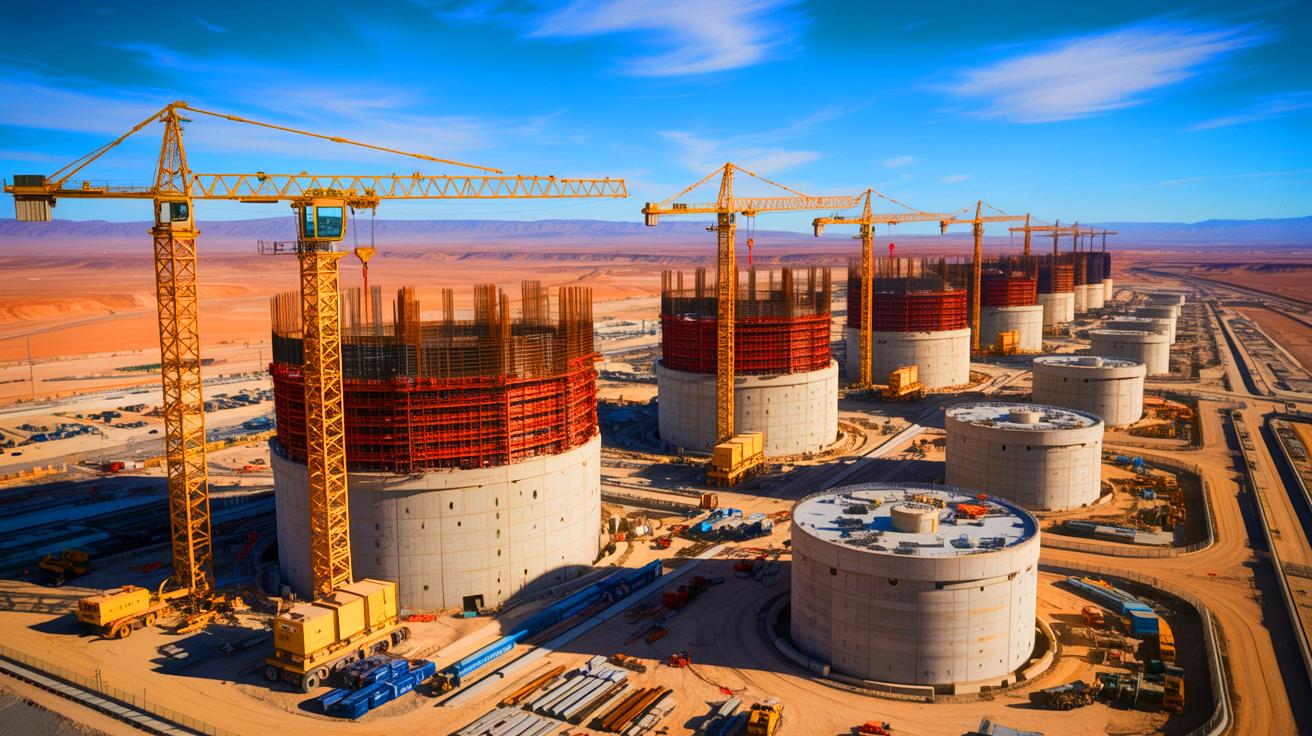
Initial reports of excavation at Dimona date back to 2021, when images captured a substantial hole near the original reactor site. Recent images from July 5, provided by Planet Labs PBC, now reveal thick concrete walls, multiple underground levels, and active construction cranes. Notably, the absence of a containment dome, which is typical for heavy water reactors, has sparked further debate among analysts. Some experts suggest that Israel might be pursuing a novel dome-less reactor design.
The current reactor at Dimona has been operational since the 1960s, far exceeding the typical lifespan for reactors from that era. This raises the possibility that Israel is constructing a replacement to ensure the continuity of its nuclear capabilities.
“It’s tall, which you would expect, because the reactor core is going to be pretty tall,”
explained Lewis, emphasizing the structure’s alignment with reactor characteristics.
Edwin Lyman from the Union of Concerned Scientists pointed out, “Israel doesn’t allow any international inspections or verification of what it’s doing, which forces the public to speculate.”
Nuclear Ambiguity and Global Concerns
Israel’s nuclear policy is characterized by strategic ambiguity, as the country neither confirms nor denies possessing atomic weapons. However, leaks from the 1980s suggested that Israel had already amassed a significant arsenal. Daryl G. Kimball of the Arms Control Association highlighted the dual possibilities of the current construction:
“If it’s a heavy water reactor, they’re seeking to maintain the capability to produce spent fuel that they then can process to separate plutonium for more nuclear weapons.”
Alternatively, the site could support existing capabilities or facilitate new warhead production.
Plutonium and tritium, both byproducts of heavy water reactors, are crucial for nuclear armament. With tritium’s natural decay over time, ongoing production is necessary to maintain Israel’s arsenal. Lyman elaborated, “If they’re building a new production reactor, it doesn’t necessarily mean they’re looking to expand the plutonium they have, but to manufacture tritium.”
Israel remains one of the few nuclear-armed states that has not joined the Nuclear Nonproliferation Treaty, limiting international oversight. The International Atomic Energy Agency (IAEA) confirmed that Israel is not required to disclose information regarding nuclear facilities beyond its Soreq reactor.
Regional Implications and Future Prospects
The construction at Dimona raises critical questions about the balance of power in the Middle East. With Israel’s nuclear capabilities remaining unacknowledged officially, the region’s security dynamics are perpetually uncertain. The potential completion of a new reactor or assembly facility could shift strategic calculations for neighboring states.
The lack of transparency and international oversight only heightens these concerns. Without clear communication from Israel, regional actors are left to interpret these developments independently, potentially leading to heightened tensions or miscalculations. The international community, particularly stakeholders committed to nonproliferation, may seek ways to engage with Israel to address these ambiguities.
As Israel continues its construction efforts, questions remain about the broader implications for peace and security in the Middle East. How will neighboring countries respond to these developments, and what measures can be taken to ensure regional stability?
Continue reading