


“Trump Cuts Off Our Weapons Supply”: Ukraine Reveals New 1,864 Mile Range Flamingo Missile While Warning America’s Restrictions Force Desperate Self Reliance Against Russia
 By
Adam Kovács
By
Adam Kovács
| IN A NUTSHELL |
|
The geopolitical landscape surrounding Ukraine’s military capabilities has undergone considerable changes over the past few years. The United States, under different administrations, has played a critical role in shaping Ukraine’s ability to defend itself against Russian military aggression. Recent developments indicate that while the U.S. continues to impose certain restrictions on the use of specific armaments, Ukraine is advancing its indigenous military capabilities. The dynamics of military support and self-reliance are at the forefront of Ukraine’s strategic efforts to maintain sovereignty and security.
U.S. Restrictions on Missile Use
In recent years, Ukraine’s efforts to defend itself against a better-equipped Russian military have been complicated by restrictions on the use of certain Western-supplied weapons. The U.S. had initially limited Ukraine’s use of the ATACMS, a surface-to-surface missile with a range of about 186 miles. These restrictions were meant to prevent an escalation of the conflict by limiting strikes on Russian soil.
These restrictions were partially lifted by the end of President Joe Biden’s tenure in November 2024. However, by then, the strategic landscape had shifted, with Russian forces relocating key infrastructure beyond the missiles’ reach. The delayed lifting of restrictions meant the ATACMS could not deliver a decisive blow to Russian military logistics and air capabilities.
Despite the limitations, the ATACMS remains a vital component of Ukraine’s military strategy. It has been used effectively to target ammunition depots and weapons factories in regions near the Ukrainian border. Nevertheless, the limited quantity supplied by the U.S. has constrained its overall impact on the battlefield.
Challenges of Limited Missile Supplies
Although ATACMS missiles are a crucial asset for Ukraine, their limited supply has been a significant constraint. Since 2023, Ukraine has received approximately 500 of these missiles from the United States. By the time U.S. restrictions were eased, Ukraine had only about 50 missiles left, which significantly limited their military utility.
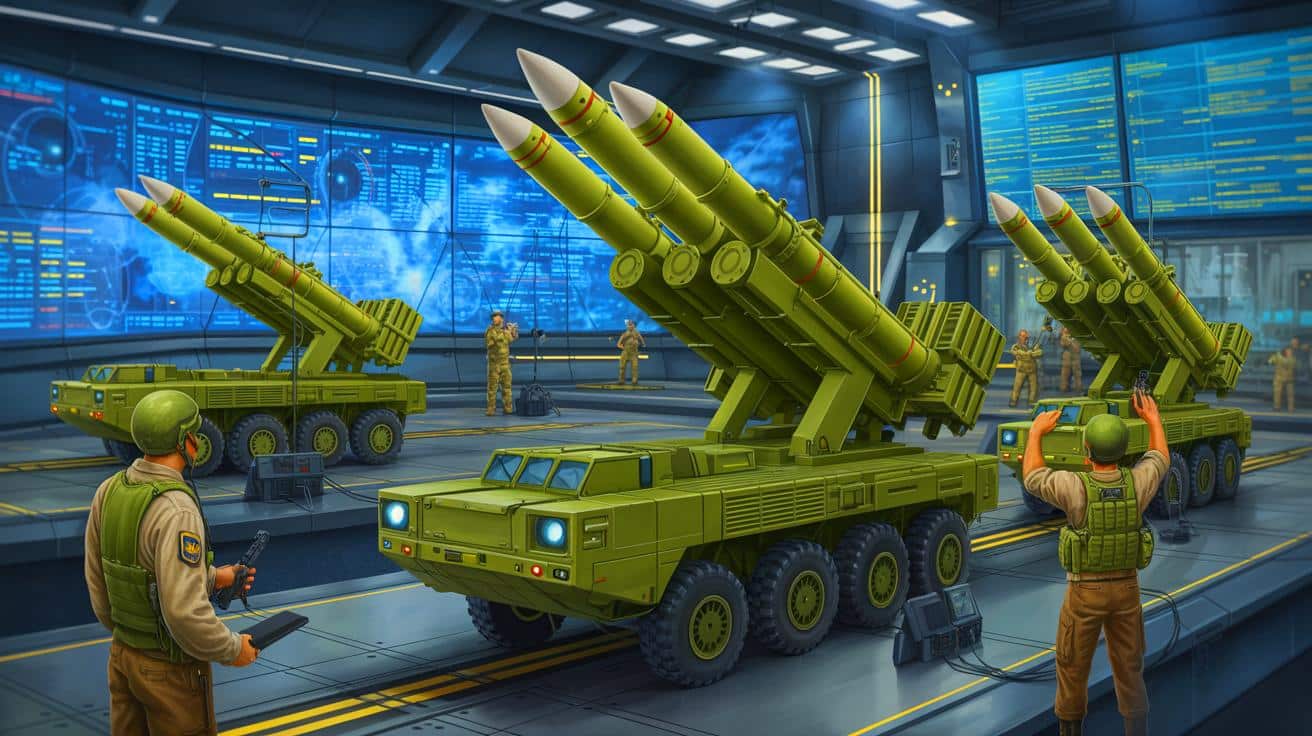
The Trump administration’s more recent restrictions have had a minor impact given the dwindling stocks of ATACMS. Instead, Ukraine’s focus has shifted towards enhancing its indigenous military capabilities. In August, the Ukrainian government unveiled the Flamingo, a cruise missile boasting a range of approximately 1,864 miles. This development marks a significant shift in Ukraine’s ability to project power independently.
Ukraine’s use of drones has also been a key factor in disrupting Russian logistics. Drones like the Liutyi have targeted Russian supply lines, leading to fuel shortages due to strikes on depots and refineries located hundreds of miles from the front lines.
Revitalizing Ukraine’s Armament Program
Ukraine has been striving to reduce its reliance on Western military support since the war’s inception. While Western arms remain crucial in certain areas, such as air defense, Ukraine is increasingly focusing on domestic production. This shift is partly driven by dwindling Western armament stocks and advancements in Russian missile technology.
According to Andriy Hrytseniuk, a leader in Ukraine’s defense industry platform, numerous companies are now producing missiles domestically, including those for air defense. This diversification is vital as Russia continues to employ hundreds of missiles and drones in an attempt to overwhelm Ukraine’s interception capabilities.
President Volodymyr Zelensky has called for the production of 1,000 interceptor drones daily to counter the growing threat from Russian drones like the Shahed. Despite challenges posed by the return of Donald Trump to the U.S. presidency, Ukraine is committed to sustaining its defense efforts, even if it means going it alone.
The Path Forward for Ukraine
As Ukraine navigates the complexities of international military support and domestic production, its ability to adapt and innovate remains crucial. The nation’s strategic focus on enhancing its indigenous weapons capabilities reflects a pragmatic response to shifting geopolitical realities.
With the introduction of long-range missiles like the Flamingo and the continued use of effective drones, Ukraine is fortifying its position against Russian aggression. The question remains whether these advancements will be sufficient to deter ongoing threats and achieve a more secure future.
Ukraine’s resolve to produce advanced weaponry independently signals a long-term commitment to self-reliance. However, the success of these efforts will depend on various factors, including international support and domestic innovation. As the conflict persists, what strategies will Ukraine adopt to ensure its long-term security and stability?
Continue reading