



“Pentagon’s Secret X-Planes Flew Since 2019”: F-47 Fighter Destroys Everything China Built While Boeing Rushes Production For War
 By
Adam Kovács
By
Adam Kovács
| IN A NUTSHELL |
|
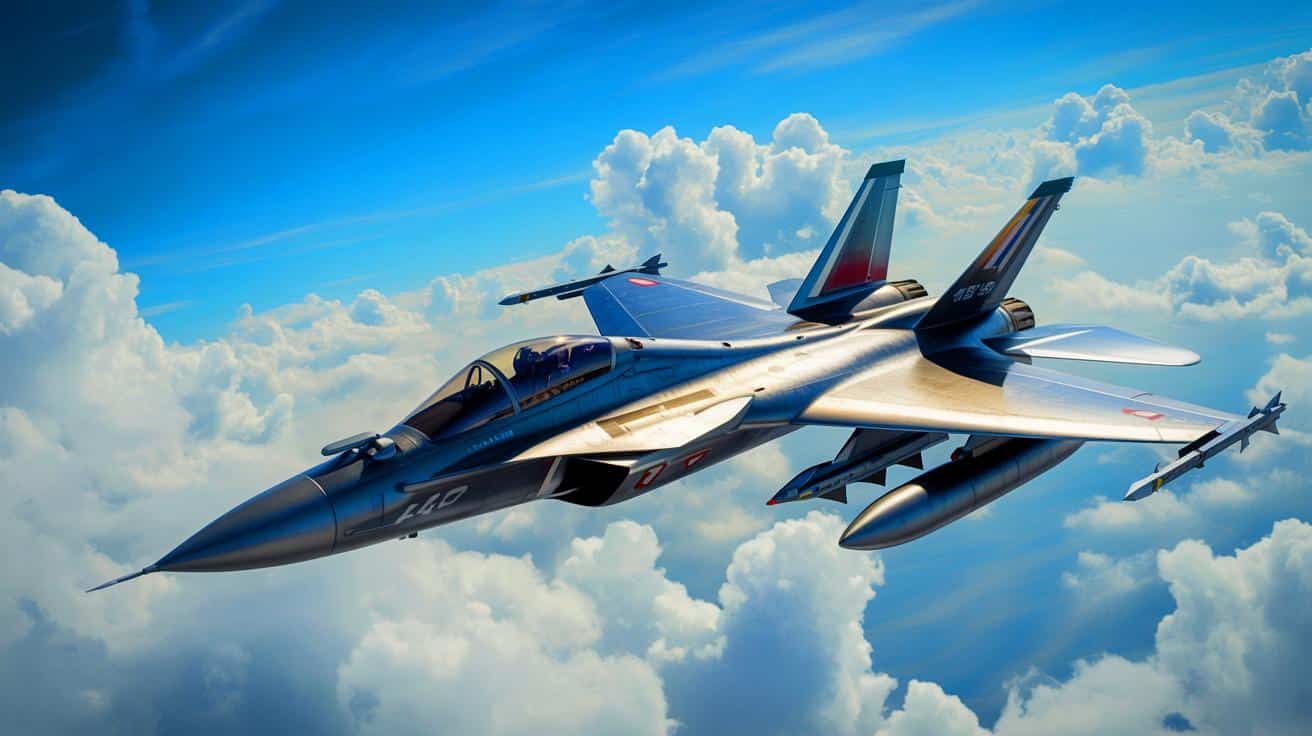
The landscape of military aviation is on the cusp of a significant transformation as the United States forges ahead with the production of its F-47 sixth-generation fighter jet. This announcement follows closely on the heels of China’s recent display of advanced military technology during its Victory Day parade. The unveiling of these new fighter jets by both nations underscores a burgeoning technological arms race, with each country striving for aerial superiority. The F-47, part of the Next Generation Air Dominance (NGAD) program, promises to redefine air combat capabilities. As tensions simmer between the U.S. and China, the implications of these advancements reach far beyond mere technological marvels.
The Genesis of the F-47 Fighter Program
The F-47 fighter jet represents a bold leap forward in military technology, a product of the United States Air Force’s ambitious vision for air dominance. The program was initially set in motion under President Donald Trump’s administration as a replacement for the aging F-22 fleet. Boeing, a stalwart in aerospace manufacturing, was tasked with the design and production of this cutting-edge aircraft. The fighter is a pivotal component of the Air Force’s NGAD initiative, aimed at maintaining U.S. superiority in the skies.
According to Air Force Chief of Staff General David Allvin, the development of the F-47 has been shrouded in secrecy. Experimental X-planes have been undergoing rigorous testing since 2019, accumulating hundreds of test hours and thousands of man-years in laboratory research. This extensive groundwork has laid the foundation for what promises to be a transformative addition to the U.S. military’s arsenal. The F-47 is not merely an upgrade; it is a reimagining of what a fighter jet can achieve in modern warfare.
A Race Against Time
General Allvin emphasized the urgency of the F-47 program during his keynote at the 2025 Air, Space, and Cyber Conference. “We have to go fast,” he declared, stressing the need to keep pace with evolving global threats. The timeline is ambitious: the first F-47 is slated for flight in 2028, with production already underway. This rapid development cycle reflects the high stakes involved in maintaining technological parity with adversaries like China.
The urgency is further fueled by China’s recent military advancements. During its Victory Day parade, China showcased an array of new military hardware, including advanced fighter jets that signal its own aspirations for air dominance. The U.S. response, embodied in the F-47, is a clear message: the race for aerial superiority is very much alive, and neither nation is willing to cede ground.
“Russia Fires 619 Drones at Ukraine”: Massive Attack Terrifies NATO While Air Defenses Overwhelmed
Technological Marvel or Strategic Necessity?
The F-47 is more than just a technological marvel; it is a strategic necessity in an increasingly volatile world. Designed to operate seamlessly within the NGAD framework, the F-47 integrates advanced stealth capabilities, unparalleled speed, and cutting-edge weaponry. These features ensure that the U.S. Air Force maintains its edge over potential adversaries, both in terms of defense and deterrence.
However, the development of such advanced technology is not without its challenges. The costs associated with the F-47 program are substantial, raising questions about budget allocations and long-term sustainability. Moreover, the reliance on high-tech solutions in warfare necessitates robust cybersecurity measures to protect sensitive data from cyber threats.
As military technology evolves, so too does the landscape of warfare, where the lines between physical and cyber threats continue to blur.
Implications for Global Security
The introduction of the F-47 fighter jet has profound implications for global security dynamics. As the U.S. and China continue to develop advanced military technologies, the potential for an arms race looms large. This competition could lead to heightened tensions, as each nation seeks to outpace the other in military capabilities.
The international community watches closely as these developments unfold, with allies and adversaries alike gauging the potential impact on global power structures. The emphasis on technological superiority may also encourage other nations to accelerate their own military advancements, potentially destabilizing existing geopolitical balances. The question remains: how will these advancements in military technology affect diplomatic relations and efforts toward peace?
The unveiling of the F-47 fighter jet signifies a pivotal moment in military aviation, reflecting the United States’ commitment to maintaining air superiority in a rapidly changing world. As production ramps up and the first flight draws nearer, the geopolitical implications are significant. The ongoing technological competition with China highlights the complex interplay of power, innovation, and strategy on the global stage. As nations continue to vie for supremacy in the skies, what steps can be taken to ensure these advancements contribute to global stability rather than escalating tensions?