


“This Will Bankrupt Every Electric Company”: Engineer Discovers Fusion Plant That Powers Entire Cities Using Just One Teaspoon Of Fuel
 By
Adam Kovács
By
Adam Kovács
| IN A NUTSHELL |
|
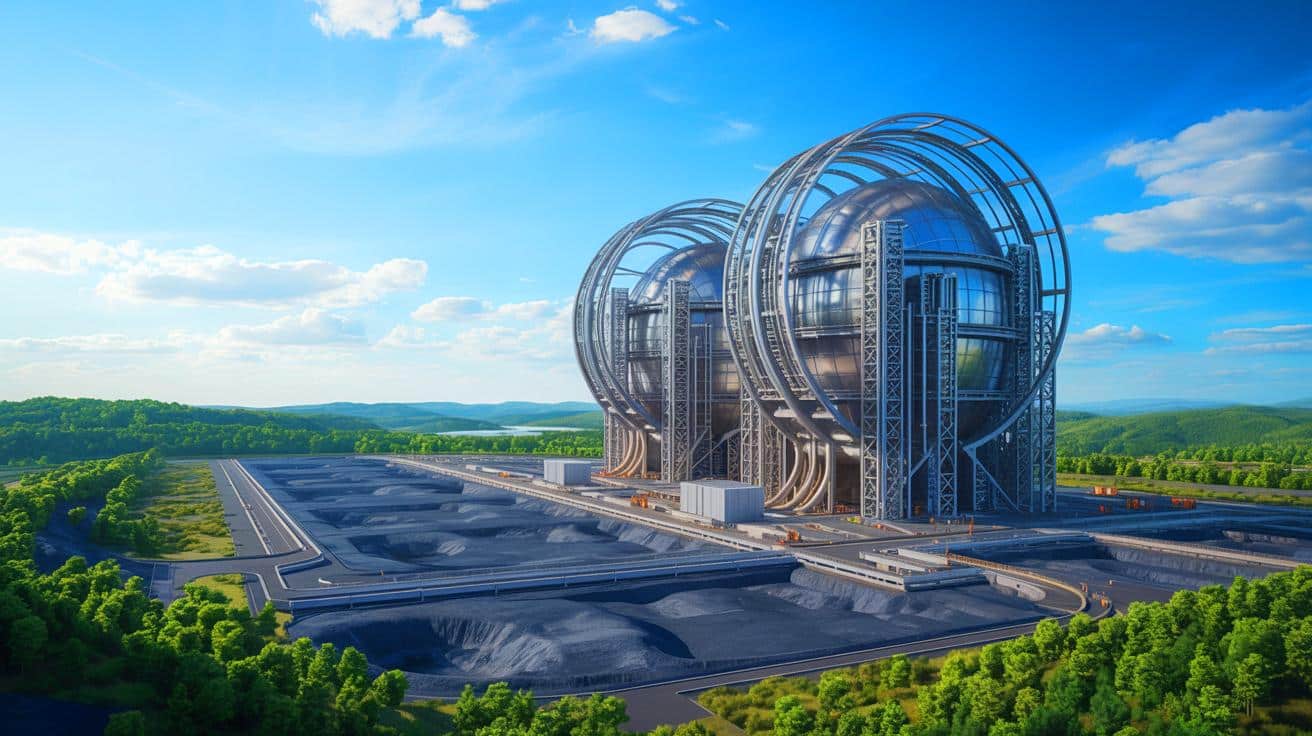
The Tennessee Valley Authority (TVA) has taken a significant step toward revolutionizing energy production in the United States by partnering with Type One Energy. This collaboration focuses on a groundbreaking nuclear fusion project at the decommissioned Bull Run Fossil Plant near Knoxville, Tennessee. The proposed Infinity Two power plant aims to produce 350 megawatts-electric (MWe) using stellarator fusion technology, a promising method that has shown potential for stable and efficient energy generation. By repurposing the Bull Run site, this initiative not only advances clean energy goals but also illustrates a strategic shift in utilizing existing infrastructure to support innovative technologies.
Understanding Stellarator Fusion Technology
Stellarator fusion technology represents a cutting-edge approach to nuclear fusion, distinct from the more commonly discussed tokamak design. While tokamaks use a toroidal, or doughnut-shaped, chamber to confine plasma, stellarators employ a complex, twisted magnetic field. This non-symmetrical configuration addresses some of the confinement challenges faced by tokamaks, which result from variations in magnetic coil density around the toroidal ring. The stellarator’s ability to demonstrate stable, steady-state operation with high efficiency makes it a promising candidate for reliable energy production.
The Tennessee Valley Authority highlighted the significance of this technology, emphasizing its potential to provide on-demand electricity at a competitive price. Type One Energy is leveraging existing materials and fundamental fusion technologies to accelerate the deployment of Infinity Two. This focus on near-term implementation underscores the urgency of integrating sustainable energy sources into the national grid, enhancing energy security, and reducing carbon emissions.
The Strategic Choice of Bull Run Site
The selection of the Bull Run Fossil Plant site is a strategic decision that capitalizes on existing infrastructure. As a former fossil fuel plant, Bull Run offers critical components such as high-capacity grid connections and access to cooling water from the Clinch River. These attributes make it an ideal location for transitioning to a new energy source like fusion. TVA President and CEO Don Moul expressed enthusiasm about the potential of establishing the first U.S. commercial stellarator fusion power plant in the Tennessee Valley.
Repurposing decommissioned sites is becoming an increasingly common practice in the energy sector. It provides a sustainable pathway for integrating innovative technologies while maximizing the use of existing resources. For TVA, exploring fusion energy aligns with a broader strategy to diversify energy sources. By incorporating non-emitting power alongside intermittent renewables like solar and wind, TVA aims to create a reliable and resilient energy system that meets future demands.
Expanding the Partnership: A Step Forward
Earlier this year, TVA and Type One Energy solidified their collaboration with a cooperative agreement to develop initial plans jointly. This partnership has since evolved, culminating in the first set of commercial contracts under the "Project Infinity" initiative. As part of these contracts, TVA’s Power Service Shops in Muscle Shoals, Alabama, are contributing to the development of specialized welding and fabrication techniques for a smaller stellarator testbed known as Infinity One.
The knowledge and expertise gained from constructing the Infinity One prototype will be instrumental in building the full-scale Infinity Two plant. This collaborative effort not only focuses on power generation but also considers the future workforce requirements of the fusion industry. The prototype facilities are envisioned as a training center for specialized technicians and operators, ensuring the availability of skilled personnel needed for the commercial deployment of fusion energy.
Looking Ahead: The Future of Fusion Energy
The Letter of Intent (LOI) between TVA and Type One Energy establishes a clear roadmap for developing the Infinity Two project. By positioning Type One Energy as the fusion technology provider, this agreement aligns with their goal of pursuing the lowest-risk approach to commercializing fusion energy. CEO Christofer Mowry emphasized the importance of this partnership in advancing their mission.
This initiative reflects a broader industry trend toward exploring fusion as a viable energy source. While challenges remain, the successful development and commercialization of fusion technology could transform the global energy landscape. It promises a virtually limitless supply of clean energy, free from the constraints of traditional fuel sources. As the world grapples with the impacts of climate change, the pursuit of fusion energy represents a beacon of hope for a sustainable future.
As the Tennessee Valley Authority and Type One Energy move forward with this ambitious project, the potential for fusion energy continues to capture global attention. How will advancements in fusion technology shape the future of energy production and contribute to a more sustainable world?
Continue reading