


“China’s Laser Drones Cut Through Metal”: Military Weapons Terrify Pentagon While Defense Systems Become Obsolete
 By
Adam Kovács
By
Adam Kovács
| IN A NUTSHELL |
|
In recent years, technological innovation has rapidly transformed various sectors, including military operations. A team of Chinese researchers, led by the eminent scientist Li Xiao, has unveiled a pioneering drone system capable of reflecting high-powered laser beams to cut through metal with precision. This breakthrough, previously relegated to the realm of science fiction, is now on the cusp of practical deployment. The drone system’s revolutionary design, which relies on a ground-based laser rather than carrying its own power source, marks a significant shift in the landscape of military technology. However, this advancement also prompts critical ethical and regulatory discussions.
Revolutionary Laser Technology in Drone Systems
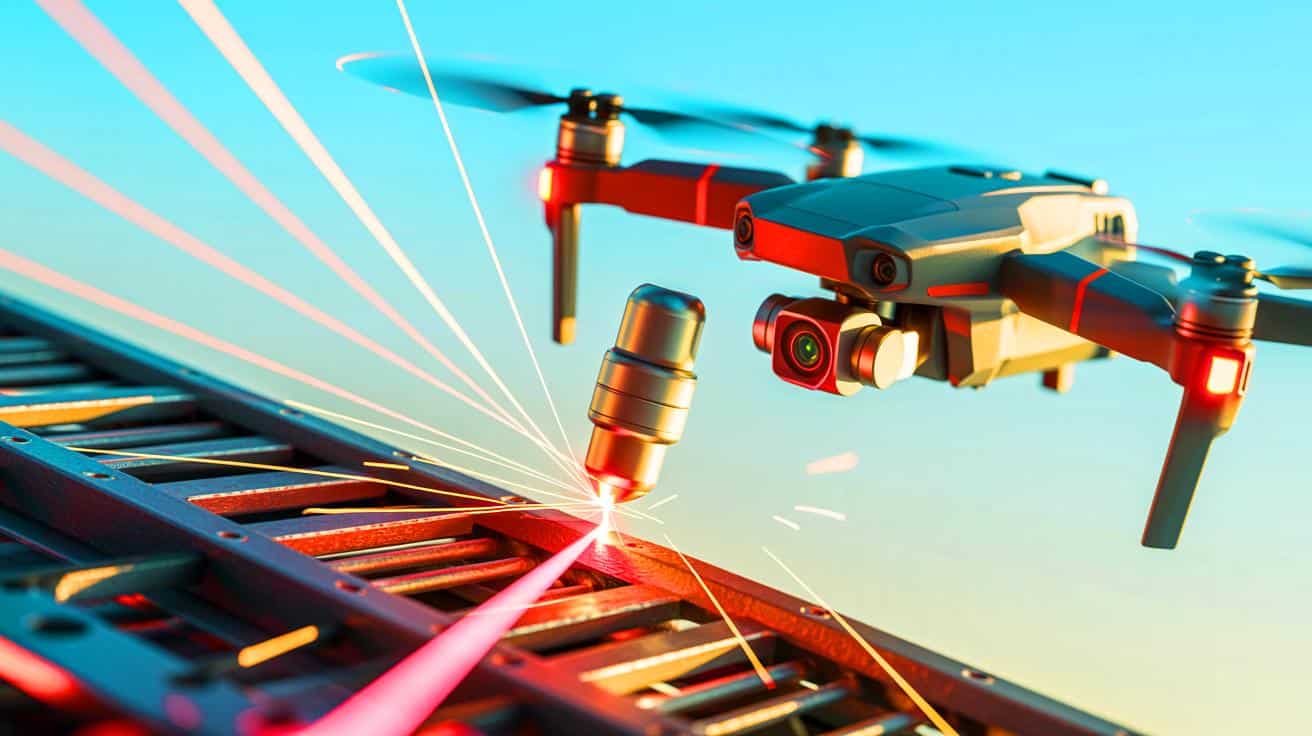
Under the visionary leadership of Li Xiao, a Chinese research team has developed a drone system that reflects powerful laser beams to cut through metal with exceptional precision. This innovation distinguishes itself with a compact and lightweight design, a stark contrast to traditional laser systems that require bulky equipment. Notably, the drone does not carry its own laser source, a departure from conventional practices.
Instead, the laser is projected from a ground station and redirected by the drone, significantly reducing the drone’s weight burden. This method allows the drone to utilize laser power exceeding 30 kilowatts, a level of power previously unattainable without large-scale equipment. The system’s ability to achieve such power without cumbersome gear represents a transformative leap in drone technology.
Innovative Design and Functionality
The laser system employs a unique design featuring two telescope-like tubes. The first tube captures the laser beam from the ground, while the second directs it towards the target with remarkable precision. This process is facilitated by ultra-precise servomechanisms and high-performance reflective mirrors, ensuring stability even under challenging conditions.
Researchers overcame significant challenges, such as vibrations caused by the drone's flight, which threatened to disperse the laser beam and compromise accuracy. To address this, the team developed advanced solutions for vibration isolation and optical stabilization. These innovations ensure the laser maintains a stable trajectory, allowing the drone to perform with impressive accuracy even in turbulent flying conditions.
Potential Military Applications and Strategic Implications
The military applications of these laser-equipped drones are vast and varied. The research team envisions drones operating in swarms, capable of detecting targets and coordinating laser strikes with ground-based support. Their ability to navigate obstacles and accurately hit vulnerable points makes them formidable tools in modern warfare.
These advancements are rooted in recent progress in laser telecommunications and precise synchronization between mobile devices. China's quantum satellite launch in 2016 laid the groundwork for these unprecedented applications. The integration of such advanced technologies into military strategies could redefine warfare, offering new tactical advantages and altering the balance of global military power.
Ethical Concerns and Regulatory Challenges
The development of laser-armed drones raises substantial ethical and regulatory concerns. While their potential to transform military strategies is undeniable, they also prompt discussions around arms control and regulation. The international community closely monitors these developments, as their implications extend beyond scientific breakthroughs.
The ability to deploy precise laser strikes from drones introduces new dimensions to military ethics and international security discourse. Balancing scientific prowess with regulatory responsibility presents a significant challenge for global leaders. As these technologies continue to evolve, the necessity for robust regulatory frameworks becomes increasingly apparent.
As laser technology integrates further into drone systems, the implications for military strategy and international security are profound. While these advancements promise enhanced precision and operational capabilities, they also necessitate careful consideration of ethical and regulatory frameworks. How will global powers navigate the balance between technological innovation and the imperative for responsible governance in the era of laser-armed drones?
Continue reading