

“MIT’s TX-GAIN Supercomputer Hits 2 Exaflops”: The Most Powerful University AI System in the U.S. Redefines Scientific Research
 By
Adam Kovács
By
Adam Kovács
| IN A NUTSHELL |
|
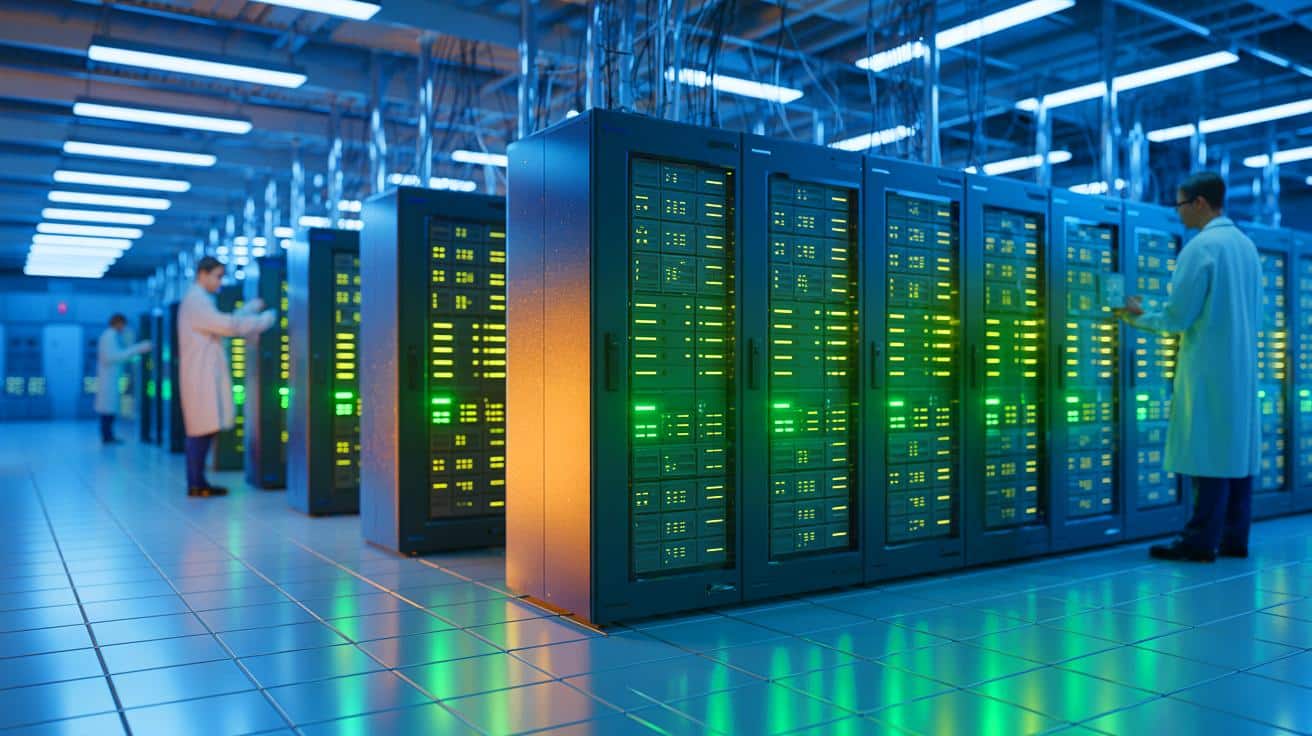
In a groundbreaking development for artificial intelligence and scientific research, the Massachusetts Institute of Technology (MIT) unveiled its latest supercomputer, TX-GAIN. This state-of-the-art AI system is now the most powerful university supercomputer in the United States, designed to revolutionize generative AI and accelerate innovation across various fields. Housed at the MIT Lincoln Laboratory Supercomputing Center (LLSC), TX-GAIN joins a prestigious lineup of advanced computing systems at MIT. With its impressive capabilities, the supercomputer has already secured a position on the TOP500 list of the world’s most powerful supercomputers, promising to push the boundaries of research and development.
Standing Out Amongst Peers
Unlike traditional AI systems primarily focused on categorization tasks, TX-GAIN is designed to generate new outputs, opening a realm of possibilities for its users. This advanced AI supercomputer is not limited to processing images or texts; it plays a crucial role in diverse applications, such as evaluating radar signatures and supplementing missing weather data. Its ability to root out anomalies in network traffic and explore chemical interactions makes it indispensable in developing new medicines and materials.
TX-GAIN’s advanced capabilities allow researchers to tackle complex challenges, providing innovative solutions in various research areas. By producing new outputs, the supercomputer serves as a powerful tool for scientists and engineers, facilitating breakthroughs in their respective fields. As the most powerful AI system in the Northeast, TX-GAIN distinguishes itself by offering unparalleled computational capabilities, enabling researchers to explore uncharted territories.
Exploring TX-GAIN’s Capabilities
The TX-GAIN supercomputer is a powerhouse of computing prowess, equipped with over 600 NVIDIA GPU accelerators specifically designed for AI operations. These GPUs, combined with traditional high-performance computing hardware, enable TX-GAIN to achieve a peak performance of 2 AI exaflops. This extraordinary performance capacity places TX-GAIN at the forefront of AI research in the region.
Researchers at the LLSC, like Rafael Jaimes, have already witnessed the transformative potential of TX-GAIN. “TX-GAIN is allowing us to model not only significantly more protein interactions than ever before, but also much larger proteins with more atoms,” Jaimes noted. This capability is a game-changer for protein characterization efforts, especially in biological defense.
Moreover, TX-GAIN has facilitated enhanced research collaborations, including partnerships with the Department of Air Force-MIT AI Accelerator. These collaborations aim to prototype, scale, and apply AI technologies for the U.S. Air Force and Space Force, highlighting TX-GAIN’s pivotal role in advancing national defense initiatives.
About the LLSC Systems
The Lincoln Laboratory Supercomputing Center (LLSC) is committed to providing cutting-edge research capabilities in a cost-effective and energy-efficient manner. Located in Holyoke, Massachusetts, the LLSC prioritizes energy efficiency while continuously exploring new ways to reduce power usage. This commitment to sustainability ensures that the supercomputing center operates within environmentally responsible parameters.
The LLSC plays an integral role in advancing innovation at Lincoln Laboratory. Thousands of researchers rely on its supercomputing capabilities to process data, train AI models, and run simulations for government-funded projects. From modeling billions of aircraft encounters to improve collision-avoidance systems for the FAA to training autonomous navigation models for the Department of Defense, the LLSC’s supercomputers are instrumental in driving technological advancements.
TX-GAIN’s launch marks a significant milestone in AI supercomputing, offering transformative potential across various industries. As AI continues to evolve, the importance of investing in high-performance computing infrastructure and fostering collaborative research and development cannot be overstated. These efforts are crucial for maintaining a competitive edge in an increasingly data-driven global landscape.
The introduction of TX-GAIN at MIT represents a remarkable leap forward in artificial intelligence and scientific research capabilities. As the most powerful university AI supercomputer in the United States, it holds the promise of unlocking new frontiers in innovation across multiple disciplines. The collaborative efforts between MIT and various research entities highlight the importance of partnerships in advancing technology. As AI technology continues to develop and expand its influence, how will institutions leverage these advancements to address the pressing challenges of our time?
Continue reading