


“They Finally Did It”: This New Poseidon Jet Transforms Germany’s Navy and Sends a Clear Warning Across Europe’s Waters
 By
Adam Kovács
By
Adam Kovács
| IN A NUTSHELL |
|
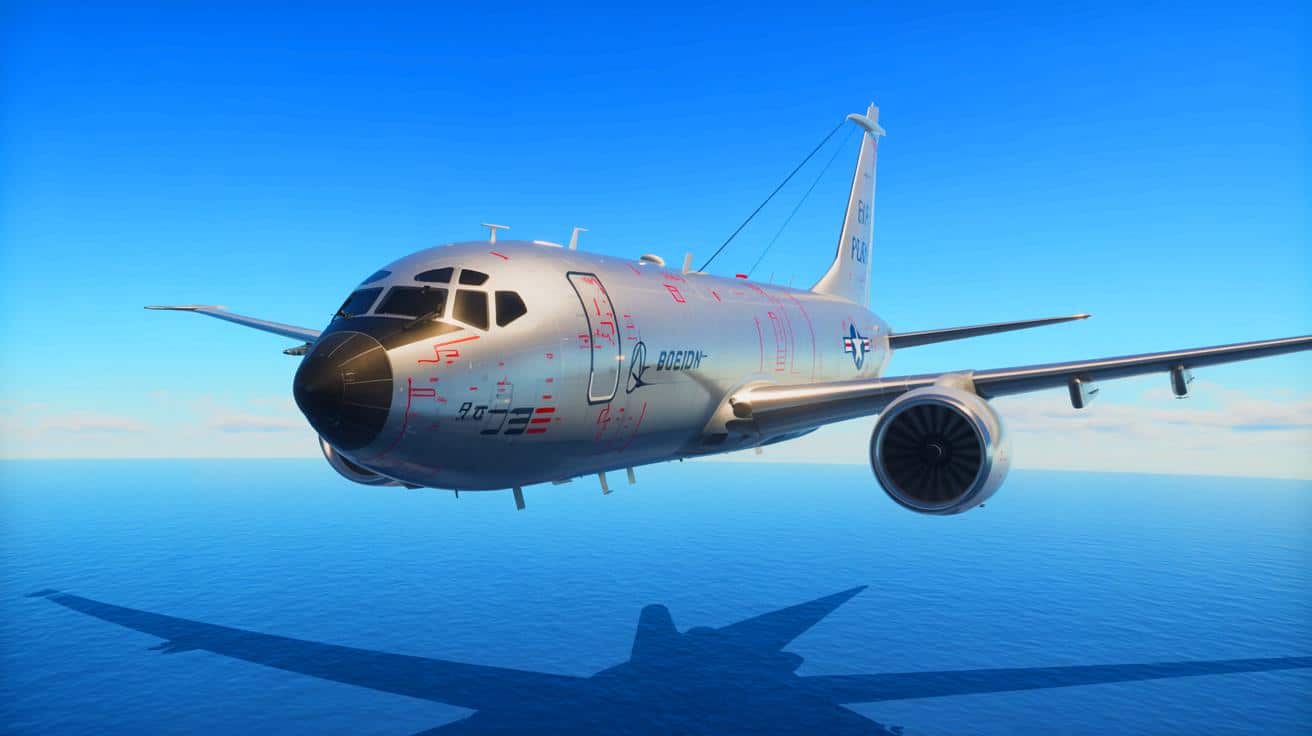
Germany has taken a significant step in bolstering its maritime defense capabilities by acquiring its first Boeing P-8A Poseidon aircraft. This delivery marks the beginning of a new era for the German navy, seeking to enhance its maritime surveillance, particularly in detecting and countering submarine threats. The decision to procure these aircraft was made in 2021 as a replacement for the aging P-3C Orion fleet. The recent geopolitical tensions, especially following Russia’s actions in Ukraine, have further fueled Germany’s commitment to strengthening its military capabilities. This acquisition is part of a broader strategy to ensure national and regional security in increasingly volatile waters.
Strengthening Maritime Surveillance
The introduction of the Boeing P-8A Poseidon into Germany’s naval arsenal is a strategic move aimed at enhancing maritime surveillance. The aircraft is renowned for its advanced sensor technology and extended range, making it ideal for identifying and tracking enemy submarines. Vice Adm. Jan Christian Kaack, chief of staff of the German navy, has emphasized the aircraft’s capabilities in providing a substantial leap in Germany’s maritime defense. The P-8A Poseidon is not just a replacement but a significant upgrade over the older P-3C Orion aircraft.
This acquisition is part of Germany’s broader efforts to modernize its military and respond to new security challenges. As maritime threats become more complex, the need for advanced surveillance technology is critical. The Poseidon aircraft is expected to play a crucial role in ensuring the security of Germany’s maritime domains, particularly in the North and Baltic Seas where Russian naval activities have raised concerns among NATO allies.
Responding to Geopolitical Pressures
The decision to procure additional P-8A aircraft was catalyzed by the geopolitical landscape post-2022, particularly after Russia’s invasion of Ukraine. Amid heightened tensions, Germany recognized the necessity of strengthening its defense capabilities. The activation of a special extra-budgetary defense fund allowed for the purchase of three more Poseidons, bringing the total order to eight.
Furthermore, the German navy is considering acquiring four additional aircraft, which would increase the fleet to twelve. This move underscores Germany’s commitment to ensuring robust maritime security and aligns with the broader NATO strategy to deter potential threats in European waters. The P-8A Poseidon’s deployment reflects a proactive stance in addressing security challenges and enhancing Germany’s role within the alliance.
International Collaboration and Technological Independence
While the P-8A Poseidon is manufactured by the American company Boeing, the maintenance of these aircraft will be handled by German partners ESG and Lufthansa Technik. This arrangement highlights Germany’s focus on maintaining technological independence and military autonomy. Such partnerships ensure that critical support and maintenance capabilities remain within national control, addressing concerns about reliance on foreign technology.
Germany’s approach is reflective of a broader European trend of seeking greater autonomy in defense capabilities. This is particularly relevant in the context of changing U.S. political dynamics, including the return of Donald Trump to the Oval Office. Europe is increasingly focused on enhancing its own defense infrastructure to reduce dependency on external powers.
The Global Context and Future Implications
The P-8A Poseidon’s introduction into Germany’s naval fleet is part of a wider trend among U.S. allies to bolster maritime capabilities. Countries such as South Korea, Norway, Canada, and the United Kingdom have also placed orders for these aircraft, recognizing the need for advanced surveillance tools in maintaining security in their respective regions.
The global fleet of P-8 Poseidons has already logged over 700,000 flight hours, showcasing its reliability and effectiveness. For Germany, the deployment of these aircraft with Marinefliegergeschwader 3, located near the North Sea coast, is a strategic move to enhance regional security. As Europe faces evolving security challenges, the Poseidon’s role in safeguarding maritime interests cannot be overstated.
Germany’s acquisition of the P-8A Poseidon marks a pivotal moment in its defense strategy, reflecting a commitment to enhancing maritime security in response to geopolitical challenges. As the nation looks to the future, how will further developments in military technology shape the balance of power in Europe and beyond?
Continue reading