



“They Swear It’s Real”: The Air Force’s Secretive F-47 Fighter May Be Hiding Its True Shape (and it’s already rewriting air warfare)
 By
Adam Kovács
By
Adam Kovács
| IN A NUTSHELL |
|
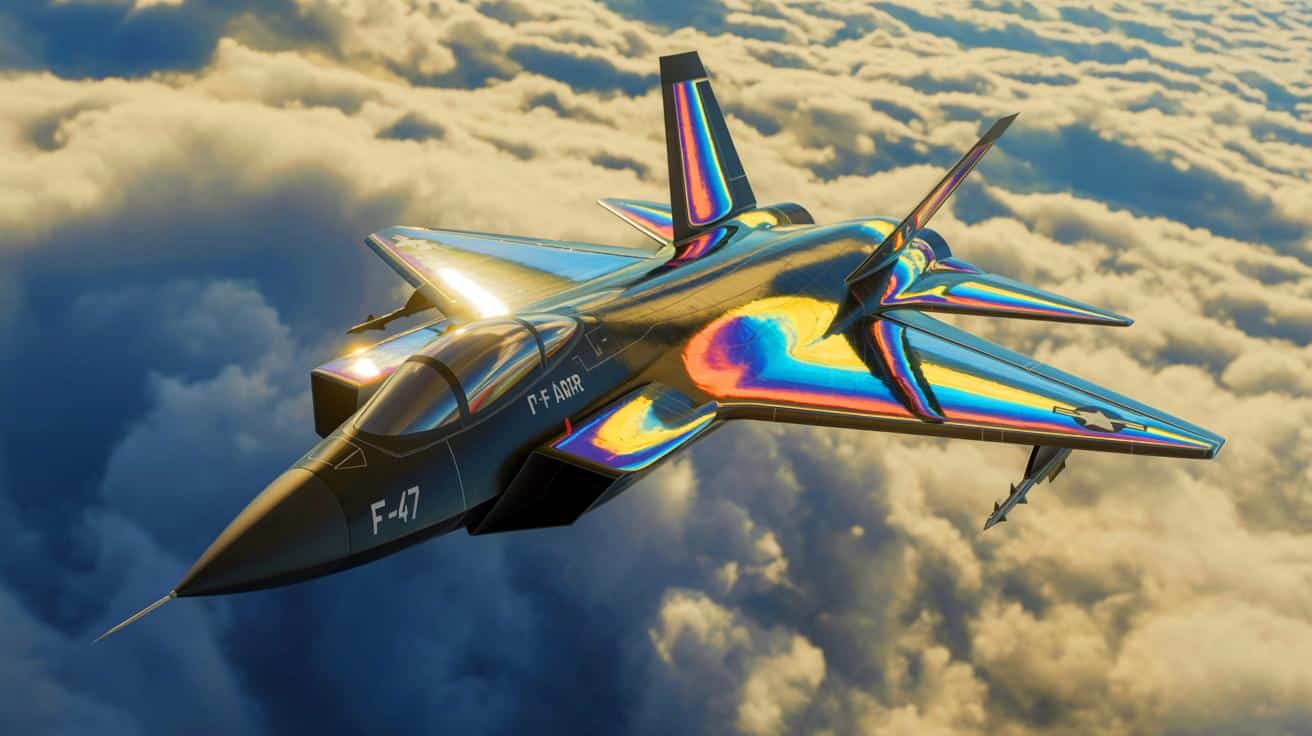
The U.S. Air Force’s recent revelation of its new sixth-generation fighter jet, the F-47, has set the defense community abuzz with speculation and analysis. The announcement, accompanied by cryptic artist renderings, highlights the F-47’s promise of cutting-edge technology and design. Yet, the images released have sparked debates and raised eyebrows, particularly due to unique features like canards and dihedral wings. Analysts are questioning whether these renderings truly reflect the future of aerial combat or if they are strategic misdirections in a game of military deception.
Analyzing the Canards and Dihedral Wings
The depiction of canards and dihedral wings in the F-47 renderings has surprised many aviation experts. Canards, small forward wings, can enhance lift and stabilization but may increase drag and compromise stealth. This inclusion in the F-47 raises questions about its impact on stealth capabilities, a crucial aspect of modern fighter design. Dihedral wings, on the other hand, provide lateral stability at the cost of maneuverability. While these features may seem contradictory for a stealth fighter, they might be part of a broader strategy to achieve a balance between stability and agility.
Experts speculate that the combination of canards and dihedral wings could stabilize a potentially tailless design. Although going tailless benefits stealth and reduces drag, it challenges maneuverability and control. Advances in flight control technology might allow for such a design, potentially reducing the demand for extreme maneuverability in favor of other capabilities. The Air Force’s history of altering initial aircraft imagery suggests these renderings might not represent the final design, leaving room for speculation and strategic ambiguity.
Stealth and Propaganda in Military Design
The Air Force's history of using misleading imagery for its stealth aircraft suggests a calculated strategy in the F-47's presentation. Military analysts argue that the renderings might be propaganda to mislead foreign intelligence, consistent with past practices. The deliberate distortion of the F-47's features in the images could serve to protect critical design secrets while maintaining an element of surprise.
Air Force officials have acknowledged that the renderings do not accurately portray the aircraft, emphasizing the speculative nature of the images. This approach mirrors the secrecy surrounding previous stealth projects, where initial images were often altered or obscured. Such tactics aim to maintain a technological edge while keeping potential adversaries guessing. The true capabilities of the F-47 remain under wraps, with speculation focusing on its potential to incorporate breakthrough technologies and redefine aerial combat dynamics.
Technological Innovations in the F-47
The F-47 promises to integrate groundbreaking technologies, particularly in its propulsion system. The development of adaptive-cycle turbofan engines by Pratt & Whitney and General Electric is a focal point. These engines can adjust air bypass ratios mid-flight, optimizing fuel efficiency for long-range missions and enhancing performance in combat situations. This capability aligns with the F-47's role as a long-range stealth fighter, designed to traverse vast distances and penetrate enemy airspace.
Fuel efficiency is crucial for operations in the Pacific theater, where the F-47 needs to operate from safe distances while maintaining combat effectiveness. Additionally, the engines will generate increased electricity for advanced radar and computing systems, enhancing target detection capabilities. The renderings' lack of visible engine inlets suggests a focus on minimizing radar reflections, further enhancing the aircraft's stealth profile. These innovations position the F-47 as a formidable platform for future aerial warfare.
The Role of Loyal Wingmen in Future Combat
The F-47 is poised to pioneer the integration of jet-powered drones, known as Loyal Wingmen, into aerial combat strategies. These drones, controlled by the F-47, will augment its capabilities by serving as additional missile platforms and diversions in complex combat scenarios. The Air Force is currently evaluating drone designs to complement the F-47, enhancing its combat effectiveness.
Drones offer a strategic advantage, allowing the F-47 to extend its reach and increase its missile capacity without compromising stealth. They can engage enemy targets, provide electronic warfare support, and serve as expendable assets to protect the more valuable fighter. This integration reflects a shift in aerial warfare, where the synergy between manned and unmanned platforms will play a crucial role. As the Air Force continues to develop the F-47, its ability to command Loyal Wingmen will be a defining feature of its operational capabilities.
As the Air Force progresses with the development of the F-47, the true nature of its design and capabilities remains shrouded in mystery. The strategic use of renderings and the promise of advanced technologies suggest a transformative aircraft poised to redefine aerial combat. Yet, questions persist about the final design and its operational implications. How will the F-47's innovations shape the future of air warfare, and what challenges will arise in integrating these technologies into a cohesive combat strategy?
Continue reading