


“They Vanish Beneath the Waves”: These Silent Chinese Drones Are Rewriting Naval Warfare (and no one knows how to stop them)
 By
Adam Kovács
By
Adam Kovács
| IN A NUTSHELL |
|
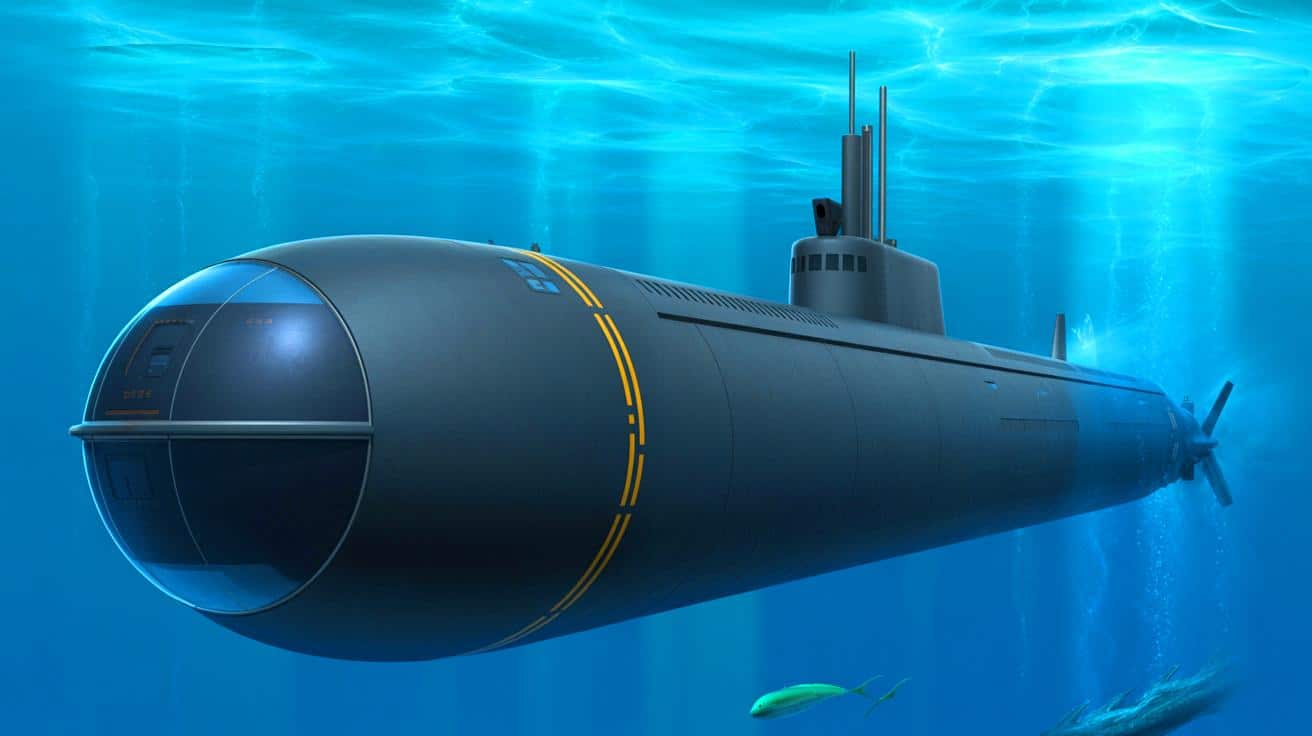
In recent years, China’s military advancements have captured global attention, particularly in the realm of underwater technology. The country’s latest innovations in unmanned submersibles represent a significant shift in naval warfare tactics. Introduced during a grand military parade celebrating the 80th anniversary of victory over Japan, these submersibles are designed to operate with stealth and precision. Their ability to maneuver with zero-radius turning and function below 90 decibels makes them nearly invisible to enemy sonar. These systems can be paired with advanced weaponry, including smart mines and submarine-launched missiles, to form a comprehensive and multilayered strike network. As China continues to expand its maritime capabilities, questions arise about the implications for international security and maritime governance.
Unmanned Submersibles for Blockades and Saturation Attacks
The People’s Liberation Army (PLA) Navy recently showcased its cutting-edge unmanned submersibles, surface vessels, and minelaying systems. These vehicles are capable of executing blockades, autonomously identifying targets, and launching saturation attacks. The systems are designed for coordinated operations, enhancing China’s ability to control strategic maritime routes. Reports suggest these platforms have considerable endurance and could eventually integrate with underwater charging stations, although such infrastructure plans remain undisclosed.
Advanced intelligence features are at the core of these systems, enabling three-dimensional coordination with aerial drones and unmanned surface vessels. This technological prowess allows the vessels to autonomously identify and assess threats, providing China with a strategic advantage in maritime environments. The PLA’s focus on developing these capabilities underscores its commitment to enhancing maritime defense and expanding its influence across regional waters.
Naval Drones Can Reshape Rules of Maritime Conflict
The introduction of swarms of unmanned vessels marks a transformative phase in maritime conflict. These drones could decisively influence future contests for sea control, adding layers of complexity to global maritime security. The AJX002 unmanned minelaying system stands out, capable of severing enemy supply lines through asymmetric tactics. This system, resembling Russia's Poseidon nuclear torpedo, serves as a deep-sea defensive stronghold, though its nuclear capabilities remain unconfirmed.
China's ambitions extend beyond enhancing its defense capabilities. The country aims to establish a formidable blue-water navy by 2035, potentially operating up to six aircraft carriers. These advancements are pivotal in any potential conflict, particularly in the Taiwan Strait, where they could support amphibious operations and counter U.S. intervention. Analysts highlight that China's recent military parade emphasized its focus on defending sovereignty claims and expanding its naval forces.
Implications for Global Maritime Security
China's advancements in unmanned naval technology could alter the landscape of maritime security. The ability to deploy AI-driven submersibles and surface vessels adds a new dimension to military strategy, challenging existing norms and regulations. These systems enable China to project power and enforce territorial claims, particularly in contested regions like the South China Sea. As other nations observe these developments, there is growing concern about a potential arms race in unmanned military technology.
Furthermore, the integration of AI and autonomous systems in naval warfare raises questions about accountability and decision-making in conflict scenarios. The global community must grapple with these challenges, seeking to establish frameworks that govern the use of such technologies. As China continues to modernize its naval capabilities, the international response will be crucial in shaping future maritime security dynamics.
Technological Innovations and Future Prospects
The technological innovations underpinning China's naval advancements are a testament to its commitment to military modernization. The use of AI and autonomous systems in unmanned vessels reflects broader trends in warfare, where technology increasingly dictates strategic outcomes. China's focus on developing a sophisticated navy aligns with its aspirations to assert dominance in regional waters and beyond.
Looking ahead, the global community must consider the implications of unmanned naval technology. As these systems become more prevalent, there is a need for international dialogue to address potential conflicts and establish regulatory frameworks. The future of maritime security will likely hinge on how nations adapt to these technological shifts and collaborate to ensure stability.
As China continues to innovate and expand its naval capabilities, the world watches closely. The advancements in unmanned submersibles and naval drones present both opportunities and challenges. How will the international community respond to these developments, and what measures can be taken to ensure a balanced and secure maritime environment?