



“It Just Bounced Off It”: This Congressional UFO Video Has the Pentagon Scrambling for Answers (and the Truth Is Even Stranger)
 By
Adam Kovács
By
Adam Kovács
| IN A NUTSHELL |
|
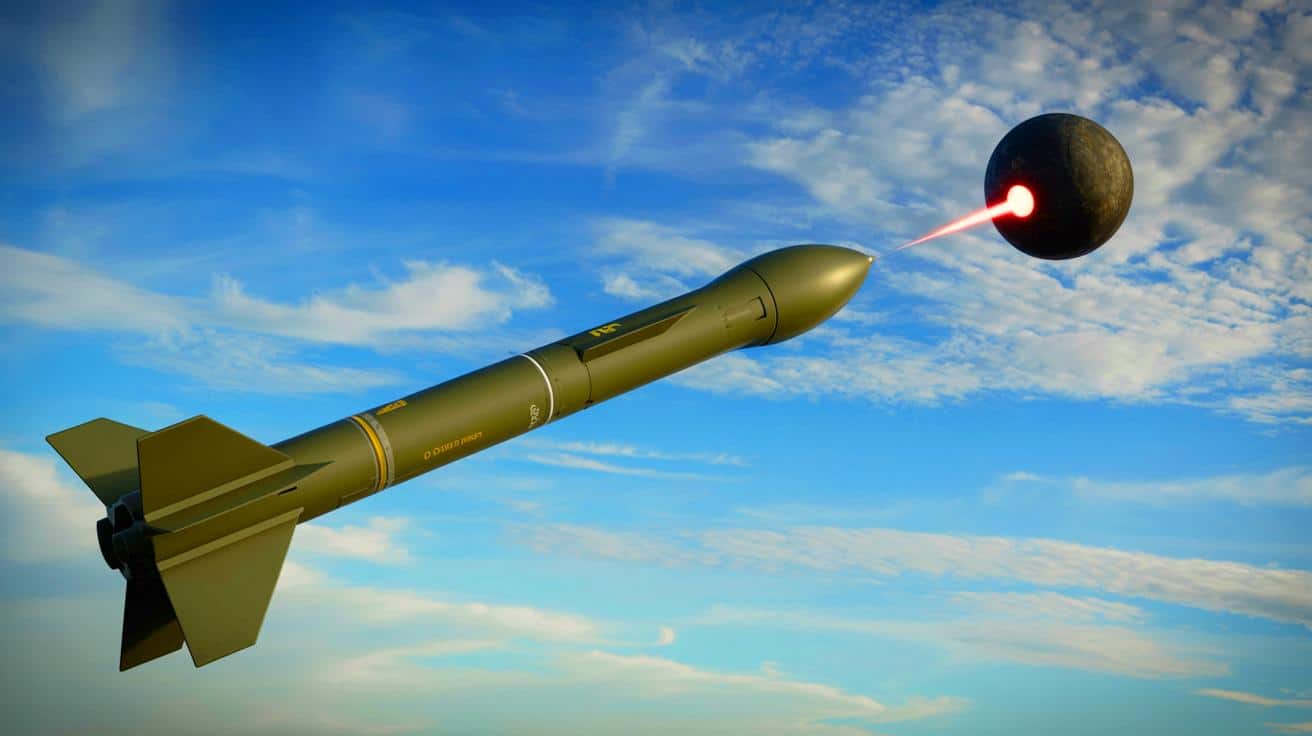
The mysterious interaction between a U.S. military missile and an unidentified aerial object has captured public attention, sparking widespread speculation about its true nature. Recent footage revealed during a Congressional hearing showed what appeared to be a missile striking a mysterious orb mid-air. The video, presented at a House Oversight transparency hearing, has fueled theories about the presence of unidentified anomalous phenomena, or UAPs, traditionally known as UFOs. However, experts suggest that the reality behind the footage might be less extraordinary, with indications pointing towards the object being a high-altitude balloon. This revelation invites a deeper examination of what truly transpired and the implications for military operations and public perception.
An Expert on Missile Physics Weighs In
In the absence of official confirmation from the U.S. Army, experts have stepped in to provide context to the situation. Fred Lamb, a theoretical astrophysicist, has provided insights based on available data, although he clarified that his analysis is speculative due to the lack of firsthand information. Lamb suggests that the object in question was likely a balloon, targeted by a specialized missile variant designed to deploy blades rather than explode. This type of missile interaction, he notes, is not what the public typically envisions, influenced by dramatic portrayals in media. The analysis underscores the complexities of interpreting such events without comprehensive data, emphasizing the gap between public perception and military operations.
Lamb’s observations point to the possibility of the missile striking a high-altitude balloon, leading to the dispersal of its fragments. This hypothesis aligns with the characteristics of a Hellfire missile, commonly used by the U.S. military. The incident raises questions about the procedures and decision-making processes involved in deploying military assets in uncertain scenarios. The ambiguity surrounding the event highlights the challenges of distinguishing between actual threats and benign objects, a task further complicated by technical limitations and environmental factors.
What We See Doesn’t Always Reflect the Facts
The video footage, reportedly captured near Yemen, has been linked to a Hellfire missile operation. The specific variant of the missile and the conditions under which it was deployed remain speculative, with assumptions based on media reports. Lamb’s analysis suggests that the footage may have been captured using a high-magnification thermal imaging camera from a drone, adding layers of complexity to the interpretation. The absence of clear background reference points in the footage creates an optical illusion, contributing to the perception of rapid movement and interaction.
The phenomenon of “parallax motion,” where objects appear to move relative to each other when viewed from different angles, may have played a role in the misleading interpretation of the footage. This optical illusion, coupled with environmental factors such as high-altitude winds, could account for the perceived rapid movement of the object. The broader implications of such misinterpretations underscore the need for careful analysis and communication when dealing with ambiguous aerial phenomena.
What Happens When You Fire on a Balloon?
Determining who authorizes the firing of missiles on potential threats remains shrouded in confidentiality due to operational security considerations. Despite the lack of explicit details, experts like Lamb suggest that multiple factors could justify targeting a balloon, especially in conflict zones. The video depicts fragments dispersing post-impact, consistent with a missile making contact with a lightweight target like a balloon.
The Hellfire missile’s design, including variants that deploy blades, further supports the theory of non-explosive interaction. This aligns with the observed behavior of the missile continuing its trajectory post-impact. The absence of an explosion raises questions about the type of ordnance used and the strategic objectives behind its deployment. The incident serves as a reminder of the complexities involved in military engagements and the importance of understanding the technological and tactical nuances at play.
Implications and Future Considerations
The incident highlights the intricate balance between military operations, technological capabilities, and public perception. It underscores the importance of transparency and informed analysis in addressing unidentified phenomena. While the true nature of the object remains speculative, the discussion surrounding it reflects broader themes of national security, technological advancements, and the influence of media portrayals on public understanding.
This event prompts reflection on how military and civilian entities can collaborate to enhance understanding and address the challenges posed by unidentified aerial phenomena. As we continue to explore the implications of this incident, an open question remains: How can future investigations and technological advancements improve our ability to distinguish between genuine threats and benign objects in increasingly complex airspaces?