


“Air Force Engineers Stunned by Tiny Wing Vanes”: Simple Add-Ons Glued to Planes Deliver Massive Fuel Savings and Unmatched Efficiency
 By
Adam Kovács
By
Adam Kovács
| IN A NUTSHELL |
|
In a world where military efficiency is paramount, even the smallest innovations can lead to massive savings. The venerable Boeing C-17 Globemaster III, a cornerstone of military logistics for the US Air Force and allies, has recently undergone a subtle yet impactful modification. By attaching tiny microvanes to the aircraft’s rear, the Air Force is achieving substantial fuel savings. This innovation, a collaboration between the Air Force Research Laboratory (AFRL) and industry partners, promises to make a significant impact on operational costs and efficiency.
The C-17 Globemaster III: A Backbone of Military Logistics
The C-17 Globemaster III, introduced in 1995, has long been a crucial asset for the US Air Force and several allied forces, including the Royal Air Force and the Royal Australian Air Force. Designed as a replacement for the Lockheed C-141 Starlifter, the C-17 has provided decades of reliable service. Despite its robust performance, there remained room for improvement. A common issue for the C-17 and similar aircraft, like the Lockheed C-130 Hercules, is the drag and turbulence caused by their upswept rear sections when the cargo door is raised. This aerodynamic challenge, while not new, has persisted throughout the aircraft’s service life.
The significance of the C-17 cannot be understated. It is a logistical powerhouse, capable of carrying large quantities of cargo and troops across vast distances. Its design prioritizes versatility and reliability, making it indispensable in both peacetime and combat operations. However, as fuel costs rise and environmental concerns grow, improving fuel efficiency has become a critical goal for military aviation.
Microvanes: The Tiny Innovation with a Huge Impact
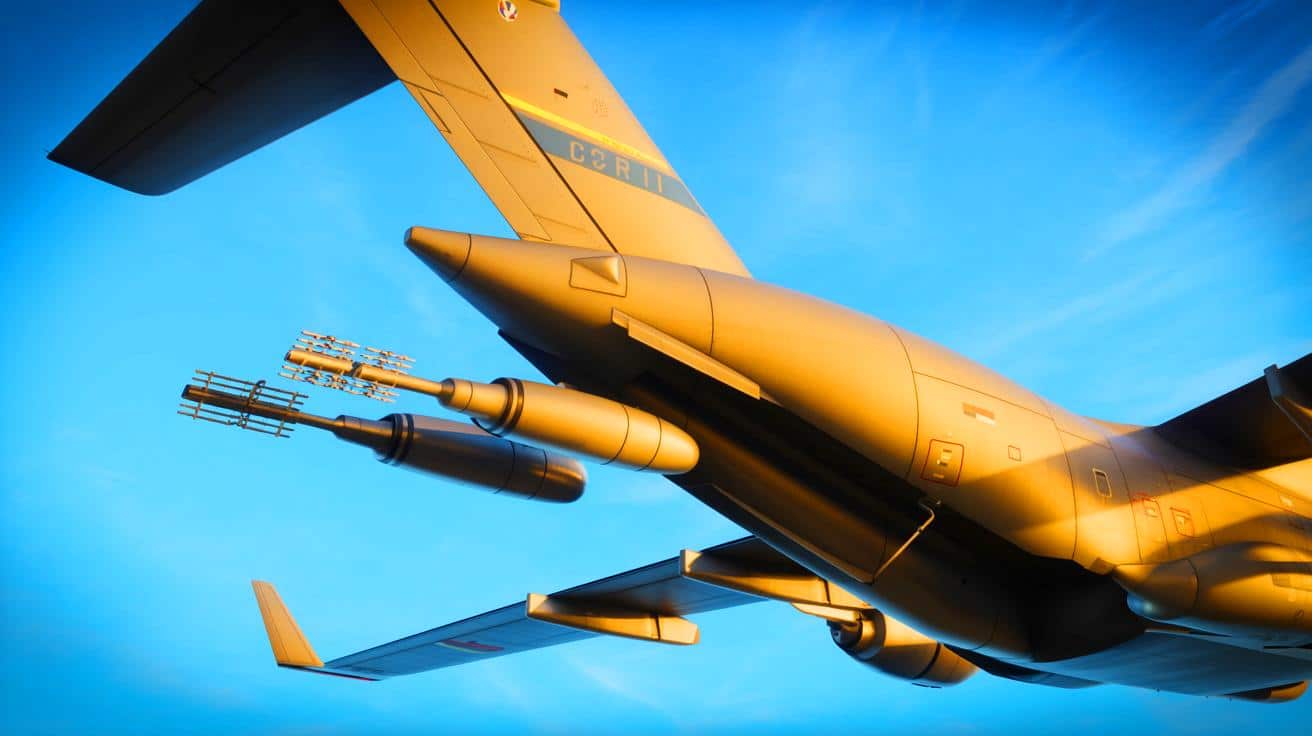
To address the aerodynamic inefficiencies of the C-17, the AFRL and its partners embarked on a modernization project. The result is the microvane, a 3D-printed, 4 x 16-inch component attached to the aircraft’s fuselage using adhesive. While the idea of simply gluing components to an aircraft might seem precarious, adhesives are actually incredibly effective for such applications. Just as car brake pads rely on adhesives for secure attachment, these microvanes are firmly affixed to the aircraft’s surface.
Installed in a series of steps along the fuselage’s rear, these microvanes streamline airflow, achieving a 1% reduction in drag. This seemingly small improvement translates to a 1% reduction in fuel consumption. The financial implications are significant, with projected savings of $14 million annually. The microvane project exemplifies how incremental changes can yield substantial benefits, particularly when applied across a large fleet of aircraft.
Financial and Operational Benefits of Reduced Fuel Consumption
Reducing fuel consumption offers multiple advantages beyond simple cost savings. By decreasing fuel usage, the Air Force strengthens its operational readiness and extends its logistical capabilities. This is particularly crucial in forward-deployed areas, where supply chain challenges can limit operational effectiveness. The projected $14 million in annual savings frees up resources for other critical needs, enhancing overall military readiness.
Moreover, these savings contribute to a broader strategy of improving sustainability within the military. As global attention shifts towards reducing environmental impact, the Air Force’s commitment to fuel efficiency aligns with national and international goals. The ability to leverage modern technology to improve legacy aircraft is a testament to the Air Force’s innovative spirit and dedication to maintaining a competitive edge in today’s complex geopolitical landscape.
A Global Interest in Microvane Technology
The success of the microvane project has garnered interest beyond the United States. Allied nations, recognizing the potential benefits, are exploring the technology for their own fleets. This international interest underscores the universal appeal of cost-effective, sustainable solutions in military aviation. The Air Force’s initiative not only strengthens its own capabilities but also fosters collaboration and shared advancements among partner nations.
Roberto Guerrero, Deputy Assistant Secretary of the Air Force for Operational Energy, Safety, and Occupational Health, emphasized the broader implications of the project. “Every gallon of fuel saved strengthens our readiness and operational effectiveness,” he noted, highlighting the strategic importance of such innovations. As nations navigate the era of Great Power Competition, the ability to integrate modern technology with existing assets becomes increasingly vital.
As the Air Force continues to innovate, the microvane project serves as a reminder of the power of small changes. In a world where efficiency is paramount, even minor adjustments can lead to significant advancements. As military aviation evolves, what other innovations might emerge to further enhance efficiency and sustainability in the skies?
Continue reading