


“They lit up like dying suns”: Turkey’s YILDIRIM 100 laser blinds missiles mid-flight in game-changing air defense breakthrough
 By
Adam Kovács
By
Adam Kovács
| IN A NUTSHELL |
|
In the evolving landscape of modern warfare, the focus often shifts from offensive capabilities to sophisticated defense systems. One such innovation is the Turkish ASELSAN YILDIRIM 100 Directed Infrared Countermeasure (DIRCM) System. Unlike conventional laser weapons that aim to destroy, the YILDIRIM 100 is designed to blind incoming infrared missiles, preventing them from locking onto their targets. This development highlights a growing trend in military technology where the emphasis is on neutralizing threats before they can cause harm, rather than on direct destruction.
The Evolution of Missile Defense
In the realm of military defense, the development of missile countermeasures has progressed rapidly over the years. Gone are the days when missiles were simplistic projectiles fired in the hope of hitting a target. Today’s missiles are sophisticated instruments equipped with advanced systems capable of identifying, locking onto, and pursuing targets, even when evasive maneuvers are employed. This advancement necessitates equally sophisticated countermeasures.
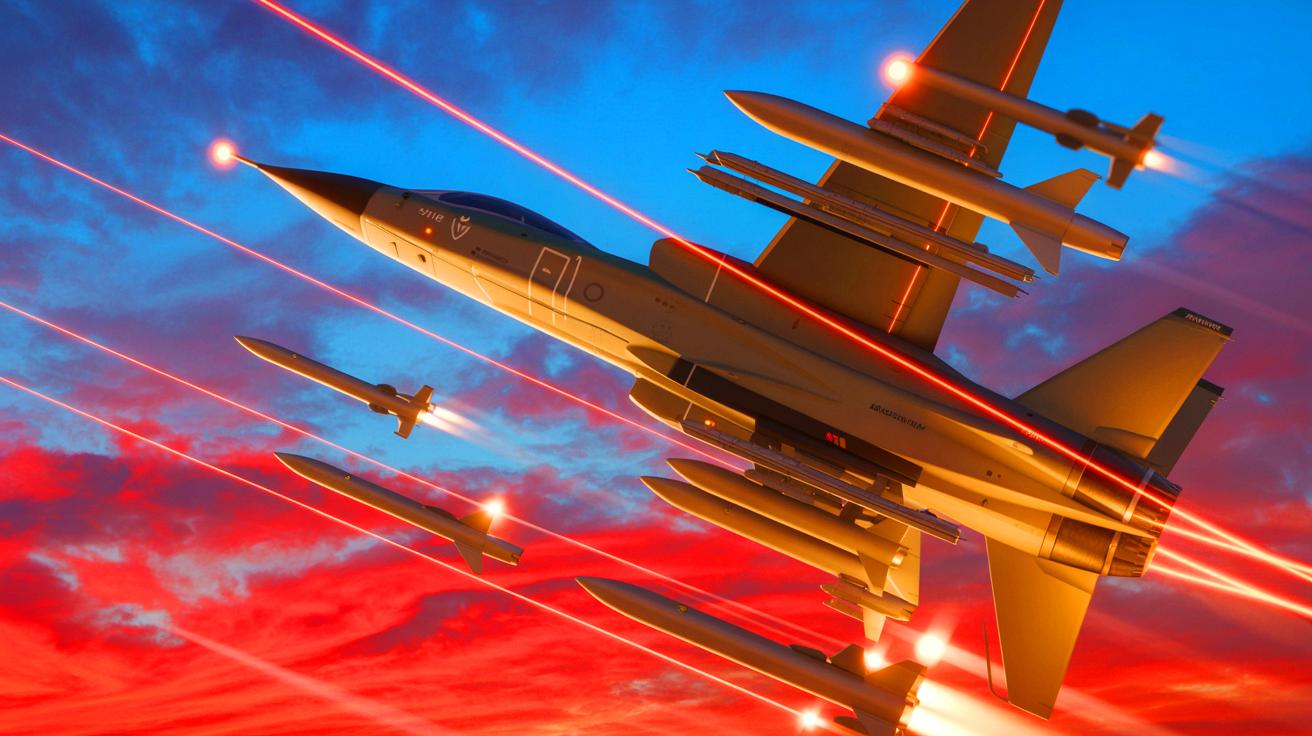
The YILDIRIM 100 laser system represents a shift in defensive strategies. Instead of destroying an incoming missile, it employs a multi-spectral infrared laser to confuse and incapacitate the missile’s sensors. This approach is reminiscent of tactics used during the Falklands War, where dazzle lasers were deployed to disorient enemy pilots. However, the YILDIRIM 100 automates this process, creating a system that can engage with multiple threats simultaneously.
Technological Capabilities and Applications
The YILDIRIM 100 laser system is noteworthy not only for its innovative approach but also for its versatility. It can be retrofitted to various aircraft types, including both fixed-wing and rotorcraft. This flexibility is crucial as it allows for widespread adoption across different military platforms. Additionally, the system’s compatibility with numerous infrared and ultraviolet missile warning systems enhances its practicality.
ASELSAN, the company behind YILDIRIM 100, reports that the system can counter a wide range of missile types. During a live-fire exercise on July 4, 2025, the YILDIRIM 100 demonstrated its capability by intercepting and neutralizing multiple infrared missiles. Such demonstrations underscore the system’s potential to safeguard military assets effectively.
Strategic Implications and Future Prospects
The introduction of the YILDIRIM 100 has significant strategic implications for Turkey and its military allies. By advancing its air defense capabilities, Turkey positions itself alongside leading nations in military innovation. According to ASELSAN President & CEO Ahmet Akyol, the success of the YILDIRIM 100 reflects Turkey’s commitment to technological excellence and innovation.
Looking ahead, ASELSAN is developing a high-power YILDIRIM 300 system, which promises even faster operation speeds. This advancement could make it suitable for installation on fighter aircraft, further broadening its applicability. Such developments are critical as nations continue to seek effective countermeasures to protect their assets in increasingly complex conflict environments.
Challenges and Considerations in Implementation
While the YILDIRIM 100 offers promising capabilities, its implementation is not without challenges. The integration of such systems into existing military infrastructure requires careful consideration. Compatibility with current aircraft and missile warning systems is essential to ensure seamless operation. Additionally, the cost of retrofitting and maintaining these systems may pose financial challenges for some military budgets.
Moreover, the reliance on automated systems raises questions about the potential for malfunctions or unintended consequences. Ensuring the reliability and safety of these defense systems is paramount. As military technology continues to evolve, balancing innovation with practicality and safety will be a key consideration for defense strategists.
As the YILDIRIM 100 and similar technologies continue to develop, they represent a crucial shift in military strategy towards proactive defense measures. This evolution prompts broader questions about the future of warfare and the role of technology in safeguarding national security. How will nations balance the advancement of such technologies with ethical considerations and international regulations?
Continue reading