

“They Were Pulling Gold Like Roots”: Experts Staggered After Unearthing $84 Billion Deposit In One Of Earth’s Richest Soil Zones
 By
Adam Kovács
By
Adam Kovács
| IN A NUTSHELL |
|
In the heart of Hunan Province, China, a groundbreaking discovery has captured the attention of the global mining community. More than 1.2 miles underground, geologists have uncovered a colossal gold reserve in the Wangu gold field, valued at approximately $85 billion. This find, facilitated by advanced technological methods, marks a new chapter in China’s mining narrative. As this discovery unfolds, it promises to reshape the dynamics of gold mining not only in China but potentially worldwide, positioning Hunan Province at the forefront of the industry. It also raises critical questions about the balance between economic development and environmental stewardship.
Visible Gold and a Rare Density
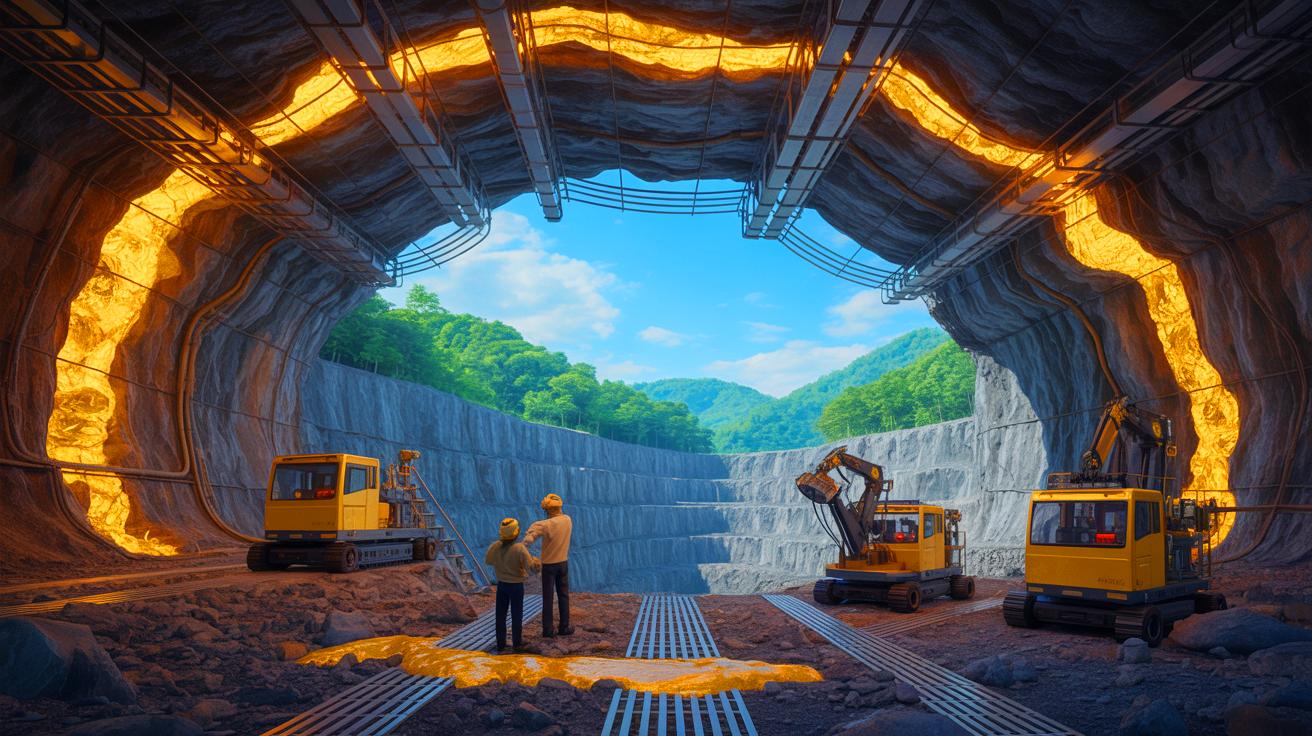
The Wangu gold field is a geological marvel, with over 40 identified gold veins penetrating depths of up to 1.86 miles. Initial findings at shallower depths revealed around 300 tons of gold, but deeper explorations unveiled richer prospects. The ore extracted boasts a remarkable gold concentration of up to 138 grams per metric ton. This level of mineralization is rare in large-scale mining, elevating the status of the Wangu deposit to that of the most productive mines in the world. The presence of visible gold within the rock cores is particularly noteworthy. Such visible mineralization is typically only seen in smaller, high-grade samples, highlighting the exceptional quality of this deposit.
Technology Behind the Breakthrough
The discovery of this gold reserve is attributed to cutting-edge surveying techniques, particularly three-dimensional geological modeling. This technology allowed scientists to map subterranean formations with precision, guiding drilling operations to gold-rich zones. Liu Yongjun, deputy director of the Hunan Geological Bureau, has confirmed ongoing exploration efforts, leading to the identification of additional reserves. As these efforts continue, the potential for expanding the known boundaries of the deposit grows, promising even greater mineral wealth. This technological innovation underscores the significant role of modern science in advancing mining capabilities.
A New Mining Frontier in Central China
The scale of the Wangu deposit positions Hunan Province as a new leader in China’s gold mining sector. The development of this field is expected to attract substantial investment, bolstering the region’s infrastructure, including transport and energy networks. Technicians are already busy analyzing rock samples and preparing for future extraction efforts. While a timeline for commercial mining has yet to be established, the field’s potential ensures it will remain a priority for development. The anticipated economic growth could transform Hunan into a central hub for gold production in China, with implications for the global market.
Environmental Watchdogs Remain Alert
The environmental implications of such large-scale mining activities cannot be ignored. The planned extraction poses risks such as land subsidence, water contamination, and increased carbon emissions. In response, Hunan authorities have pledged to maintain strict regulatory oversight. This development could set a benchmark for environmentally responsible mining practices, balancing industrial ambition with ecological stewardship. The methods employed in extracting this reserve may prove as significant as the size of the deposit itself, potentially influencing future mining operations worldwide.
The discovery of the Wangu gold field presents both opportunities and challenges on a monumental scale. As the world watches closely, the decisions made in the coming years will have significant implications for both the global gold market and environmental policies. How will the balance between resource extraction and ecological responsibility be navigated in this new era of mining?