


“Magnet Powers Fusion Dreams”: China Delivers Massive ITER Component As World Unites To Harness Sun’s Energy And Rewrite Future Of Power
 By
Adam Kovács
By
Adam Kovács
| IN A NUTSHELL |
|
The quest for sustainable energy solutions has led the global scientific community to explore some of the most ambitious projects in modern history. Among these is the International Thermonuclear Experimental Reactor (ITER) project, housed in the south of France. Recently, a significant milestone was achieved with the delivery of a critical component from China, marking a step closer to harnessing the power of the sun on Earth. This collaborative international effort exemplifies the potential of fusion energy to revolutionize how we generate power, promising an almost limitless source of clean energy. The involvement of numerous countries underscores the importance of global cooperation in tackling such monumental technological challenges.
A Critical Component for ITER’s Success
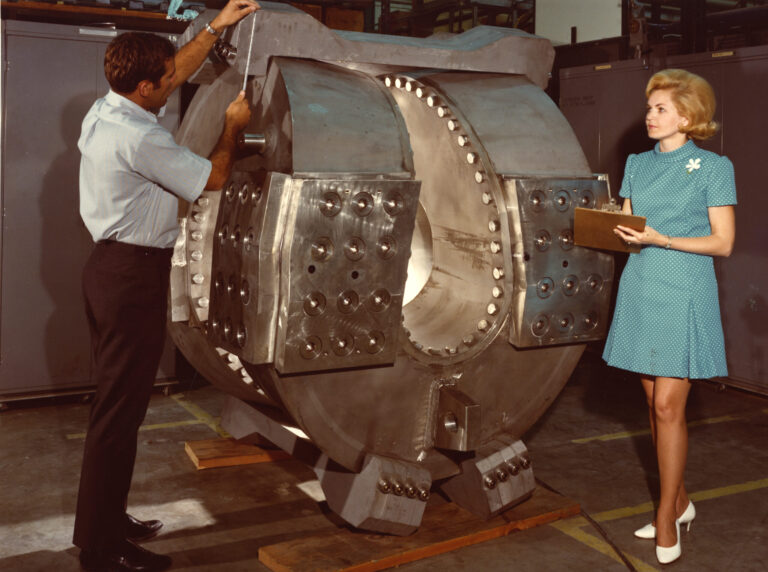
In a significant move forward for the ITER project, China has delivered a crucial component that plays an integral role in the reactor’s operation. This massive component, a magnetic power supply system, is essential for the tokamak, which is the device used to contain the plasma necessary for nuclear fusion. The component, with a diameter of nearly 49 feet and weighing approximately 3.5 million pounds, represents a remarkable engineering feat. Precision is non-negotiable; even the slightest error could jeopardize the entire experiment. These “correction coil feeders” not only supply power and cooling to the magnets but also act as safety valves. The development of this component is the result of over two decades of collaborative research by the Institute of Plasma Physics of the Chinese Academy of Sciences.
The Promise of Nuclear Fusion
Nuclear fusion offers significant advantages over current energy production methods. Unlike fission, which is used in traditional nuclear power plants, fusion does not produce long-lived radioactive waste and emits minimal CO₂. The goal is to replicate the process that powers the sun, fusing hydrogen nuclei to produce heat and light. This technology has the potential to transform how we generate energy, making it cleaner and more sustainable. However, the technical and financial challenges are immense, with total costs projected to exceed $23 billion. Despite these hurdles, the promise of a virtually inexhaustible energy source continues to drive efforts forward.
Global Collaboration at the Heart of ITER
ITER stands as a testament to global collaboration, uniting seven world partners: the European Union, China, the United States, Russia, Japan, India, and South Korea. This cooperative effort reflects a shared commitment to overcoming technical obstacles and achieving a sustainable energy solution. Each country contributes its unique expertise, whether in technology, funding, or research. This international synergy is crucial for reaching the ambitious goal of creating a clean and inexhaustible energy source. The success of ITER depends on this collective endeavor, illustrating the power of shared knowledge and resources in addressing global challenges.
Towards a New Energy Era
The ITER project is moving towards the creation of the first plasma, and eventually, the production of net energy. The upcoming phases will be pivotal in determining whether this technology can be implemented on an industrial scale. Should ITER succeed, it could pave the way for a new energy era, with nuclear fusion playing a central role. Nevertheless, challenges remain, and only time and continued research will reveal if nuclear fusion can become a practical reality for large-scale energy production. The ongoing work at Cadarache highlights both the potential and the hurdles of this groundbreaking endeavor.
The ITER project marks a significant step in our pursuit of clean and sustainable energy. As progress continues in Cadarache, the lingering question is: Can we master this complex technology to transform our energy future?