



“Ukraine Burns Russian Oil Forever”: Drone Strikes Hit 620 Miles Deep While Moscow Faces Gas Station Lines And Fuel Shortages
 By
Adam Kovács
By
Adam Kovács
| IN A NUTSHELL |
|
Amid diplomatic stalemates and fluctuating geopolitical landscapes, Ukraine has embarked on a bold strategy to undermine Russia’s war efforts by targeting the very core of its economic power: the oil industry. With traditional battlefield tactics proving insufficient, Ukraine, supported by European allies, has initiated a series of targeted strikes on Russian refineries, pipelines, and energy infrastructures. This innovative approach aims to choke off the financial resources fueling Russia’s military operations, presenting a new front in the ongoing conflict and challenging the global economic status quo.
The Birth of a New Military Industry
In makeshift workshops scattered across Ukraine, a remarkable transformation is unfolding. Engineers, who just a few years ago had no experience in weapon manufacturing, are now at the forefront of Ukraine’s burgeoning military industry. These individuals are assembling drones and cruise missiles, marking the emergence of a new, self-sustained defense sector. This development underscores a significant shift in Ukraine’s military strategy, which now focuses on leveraging technological advancements to counter Russian aggression.
These locally produced drones and missiles are being deployed from both the front lines and the Black Sea, playing a pivotal role in slowing down Russian advances. By making each occupied area exceedingly costly for the invaders, these weapons aim to push Russian naval forces away from Ukrainian shores. This strategic use of domestically produced military technology not only serves immediate defense needs but also signifies a longer-term shift toward greater self-reliance in Ukraine’s defense capabilities.
Extending the Reach: Long-Range Strikes
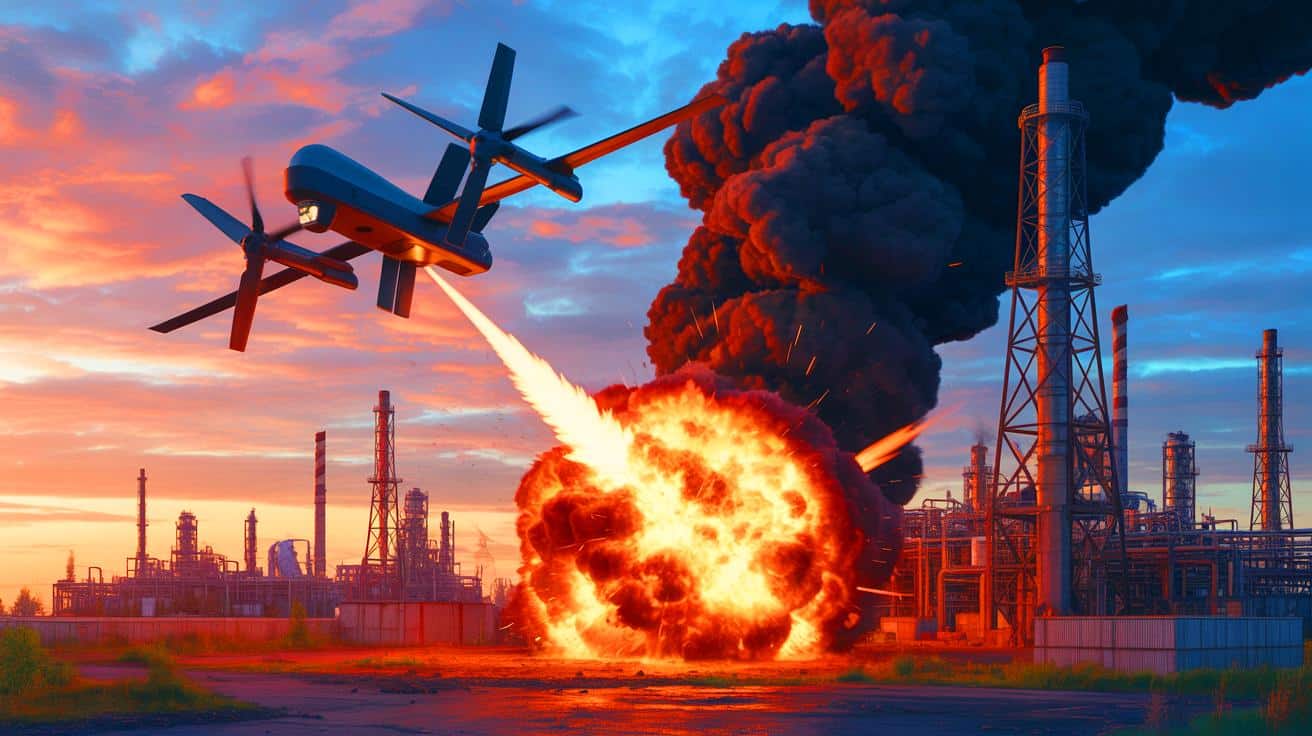
One of the most significant evolutions in Ukraine’s strategy is the use of long-range strikes. Recent advancements have enabled Ukrainian drones to hit targets over 620 miles away, deep within Russian territory. In late September, these drones successfully struck Gazprom’s massive Astrakhan plant and crucial segments of oil pipelines, delivering severe blows to Russia’s fuel supply chain.
A key figure in Ukraine’s long-range operations explained that while Russia can withstand human losses, the depletion of financial resources is a critical vulnerability. This realization has positioned the targeting of Russia’s oil industry as a central focus of Ukraine’s efforts. By disrupting the financial lifeline that funds Russian military operations, Ukraine seeks to weaken its adversary’s ability to sustain prolonged conflict.
The Impact on the Russian Economy
The consequences of Ukraine’s strategy are already manifesting. Russian oil exports have plummeted to their lowest levels since the conflict began, prompting internal restrictions and fuel shortages as far as Moscow’s suburbs. Images of long lines at gas stations have circulated widely on social media, highlighting the growing strain on Russia’s domestic resources.
The financial impact is also becoming undeniable, with the Kremlin forced to acknowledge the spread of shortages throughout Russia, including Crimea. This self-imposed form of economic sanction, supported discreetly by Europe, is exerting increasing pressure on the Russian economy. Berlin’s commitment of $9 billion to bolster Ukraine’s drone production, along with the European Union’s investment in the “Drone Alliance,” signals robust backing for Ukraine’s innovative military strategy.
Rethinking Modern Warfare
Ukraine’s approach represents a paradigm shift in modern warfare, blending industrial innovation, military tactics, and economic targeting. President Volodymyr Zelensky recently emphasized the effectiveness of setting Russian refineries and terminals ablaze as a form of sanction. This strategy not only aims to create economic hardship for Moscow but also to maintain technological superiority in drone usage.
Amidst American hesitation and the limitations of traditional Western measures, Ukraine’s strategy offers a glimpse into the future of hybrid warfare. This approach combines local ingenuity and production with strategic military and economic objectives, potentially altering the course of the conflict. As Ukraine continues to innovate and adapt, the implications for global military strategy and economic dynamics remain profound.
As Ukraine’s strategy unfolds, it challenges conventional perceptions of warfare and economic influence. The nation’s ability to leverage technological advancements and economic targeting raises critical questions about the future of conflict and international relations. How will other nations respond to this evolving landscape, and what new forms of warfare might emerge as a result?
Continue reading