



“China’s Electromagnetic Catapult Launches 50 Jets”: Fujian Carrier Fires Stealth Fighters While U.S. Navy’s Ford Class Remains Broken
 By
Adam Kovács
By
Adam Kovács
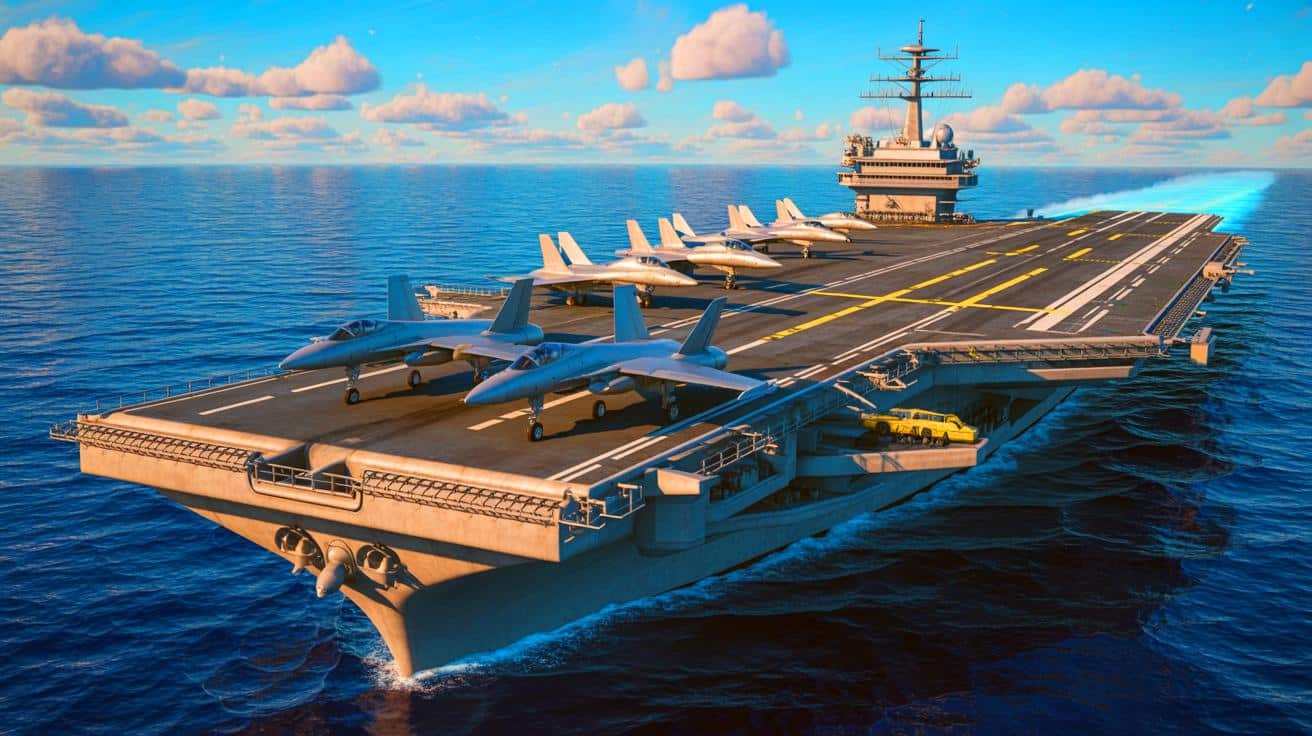
| IN A NUTSHELL |
|
China’s naval advancements have recently taken a significant leap forward with the successful testing of electromagnetic catapults on its Fujian aircraft carrier. This development marks a pivotal moment for the People’s Liberation Army (PLA) Navy as it seeks to enhance its capabilities in naval aviation. The tests involved three major aircraft types, showcasing the carrier’s ability to handle complex operations. As the world watches these developments, the implications for global naval power dynamics are profound. The introduction of these technologies could shift the balance of naval power, potentially challenging the long-standing dominance of the U.S. Navy.
Electromagnetic Catapults: A New Frontier
The introduction of electromagnetic catapults on the Fujian aircraft carrier represents a significant technological advancement for China. Traditionally, aircraft carriers have relied on steam-powered catapults to launch aircraft. However, electromagnetic systems offer greater precision and efficiency. Chinese state media have been quick to highlight this achievement as a testament to the country’s growing prowess in naval technology. The successful launch and recovery of the J-15T, J-35, and KJ-600 aircraft demonstrate the carrier’s capability to support a diverse range of missions.
This capability is essential for China as it seeks to project power beyond its immediate shores. Analysts have noted that this development positions the PLA Navy as a formidable blue-water force. A blue-water navy is capable of sustained operations across the deep waters of open oceans, a characteristic long associated with the U.S. Navy. The electromagnetic catapult system on the Fujian is not just a technological triumph but also a strategic asset, enhancing China’s military reach and operational flexibility.
« Russia Fires 619 Drones at Ukraine »: Massive Attack Terrifies NATO While Air Defenses Overwhelmed
Power Projection and Strategic Implications
The advancements made by the Fujian aircraft carrier have significant implications for global naval strategy. The ability to launch a variety of aircraft, including stealth fighters and early warning planes, enhances China's capacity for power projection. The J-35 stealth fighter, in particular, is a critical component of this strategy, offering capabilities for both air superiority and strike missions. Coupled with the high-payload J-15T, the Fujian's air wing can conduct saturation strikes, a capability that extends China's reach.
The KJ-600, serving as the "eyes" and "brain" of the carrier group, significantly boosts the formation's ability to detect and respond to threats. This capability is vital in modern naval warfare, where early detection and rapid response are crucial. The integration of these systems into the Fujian's operations underscores China's commitment to developing a modern and versatile naval force.
Comparisons With U.S. Naval Capabilities
As China advances its naval capabilities, comparisons with the U.S. Navy are inevitable. Currently, U.S. carriers like those in the Nimitz class use steam catapults, while the newer Ford class is equipped with electromagnetic systems. However, the Ford class has faced various challenges and delays in fully implementing these technologies. In contrast, China's rapid development and deployment of electromagnetic catapult systems on the Fujian highlight its technological agility.
While the U.S. Navy remains a formidable force with a long history of carrier operations, China's advancements represent a strategic shift. The successful testing of the Fujian's catapult systems indicates a level of sophistication that could challenge U.S. naval dominance in the Asia-Pacific region. As both nations continue to develop their naval capabilities, the potential for strategic competition on the high seas increases.
Future Prospects and Challenges
Looking ahead, the commissioning of the Fujian aircraft carrier is a critical milestone for the PLA Navy. Once operational, it will significantly enhance China's ability to conduct operations in distant waters. The carrier's advanced systems, combined with its diverse air wing, position it as a potent tool for asserting China's interests globally. However, challenges remain, including the integration of new technologies and the training of personnel to operate these complex systems.
The successful deployment of the Fujian will require ongoing investment in training and infrastructure. Additionally, as China continues to build its carrier fleet, questions arise about the long-term sustainability of these efforts. Will China maintain its momentum and continue to develop its naval capabilities at this pace?
As China continues to expand its naval capabilities, the implications for regional and global security are significant. The successful testing of electromagnetic catapults on the Fujian aircraft carrier marks a new chapter in naval warfare. How will other nations respond to China's growing naval prowess, and what does this mean for the future of global maritime security? The answers to these questions will shape the strategic landscape for years to come.
Continue reading