



“A Shell With a Jet Engine”: The Sceptre Ramjet Artillery Round Flies 93 Miles at Supersonic Speed: and Changes the Rules of Modern Warfare
 By
Adam Kovács
By
Adam Kovács
| IN A NUTSHELL |
|
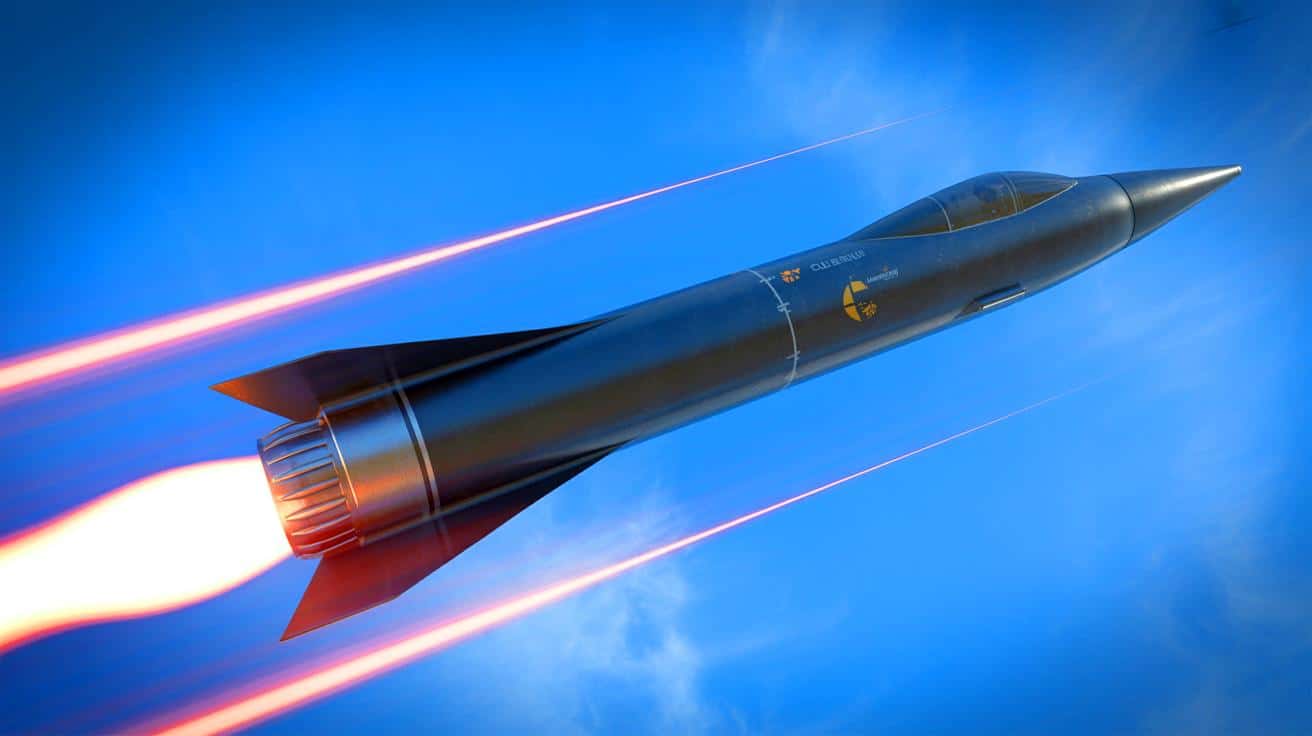
The military landscape is undergoing a transformation with the introduction of advanced artillery technology. Tiberius Aerospace has unveiled the Sceptre TRBM 155HG, a groundbreaking artillery round equipped with a ramjet engine that allows it to travel at supersonic speeds and achieve unprecedented range. This innovation not only marks a significant leap from conventional artillery capabilities but also introduces new strategic possibilities for military operations. The Sceptre’s design enables it to maintain precision and efficiency, potentially altering the dynamics of modern warfare. As these advancements develop, the question remains: how will they reshape future military engagements?
The Ramjet Revolution
Conventional artillery rounds have long been a staple of military arsenals, with their effectiveness determined by range and accuracy. The introduction of the ramjet engine in artillery rounds marks a significant departure from traditional designs. A ramjet, essentially a jet engine without moving parts, leverages forward velocity for air compression, enabling sustained thrust throughout the projectile’s flight.
The Sceptre TRBM 155HG, utilizing this technology, transforms an ordinary shell into a sophisticated flying machine. Once fired, the round achieves an initial velocity of approximately 2,700 feet per second. As it arcs towards its target, the ramjet ignites, allowing the round to maintain supersonic speeds and reach altitudes of up to 65,000 feet. This not only extends the range to about 93 miles but also enhances the projectile’s accuracy and resilience against electronic warfare tactics.
Precision and Guidance
Precision is paramount in modern artillery, and the Sceptre does not disappoint. Equipped with a hybrid GPS/inertial guidance system and AI-enhanced targeting correction, the Sceptre can strike targets with a margin of error of just 16 feet. This level of accuracy is achieved even at high altitudes, providing a tactical advantage by keeping the round out of range of enemy jamming devices.
The Sceptre’s design allows it to deliver precise results with minimal explosive payload. Carrying just 11.5 pounds of explosives, its efficiency is enhanced by the precision of its guidance system. This not only ensures effective target engagement but also reduces collateral damage, a critical consideration in modern conflict scenarios.
Strategic Implications
The introduction of the Sceptre TRBM 155HG presents significant strategic implications. With a range and speed surpassing conventional artillery, it offers new tactical avenues for military planners. The ability to deploy long-range precision-guided munitions can shift the balance of power on the battlefield, providing forces with the capability to engage targets from afar.
Moreover, the compatibility of the Sceptre with existing NATO-standard 155mm artillery pieces means that forces can integrate this advanced technology without overhauling their current equipment. This interoperability is crucial for maintaining cohesion and maximizing the effectiveness of allied forces in joint operations.
Cost-Effectiveness and Future Prospects
Beyond its technical capabilities, the Sceptre is noteworthy for its cost-effectiveness. According to Tiberius Aerospace, the Sceptre is significantly cheaper than comparable-range missiles, making it an attractive option for budget-conscious military organizations. Its liquid-fueled engine, compatible with widely available fuels like diesel and JP-8, further enhances its practicality and ease of deployment.
The potential for long-term storage without degradation, due to its just-in-time fueling system, adds another layer of logistical efficiency. As the defense industry continues to innovate, the Sceptre’s introduction could signal a broader shift towards more versatile and sustainable military technologies.
The debut of the Sceptre TRBM 155HG represents a pivotal moment in artillery technology. With its advanced range, precision, and cost-effectiveness, it sets a new standard for military munitions. As nations ponder the strategic implications of such advancements, one question remains: how will these technological leaps influence global military strategies and alliances in the years to come?