



“It Wasn’t Supposed to Be Seen”: This Hidden SR-72 Discovery at Lockheed Martin Sparks Global Alarm (and no one’s denying it)
 By
Adam Kovács
By
Adam Kovács
| IN A NUTSHELL |
|
A recent discovery at Lockheed Martin’s facility in Florida has stirred significant interest in the defense and aviation sectors. Satellite images have revealed a mysterious aircraft, believed to be the SR-72, sparking discussions about the future of aerial reconnaissance. This development follows the legacy of the SR-71 Blackbird, renowned for its speed and stealth during its service. Now, the SR-72 is poised to surpass its predecessor with unprecedented capabilities. As nations focus on enhancing their surveillance and defense mechanisms, the emergence of such advanced aircraft raises crucial questions about global security and technological advancements.
The Legacy of the SR-71 Blackbird
The SR-71 Blackbird holds a legendary status in aviation history. Developed during the intense years of the Cold War, the aircraft was instrumental in providing the United States with critical intelligence. Its ability to fly at speeds beyond Mach 3 made it not only a marvel of aviation engineering but also a strategic asset in national defense.
Its retirement in 1998 marked the end of an era, driven by the high operational costs and advancements in technology that outpaced its capabilities. The aircraft’s decommissioning left a void in the U.S. reconnaissance capabilities that Lockheed Martin is now eager to fill with the SR-72. The new model promises enhancements in speed, stealth, and operational efficiency, leveraging advances in materials and propulsion systems. The SR-72 aims to redefine the standards set by the Blackbird, making it a pivotal player in modern reconnaissance missions.
Unveiling the SR-72: A Design for the Future
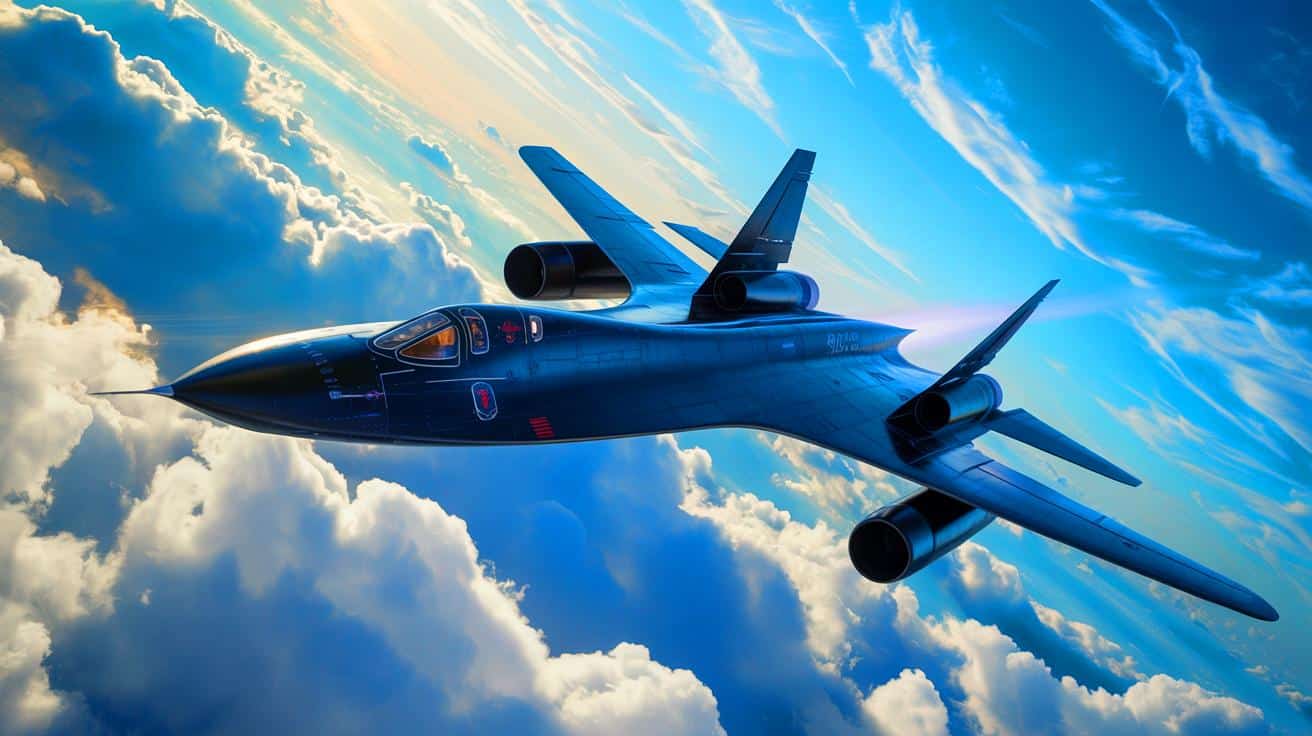
The SR-72 is designed to be a next-generation marvel, capable of reaching speeds of approximately 4,660 miles per hour, which is six times the speed of sound. Its innovative design, featuring an arrow-shaped body, minimizes air resistance, allowing it to achieve these extraordinary speeds. Such capabilities would enable the SR-72 to perform missions with unprecedented efficiency, evading enemy defenses with ease.
Despite the excitement, some skepticism remains regarding the aircraft spotted in satellite images. Experts are divided on whether it is the actual prototype or merely a model. The observed aircraft measures about 49 feet, while the prototype is expected to be around 98 feet long. Nonetheless, the prospect of the SR-72's development underscores the rapid evolution of military aviation technology, promising significant advancements in reconnaissance capabilities.
The Role of Digital Technology in Development
Lockheed Martin emphasizes the indispensable role of digital technology in the development of the SR-72. Jack O'Banion, Vice President of the company, highlighted that without digital computing, the creation of such an aircraft would not have been possible. This technological shift represents a new era in aviation design and manufacturing.
Digital tools facilitate precise simulations and virtual testing, which reduce reliance on costly and time-consuming physical prototypes. Engineers can explore innovative design concepts and optimize performance through digital models, leading to more efficient development processes. As aerospace engineering continues to evolve, the integration of digital technology will likely become even more central, transforming the way aircraft are designed and built in the future.
Implications for Global Security and Surveillance
The potential deployment of the SR-72 carries significant implications for international security and surveillance dynamics. Its advanced capabilities could enhance U.S. reconnaissance efforts, allowing for rapid and stealthy intelligence gathering. This development may shift the global balance of power in aerial surveillance, prompting other nations to invest in similar technologies.
The emergence of such sophisticated aircraft raises questions about the future of air-based intelligence operations. As countries aim to protect their airspace, the demand for cutting-edge reconnaissance technology will only increase. The SR-72 represents a major leap forward in the pursuit of aerial superiority, underscoring the ongoing arms race in reconnaissance advancements. The global community watches closely as these developments unfold, pondering the long-term impacts on security and technological progress.
The revelation of the SR-72 at Lockheed Martin's facility has sparked widespread interest and debate. As the world anticipates further developments, the implications for global security and technological innovation remain significant. How will the advent of such advanced reconnaissance aircraft reshape international relations and defense strategies in the years to come?