


“Meet the Aircraft That Flies Itself”: Sikorsky’s New Nomad Drone Blends Helicopter Power With Jet Speed (and It’s Ready for Combat)
 By
Adam Kovács
By
Adam Kovács
| IN A NUTSHELL |
|
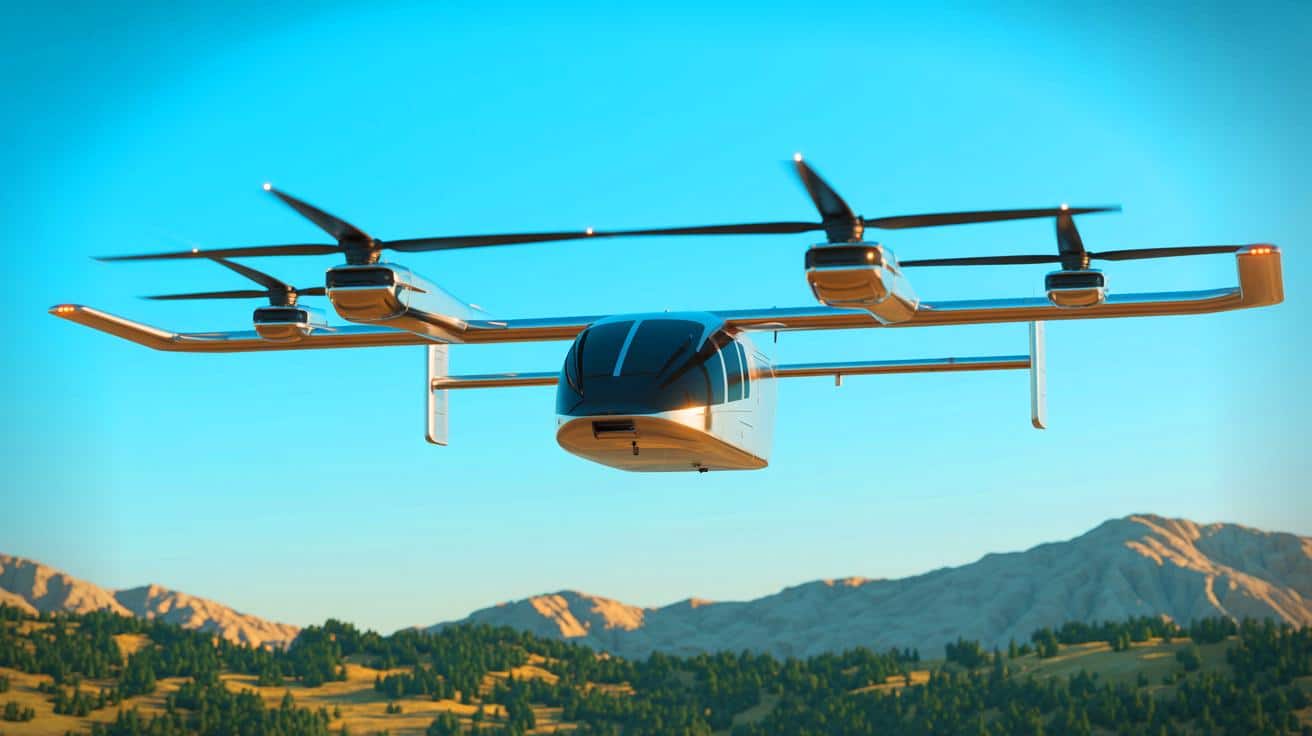
In a significant development for both military and civilian aviation, Sikorsky, a Lockheed Martin company, has introduced the Nomad family of vertical takeoff and landing (VTOL) aircraft. This innovative series, designed for a range of missions, showcases a unique twin-proprotor design that combines the agility of helicopters with the speed and range of fixed-wing aircraft. With the ability to take off, hover, and land vertically, the Nomad series is poised to redefine operational capabilities across various sectors. This advancement marks Sikorsky’s continued push towards autonomous hybrid-electric aircraft, capable of executing missions without the need for traditional runways.
The Versatile Nomad Family
Rich Benton, Sikorsky’s vice president and general manager, highlights the scalability of the Nomad series, describing it as a “family” of drones that can be adapted to different sizes and mission requirements. This flexibility allows the Nomad to serve in diverse roles, from defense and national security to civilian applications such as forestry and humanitarian operations. The design enables the aircraft to operate independently of runways, making it suitable for land and sea-based missions.
The Nomad series is set to enhance operations by working alongside crewed aircraft like the Black Hawk, improving situational awareness, logistics, and strike capabilities. This is particularly crucial in regions like the Indo-Pacific, where vast distances and dispersed bases pose logistical challenges. The Nomad 50 prototype, with a wingspan of 10.3 feet, has already demonstrated its aerodynamic and vertical lift performance in flight tests. Sikorsky is currently developing the larger Nomad 100, an 18-foot wingspan variant, with its first flight anticipated soon.
The aircraft utilizes Sikorsky’s MATRIX autonomy technology, developed in collaboration with DARPA. This advanced system includes software and sensors that enable route planning, obstacle avoidance, and mission execution without human intervention. MATRIX has been successfully tested across various platforms, demonstrating its versatility in aerial firefighting, logistics resupply, and advanced mobility missions.
Innovative Design and Capabilities
Dan Shidler, Sikorsky’s director of advanced programs, emphasizes the Nomad’s role in the next generation of autonomous drones. The series is designed for a wide array of missions, including reconnaissance, light attack, contested logistics, and humanitarian efforts. The modular airframe allows for scalability, ranging from Group 3 systems weighing between 56 and 1,320 pounds, to larger Group 4 and 5 systems exceeding 1,320 pounds.
Most Nomad variants will utilize hybrid-electric propulsion for fuel efficiency, while larger models will employ conventional drivetrains to extend range and increase payload capacity. This adaptability aligns with the U.S. military’s shift towards autonomous teaming concepts, where drones complement crewed aircraft to enhance operational reach and minimize risk. The development of the Nomad series fits the Pentagon’s demand for affordable, rapidly deployable, and runway-independent systems capable of surviving in contested environments.
Strategic Alignment with Military Goals
The introduction of the Nomad series comes as the U.S. military focuses on integrating autonomous systems into its aviation strategy. Sikorsky’s efforts resonate with the Pentagon’s push for innovative systems that offer rapid deployment and versatility in complex operational theaters. The Nomad’s runway-independent nature and autonomous capabilities make it an ideal candidate for missions in contested airspace, where traditional aircraft might face limitations.
Lockheed Martin’s stock performance reflects market confidence in the Nomad’s potential. Following the announcement, shares closed slightly higher, underscoring investor optimism about the program’s future impact. The Nomad series not only promises to enhance military capabilities but also represents a significant step forward in the development of autonomous aviation technology.
Potential Civilian Applications
While primarily designed for military use, the Nomad series holds promise for civilian applications as well. Its ability to operate without runways makes it suitable for remote areas where traditional aircraft cannot reach. Potential civilian uses include disaster response, where rapid deployment and vertical takeoff capabilities could prove invaluable. Forestry and environmental monitoring are other areas where the Nomad’s versatility and autonomy could be effectively utilized.
The integration of autonomous technology into civilian sectors could lead to significant advancements in efficiency and safety. As the Nomad series continues to evolve, its impact on both military and civilian aviation will likely grow, offering new possibilities for industries reliant on aviation technology.
As Sikorsky continues to innovate, the Nomad series represents a bold step into the future of autonomous aviation. Its diverse capabilities and adaptability position it as a key player in both military and civilian sectors. With the changing landscape of global defense and technological advancements, how will the Nomad series influence the future of aerial operations across different industries?