



“I Saw It Bounce Off”: Experts Reveal the ‘Missile vs Orb’ Video Wasn’t a UAP at All (and the truth is far less cosmic)
 By
Adam Kovács
By
Adam Kovács
| IN A NUTSHELL |
|
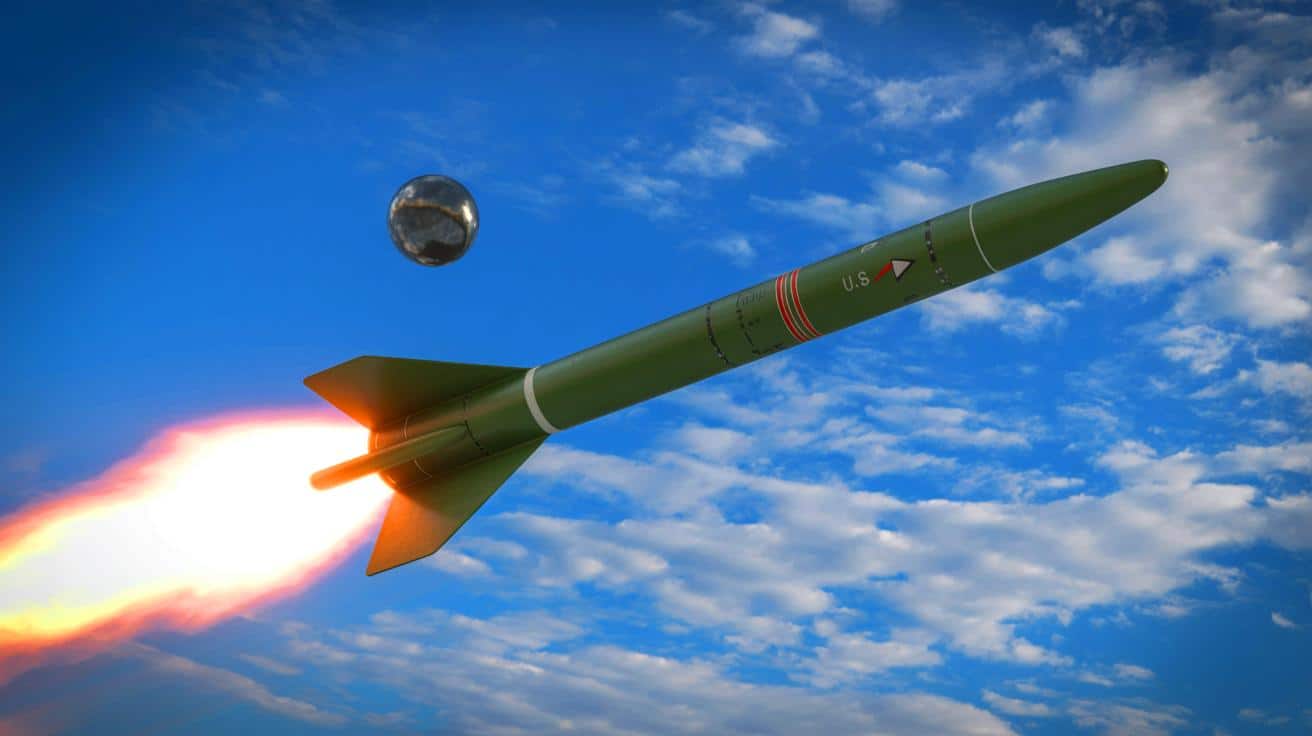
In a recent Congressional hearing, a video purportedly showing a U.S. military missile interacting with an unidentified anomalous phenomenon (UAP) gained significant attention. The footage, released during a House Oversight transparency hearing, seemed to depict a missile bouncing off a mysterious orb mid-air, sparking widespread speculation about its nature. However, further investigation reveals that the object might have been a high-altitude balloon, misinterpreted due to the angle and context of the video. This incident underscores the complexities involved in interpreting visual data and the importance of expert analysis in unraveling such mysteries.
An Expert on Missile Physics Weighs In
The U.S. Army, while acknowledging the video’s presence in the public domain, has not confirmed its authenticity or provided a detailed account of the event. To shed light on the situation, we turned to Fred Lamb, a theoretical astrophysicist from the University of Illinois. Lamb, who has extensive experience in missile physics, provided insights based on available information. He noted that any analysis requires numerous assumptions due to the lack of independent knowledge about the event. Despite these challenges, Lamb suggested that the object could have been a high-altitude balloon targeted by a specialized U.S. missile designed to deploy blades mid-air.
Lamb emphasized that the public’s expectations of missile strikes are often shaped by Hollywood depictions, which differ significantly from real-life scenarios. He pointed out that the dramatic explosions seen in movies are designed for entertainment, whereas actual missile interactions with objects like balloons may appear less spectacular. This distinction highlights the importance of understanding the technicalities involved in missile operations and the need for expert interpretation to clarify such events.
What We See Doesn’t Always Reflect the Facts
The video in question was reportedly captured near Yemen, involving a variant of the Hellfire missile. According to Lamb, this missile type is primarily used by the U.S. Army, particularly the AGM-114R, also known as "Romeo." However, Lamb's analysis assumes that the missile was fired from an MQ-9 Reaper drone, based on media reports. The footage was likely taken by a second drone equipped with a high-magnification thermal imaging camera, operating at approximately 25,000 feet.
This scenario introduces various uncertainties, including the camera's distance from the objects, the nature of the background, and the movement of the missile and target. These factors can lead to misinterpretations, such as assuming that both objects are moving in the same plane or that the camera is stationary. Lamb suggested that the video might have created an optical illusion known as "parallax motion," where the target appears to move rapidly due to the camera's zooming effect. Such illusions can be misleading, especially when there are few background objects to provide context.
What Happens When You Fire on a Balloon?
If the object was indeed a balloon, the decision to engage it remains confidential. The U.S. Army has not disclosed who authorizes such actions, citing operational considerations. Lamb explained that there could be several reasons for targeting a balloon, particularly in conflict zones. The video appears to show pieces drifting away after the missile strike, suggesting minimal interaction between the missile and its target. This observation aligns with the possibility of the target being a lightweight balloon.
Lamb also noted that the Hellfire missile in the video might have been a variant without a substantial explosive warhead, such as the AGM-114R9X. This missile type relies on sharp blades rather than explosives to neutralize targets. Such technology allows for precision strikes with minimal collateral damage, further supporting the balloon hypothesis. While the video cannot conclusively confirm this scenario, it highlights the complexities involved in military operations and the importance of expert analysis in interpreting such events.
The Broader Implications of Misinterpretation
The incident underscores the challenges in interpreting visual data, particularly in high-stakes situations like military operations. Misinterpretations can lead to public confusion and speculation, emphasizing the need for transparency and expert insight. As technology advances, the ability to capture and analyze complex scenarios will improve, but the human element of interpretation remains crucial. Such events remind us that what we perceive may not always align with reality, urging caution in drawing conclusions based solely on visual evidence.
As discussions around UAPs and military actions continue, the importance of accurate information and expert analysis becomes increasingly apparent. How can we better equip ourselves to discern fact from fiction in an era of rapidly evolving technology and information overload?