


“This Changes Europe’s Military Balance”: Germany Just Approved an $8 Billion Plan for New War Jets and Weapons (and Rivals Are Watching Closely)
 By
Adam Kovács
By
Adam Kovács
| IN A NUTSHELL |
|
Germany is making significant strides in its defense strategy with the approval of over $8 billion in military procurements by its parliament. This decision marks a critical investment in the nation’s defense capabilities, spearheaded by the acquisition of new combat jets. The parliamentary Budget Committee has sanctioned a total of 14 defense projects, with a substantial portion allocated to the procurement of tranche-five Eurofighters. This move reflects Germany’s ambition to bolster its military prowess and modernize its aging fleet, underscoring a broader strategy to strengthen its position as a leading military force in Europe.
Germany’s Commitment to Advancing Air Defense
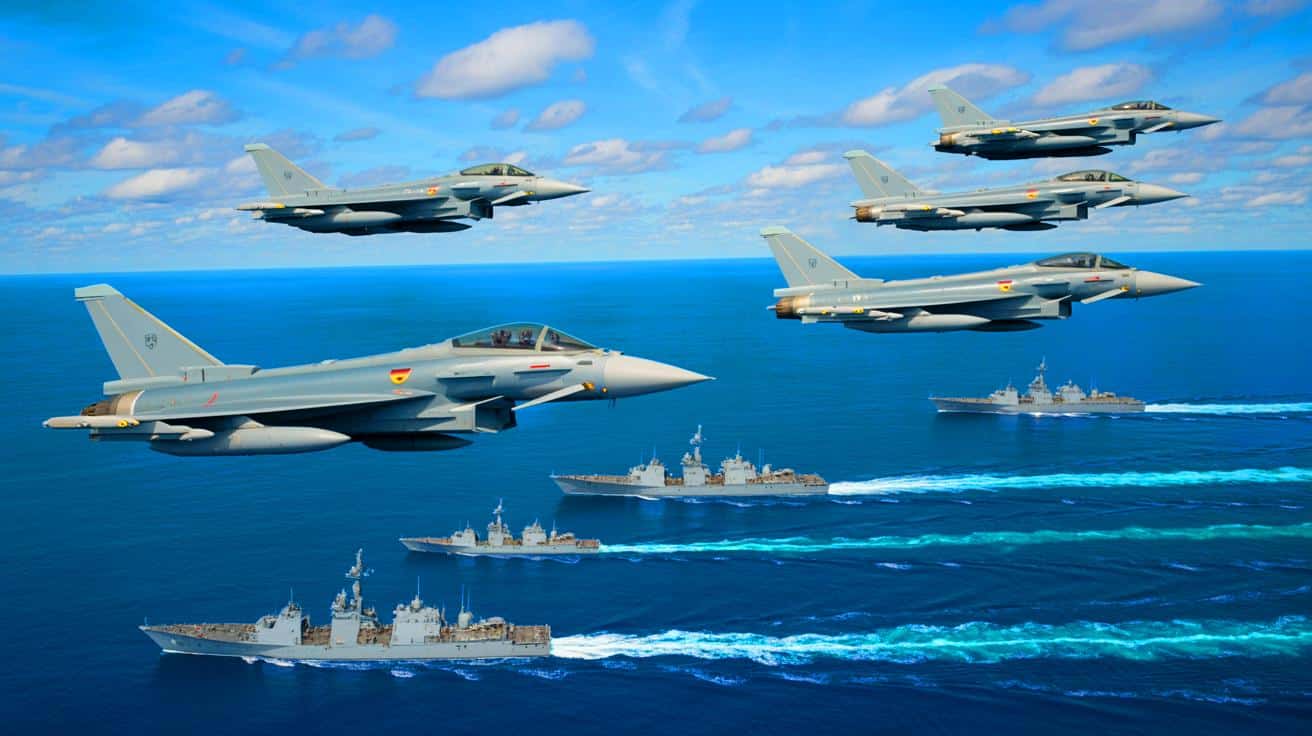
Germany’s decision to invest heavily in its air defense capabilities is a testament to its commitment to modernizing and strengthening its military forces. With the allocation of approximately $4.36 billion for the purchase of new tranche-five Eurofighters, Germany is poised to enhance its aerial combat capabilities significantly. These state-of-the-art aircraft are set to replace the aging Tornado fleet, offering advanced features such as the EScan radars, which are crucial for electronic warfare.
The new Eurofighters are expected to be delivered between 2031 and 2034, indicating a long-term strategic investment in the country’s defense infrastructure. Alongside the acquisition of these jets, Germany’s air force will benefit from parts required for maintenance and upgraded simulators, ensuring that the fleet remains at the cutting edge of technology. This comprehensive approach highlights Germany’s proactive stance in addressing current and future defense challenges, positioning itself as a formidable force in the European defense landscape.
Broader Military Investments and Strategic Goals
Beyond the Eurofighter procurement, Germany’s parliamentary Budget Committee has approved additional defense projects that reflect a holistic approach to military enhancement. These projects include the development and acquisition of new Boxer armored vehicles, which will serve both training and medical missions. Furthermore, the approval of light, air-droppable land combat vehicles and a new pontoon bridge for river crossings showcases the broad scope of Germany’s military modernization efforts.
Significantly, these investments are not solely funded by the military’s regular budget. Some projects will draw from a special fund of €100 billion created in response to geopolitical tensions following Russia’s invasion of Ukraine. This financial strategy underscores Germany’s readiness to allocate resources efficiently and effectively, ensuring that its military remains adaptive and responsive to the evolving global security environment.
Enhancing Naval Capabilities
Germany’s navy is also set to benefit from the recent defense procurements, with new medium-range boats and mine-hunting sonar systems on the horizon. These additions aim to bolster the country’s maritime special forces, enhancing their operational capabilities in diverse aquatic environments. The procurement of mine-hunting sonar systems, in particular, is a strategic move to safeguard Germany’s waters and maintain maritime security.
The focus on upgrading naval capabilities aligns with Germany’s broader defense strategy of reinforcing all branches of its military. With these investments, Germany is not only addressing current defense needs but also preparing for future challenges that may arise in the maritime domain. This comprehensive approach to military enhancement ensures that Germany remains a key player in ensuring regional and global security.
Future Implications for European Defense
Germany’s recent defense procurements are part of a broader strategy to establish itself as the strongest conventional army in Europe. Since the start of the year, the budgetary committee has approved 25 major procurement projects, reflecting a clear commitment to rearmament. This strategic shift is likely to have significant implications for European defense dynamics, influencing the military posture of neighboring countries.
As Germany continues to invest in advanced technologies and capabilities, it may set a precedent for other European nations to follow suit. The focus on modernizing air, land, and naval forces positions Germany as a leader in shaping the future of European defense. This development raises important questions about the balance of power in the region and the potential for collaborative defense initiatives among European nations.
Germany’s expansive defense investments mark a pivotal moment in its military strategy, with far-reaching implications for European security. As the country continues to enhance its defense capabilities, how will this influence the broader dynamics of military collaboration and competition in Europe?