


“From California to Anywhere in 90 Minutes”: The U.S. Air Force’s Rocket Cargo Program Could Redefine Global Transport Forever
 By
Adam Kovács
By
Adam Kovács
| IN A NUTSHELL |
|
In a world where the speed of delivery can shape the outcome of crises, the U.S. Air Force’s ambitious Rocket Cargo project seeks to redefine global logistics. Imagine a system that can transport 100 tons of cargo or personnel to any location on Earth in less than 90 minutes. This initiative, part of the Rocket Experimentation for Global Agile Logistics (REGAL) program, aims to push the boundaries of transportation technology. While the concept may seem like science fiction, the Air Force Research Laboratory (AFRL) is taking tangible steps toward making this vision a reality with the help of commercial partners like Rocket Lab USA.
Revolutionizing Global Transport
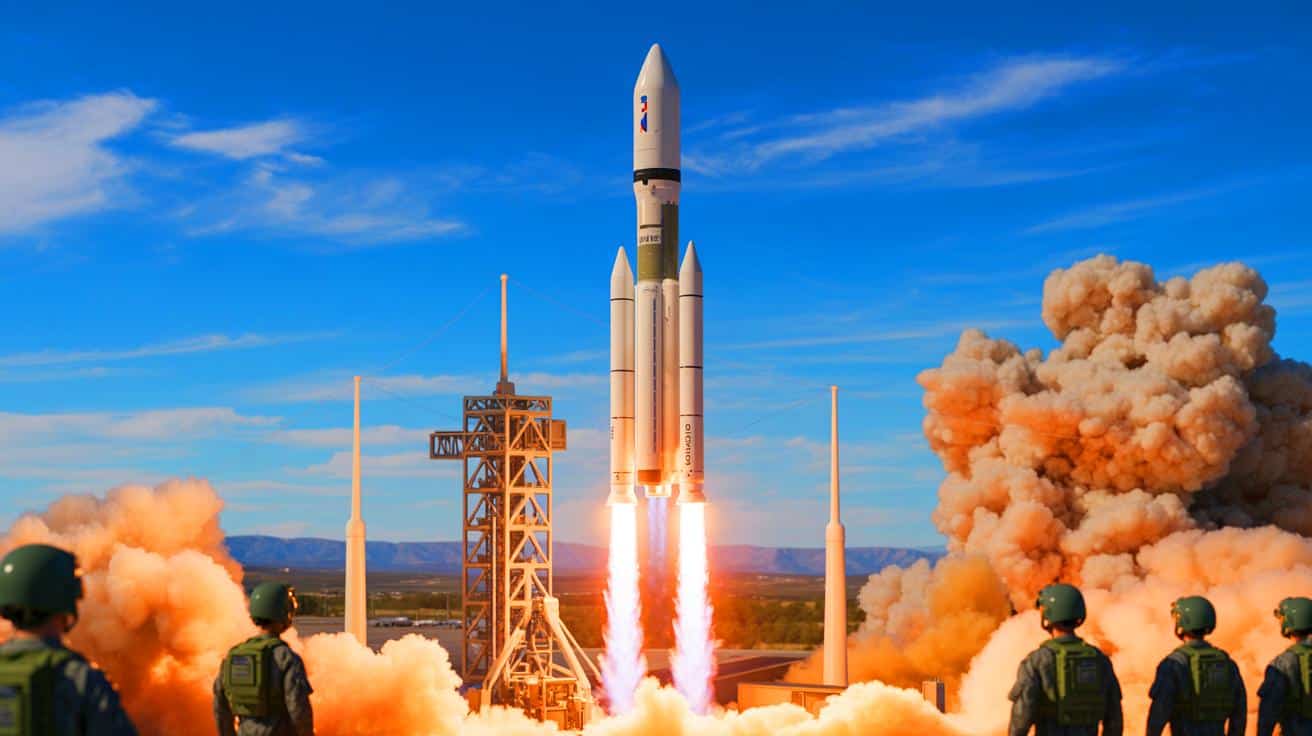
The Rocket Cargo project is not just about creating a new type of rocket. It represents a fundamental shift in how we perceive and execute global logistics. The goal is to develop a reusable transport rocket that can achieve a suborbital trajectory and land anywhere on the planet within 60 to 90 minutes. This would be a significant leap forward, allowing for the rapid deployment of goods and personnel, akin to the capabilities of a Globemaster III transport plane.
The potential applications are vast, from deploying military detachments to delivering humanitarian aid in record time. A rocket launching from Vandenberg Space Force Base could reach remote areas across the globe faster than traditional air transport, offering a strategic advantage in both military and humanitarian contexts. Such advancements promise to transform the speed and efficiency of global logistics, aligning with the Air Force’s strategic objectives.
The Science Behind the Speed
The technical challenges of the Rocket Cargo project are immense. Creating a rocket capable of carrying substantial payloads and landing safely requires advanced engineering and rigorous testing. The AFRL’s partnership with Rocket Lab USA is a critical component of this endeavor. Their Neutron rocket, a medium-lift reusable launcher, will be used for an orbital flight no earlier than 2026. This mission will serve as a survivability test, collecting data on critical factors like temperature, pressure, and structural integrity during reentry.
The information gathered will be instrumental in developing a reliable and safe transportation system. Such rigorous testing is especially crucial if the rockets are to carry human passengers, as safety standards for human-rated vehicles are exceptionally stringent. The technology, therefore, must adhere to high tolerances to prevent catastrophic failures.
Commercial Partnerships and Military Applications
Rocket Lab USA’s involvement highlights the growing collaboration between commercial enterprises and military projects. Sir Peter Beck, Rocket Lab’s founder and CEO, emphasized the potential for Neutron to set new standards in performance, affordability, and reliability. The company’s collaboration with the U.S. Air Force underscores the Department of Defense’s confidence in Neutron’s capabilities. The project not only advances space logistics but also serves as a platform for research and development in point-to-point logistics for the DoD.
Such partnerships are essential as the military increasingly looks to leverage commercial space capabilities to enhance operational effectiveness. The Rocket Cargo project exemplifies how private sector innovation can be harnessed to meet public sector needs, potentially paving the way for new business models and technologies that benefit both military and civilian sectors.
Future Implications and Challenges
The Rocket Cargo project is a bold initiative with far-reaching implications. If successful, it could revolutionize the way we approach logistics and redefine global transport strategies. However, several challenges remain. Technical hurdles, regulatory issues, and cost considerations all pose significant obstacles. Ensuring the system is economically viable and meets safety standards is crucial for its long-term success.
Moreover, as the technology develops, questions about its broader implications will arise. How will this capability affect global trade and military strategy? What are the environmental impacts of such rapid transport systems? As the project progresses, these questions will need to be addressed, shaping the future landscape of global logistics.
The U.S. Air Force’s Rocket Cargo project represents a pioneering step in redefining global logistics through advanced technology and strategic partnerships. While challenges remain, the potential benefits are substantial. As the project unfolds, it invites us to reconsider our approach to both military and humanitarian operations. How will these advancements reshape the future of global transportation and logistics?
Continue reading