

Global AI Arms Race: Paul Scharre Reveals How Advanced Technologies Are Reshaping Modern Warfare and Global Power Dynamics
 By
Adam Kovács
By
Adam Kovács
| IN A NUTSHELL |
|
In the rapidly evolving global landscape, the integration of Artificial Intelligence (AI) into military strategies is reshaping warfare. This transformation is not just a technological shift but a strategic one, influencing global power dynamics. Nations like the United States, China, and Russia are at the forefront, racing to harness AI’s potential in defense. The implications of this race extend beyond mere technological advancements, touching on ethical, strategic, and geopolitical concerns. As AI becomes a pivotal element in national defense, understanding its role and impact is crucial. The following sections delve into the intricacies of this AI arms race, exploring the strategies, technologies, and nations involved.
The Strategic Importance of AI in Modern Warfare
The strategic integration of AI into military operations is transforming how nations approach defense. AI’s ability to process vast amounts of data quickly and efficiently is a game-changer. It allows for real-time decision-making, which is crucial in the fast-paced environment of modern warfare. AI-driven technologies, from autonomous drones to predictive analytics, provide militaries with a significant edge.
AI’s impact on warfare is comparable to that of the introduction of nuclear weapons. It reshapes strategies, necessitating new doctrines and operational frameworks. Countries are investing heavily in AI research and development to maintain or gain superiority. This focus on AI is not limited to technology but extends to training personnel to operate and integrate these systems effectively.
The strategic importance of AI also lies in its potential to reduce human casualties. By deploying AI-driven systems, militaries can minimize risks to personnel. However, this shift raises ethical questions about the role of machines in making life-and-death decisions. As AI continues to evolve, its strategic importance will only grow, influencing global military hierarchies.
China and Russia: Key Players in the AI Arms Race
China and Russia are pivotal players in the global AI arms race. Both nations recognize AI’s potential to alter the balance of power and are investing significantly in its development. China’s approach is characterized by a blend of state-driven initiatives and private sector collaboration. The Chinese government has set ambitious goals to become the world leader in AI by 2030, focusing on areas such as autonomous vehicles and intelligent robotics.
Russia, on the other hand, is leveraging its strong engineering and scientific capabilities to advance its AI agenda. The Russian military is integrating AI into various aspects of its operations, from cyber warfare to autonomous weapon systems. Russia’s focus is on developing AI technologies that can operate in contested environments, enhancing its strategic capabilities.
Both China and Russia view AI as a crucial component of their national security strategies, aiming to counterbalance Western technological dominance.
This competition is not just about technological development but also about setting standards and norms in AI ethics and governance.
Autonomous Drones: The Future of Unmanned Warfare
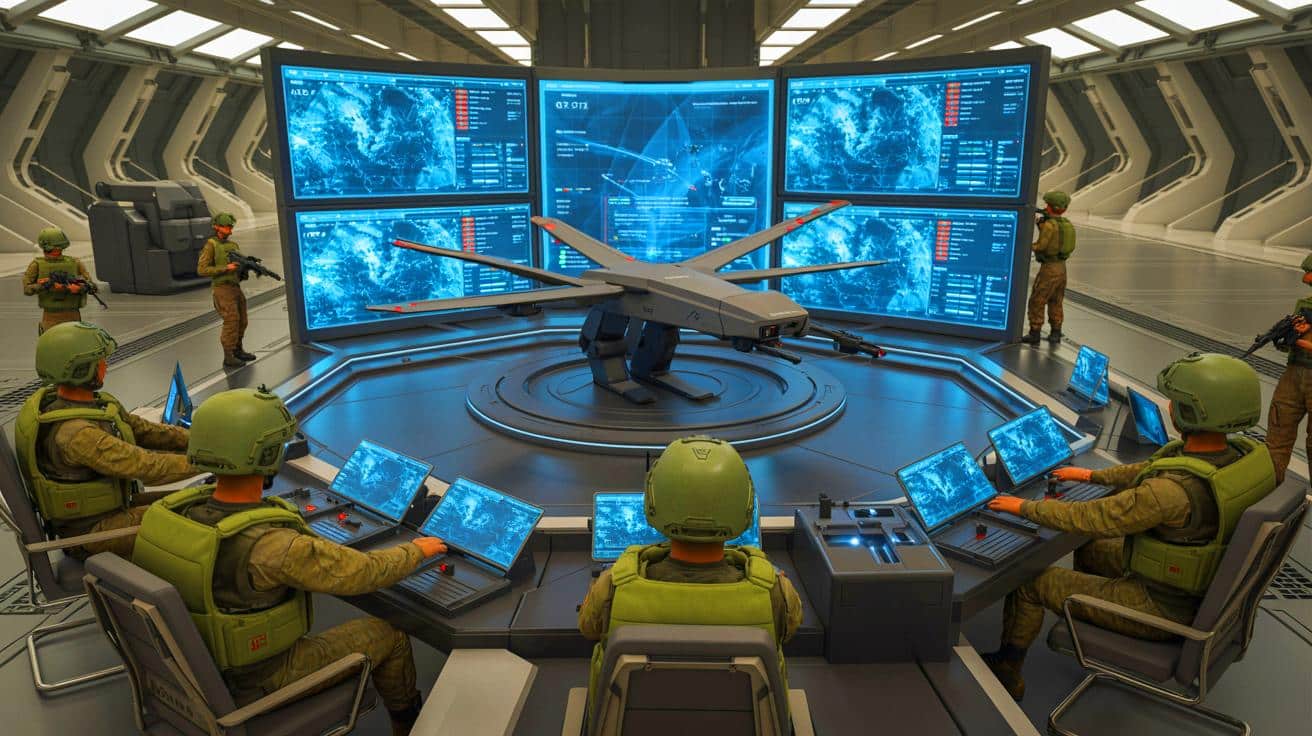
Autonomous drones represent one of the most significant advancements in military technology. These systems, powered by AI, offer unprecedented capabilities in surveillance, reconnaissance, and combat. The ability to operate without direct human control allows for more flexible and adaptive missions.
Autonomous drones can perform complex tasks, such as identifying targets and executing missions with precision. This technology reduces the need for human intervention, decreasing the risk to personnel. However, it also raises concerns about accountability and decision-making in lethal operations.
The development and deployment of autonomous drones by nations like the United States, China, and Russia underscore their importance in modern military strategy. These drones are not just tools but integral components of a broader AI-driven military ecosystem. As technology advances, the role of autonomous drones in warfare will continue to expand, prompting discussions on their ethical implications and strategic value.
Ethical and Strategic Challenges in AI Military Integration
The integration of AI into military operations presents significant ethical and strategic challenges. One of the primary concerns is the potential for AI systems to make autonomous decisions in combat, raising questions about accountability and the value of human oversight.
Strategically, AI integration requires a reevaluation of existing military doctrines. The speed and accuracy of AI-driven systems necessitate new approaches to warfare that prioritize agility and adaptability.
The ethical considerations are equally complex. The use of AI in warfare must balance technological advancement with humanitarian principles. Ensuring that AI systems comply with international law is a critical concern for governments and military leaders. The potential for AI to escalate conflicts inadvertently is a risk that must be managed through careful policy and oversight.
As AI continues to evolve, nations must navigate these challenges to harness its potential responsibly. The future of AI in military applications will depend on how these ethical and strategic issues are addressed.
The global AI arms race is reshaping the landscape of modern warfare. As nations like the United States, China, and Russia push the boundaries of AI technology, the implications for global security are profound. The integration of AI into military strategies offers both opportunities and challenges, demanding careful consideration of ethical, strategic, and geopolitical factors. As the world stands on the brink of this new era, the question remains: How will nations balance the benefits and risks of AI in their quest for security and dominance?