



Congress Challenges Navy with Minimal F/A-XX Support, Fully Backs Air Force’s F-47: Strategic Priorities Shift
 By
Adam Kovács
By
Adam Kovács
| IN A NUTSHELL |
|
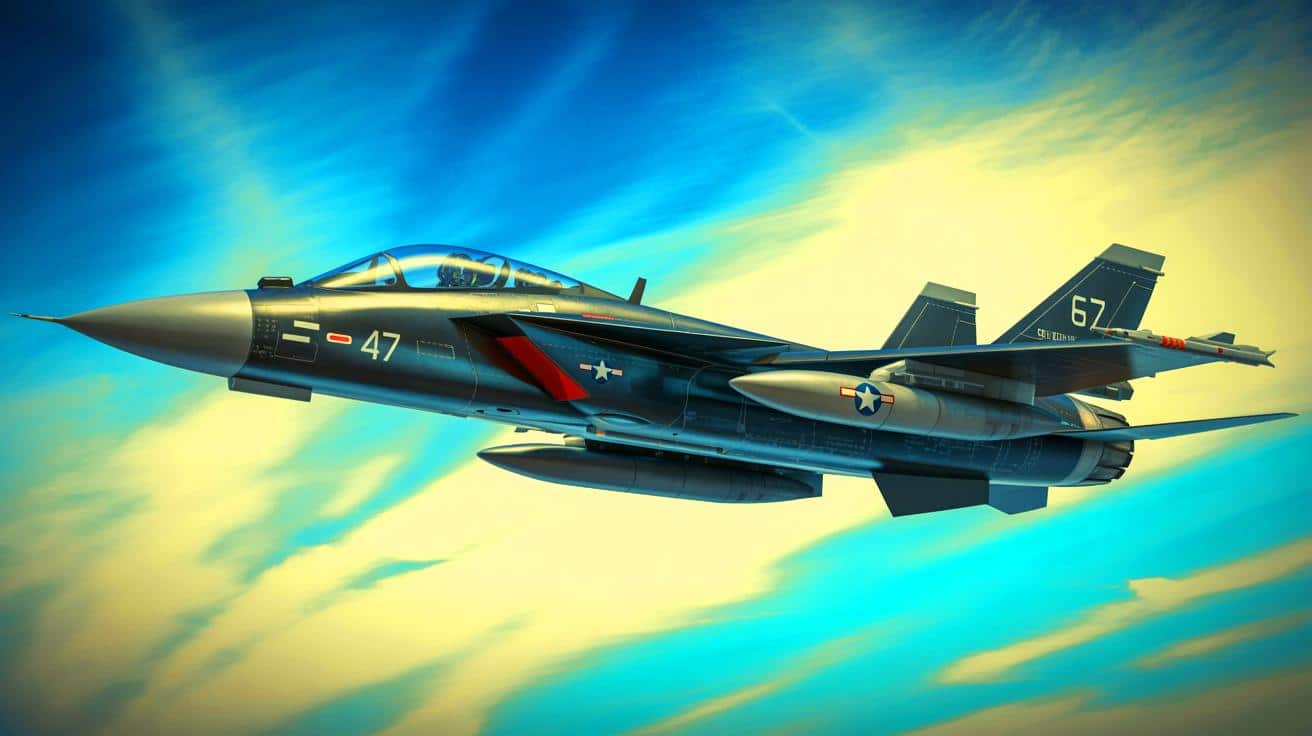
The ongoing debate in Congress over defense spending priorities shines a spotlight on the future of the U.S. military’s air capabilities. The latest National Defense Authorization Act (NDAA) reflects a significant funding disparity between the Navy’s F/A-XX program and the Air Force’s F-47 fighter jet. This decision underscores a strategic pivot in military investment, with the Air Force’s project receiving robust support while the Navy’s initiative lags behind. This disparity raises questions about the strategic direction of U.S. military aviation and the implications for future combat readiness.
Funding Priorities: Air Force’s F-47 vs. Navy’s F/A-XX
In the latest defense policy bill, Congress has earmarked approximately $2.6 billion for the Air Force’s F-47 fighter jet program while allocating a mere $74 million to the Navy’s F/A-XX project. This allocation marks a pivotal victory for the White House and the Pentagon, which have prioritized the F-47 development. According to a defense official, the decision to focus on the F-47 was strategic, factoring in the industrial base’s capacity to handle only one accelerated program at a time. The official emphasized the presidential priority of getting the F-47 program right while keeping the F/A-XX option open for future consideration.
The F/A-XX program, designed to eventually replace the Navy’s aging F/A-18 Super Hornets, has become a point of contention. Despite the program’s critical role in maintaining naval air superiority, its funding represents less than 1% of the $38 billion authorized for military aircraft development. While the NDAA sets the stage, the actual appropriations bill could alter the funding landscape, leaving room for potential increases during reconciliation or through classified accounts.
US Strategy to Constrain ISIS and Iran Faces Challenges Beyond Troop Presence at Key Syrian Airbase
The Political and Strategic Implications
The funding decisions reflect broader strategic considerations and political dynamics within the U.S. defense apparatus. Defense Secretary Pete Hegseth has expressed concerns about pursuing two sixth-generation programs simultaneously, citing industrial base limitations. This stance aligns with congressional support for the F-47, which is seen as a critical component in modernizing the Air Force’s capabilities. Meanwhile, lawmakers like Senator Mitch McConnell have criticized delays in the F/A-XX program, arguing that indecision has led to increased costs and potential gaps in naval air power.
The debate extends beyond funding to encompass strategic priorities. The House Armed Services Committee has underscored the distinct needs of the Navy and Air Force, highlighting that both programs are essential to future joint operations. However, the committee also acknowledges the need for a balanced approach to resource allocation, recognizing the risks of leaving the Navy underprepared in a high-end conflict. Such strategic considerations are compounded by the geopolitical landscape, where maintaining technological superiority in air combat remains a top priority.
The Future of the F-47 and F/A-XX Programs
As the F-47 program gains momentum, lawmakers are keen to scrutinize its long-term viability. The NDAA mandates a comprehensive report on the program, detailing projected costs, schedules, and funding requirements through 2034. This report will also explore strategic basing considerations and the integration of Air National Guard and Air Force Reserve units. With the jet’s first flight anticipated in 2028, these insights are crucial to ensuring the program’s success.
Conversely, the F/A-XX program’s future remains uncertain. The Navy’s request for a $74 million allocation starkly contrasts with its previous $454 million budget. Despite this, the Senate’s version of the appropriations bill offers hope, proposing $1.4 billion for the program. The Senate also included $500 million for F/A-XX under a special access program, indicating ongoing interest and support. As the reconciliation process unfolds, stakeholders will be watching closely to see if additional funds materialize.
What Lies Ahead for U.S. Military Aviation?
The contrasting fortunes of the F-47 and F/A-XX programs highlight the complexities of defense budgeting and strategic planning. With the F-47 receiving substantial backing and the F/A-XX facing an uncertain path, the U.S. must navigate these challenges to ensure readiness and technological superiority. The decisions made today will shape the military’s capabilities for decades, influencing its ability to respond to emerging threats and maintain a competitive edge.
The final outcomes of these programs remain to be seen, leaving open the question: how will these funding decisions impact the U.S. military’s future air power and its ability to meet evolving global challenges?
Continue reading