


Operation Southern Spear: How a Supercarrier’s Costly Mistake in Sinking Speedboats Sparks Financial and Strategic Concerns
 By
Adam Kovács
By
Adam Kovács
| IN A NUTSHELL |
|
The United States’ military engagements have long been scrutinized for their financial and human costs. This scrutiny has resurfaced with Operation Southern Spear, a campaign against alleged drug-smuggling operations linked to Venezuelan entities. This operation has been marked by a disproportionate financial expenditure compared to the value of the targets. The U.S. has deployed an extensive and costly military force to counter relatively inexpensive enemy assets, raising questions about the sustainability and strategic logic of such an approach. As the operation unfolds, a critical decision looms: whether to intensify efforts or withdraw.
Operation Southern Spear: A Financial Overview
Operation Southern Spear has illuminated a striking financial disparity between the U.S. military and its adversaries. The operation involves significant financial investment from the United States, with the deployment of some of the most expensive military assets in history. This includes an aircraft carrier and various warships, which collectively cost billions of dollars. In stark contrast, the targets of these operations, primarily drug-smuggling speedboats, are worth significantly less.
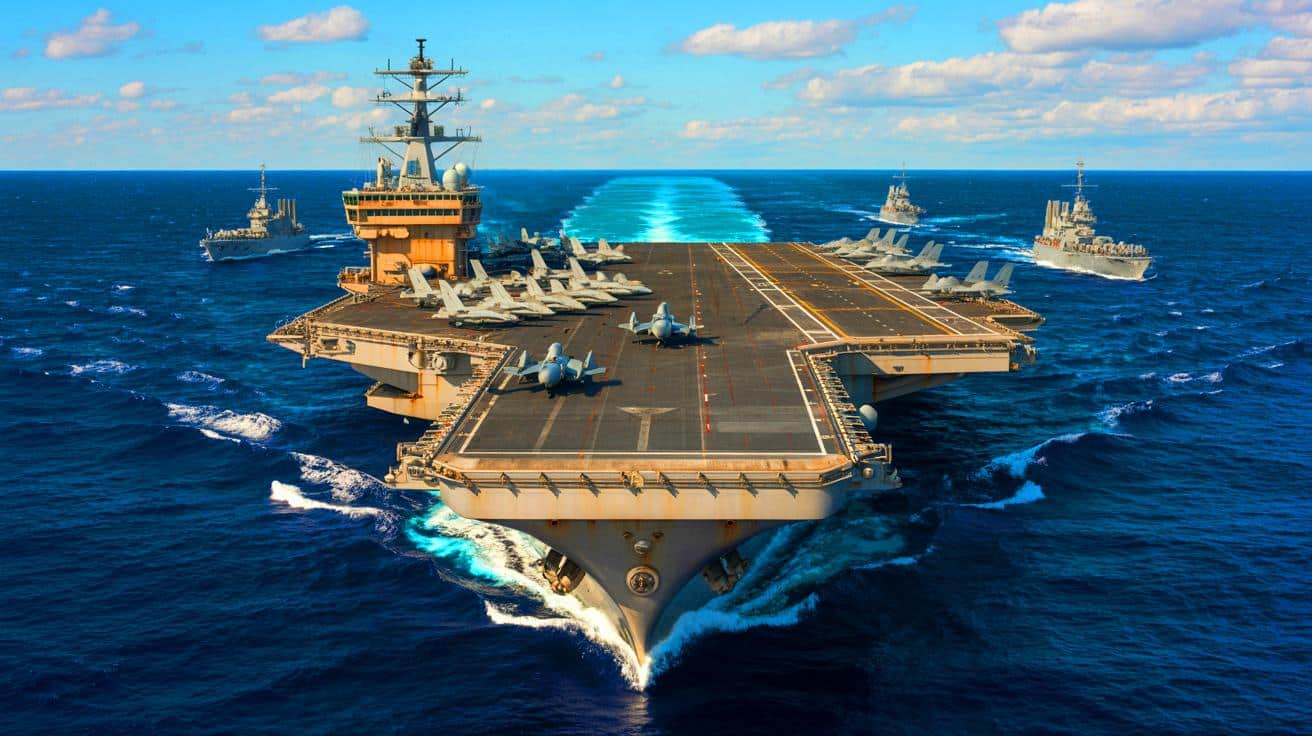
Despite the low cost of these targets, the United States has chosen to deploy a fleet that includes the Gerald R. Ford aircraft carrier, valued at $12.9 billion, and its escorts, pushing the fleet’s total cost past $40 billion. This financial commitment starkly contrasts with the estimated $6.25 billion to $8.75 billion annual revenue generated by the Cartel de los Soles, the operation’s target. This imbalance in spending raises questions about the prudence and long-term sustainability of such military engagements.
The Tactical Cost of Engagement
Beyond the strategic level, the tactical costs of Operation Southern Spear reveal even greater asymmetry. The aircraft and munitions used in the operation are immensely expensive compared to the value of the targets they destroy. For instance, Hellfire missiles used in strikes cost between $150,000 and $220,000 each, while the speedboats targeted rarely exceed a few hundred thousand dollars in value.
The operational expenses are further highlighted by the cost of flight hours for various aircraft, including F-35s, which run at approximately $40,000 per hour. In comparison, the compensation for the drug-smuggling boat crews is only about $500 per trip. Such disparities underscore the financial imbalance inherent in the operation, raising concerns about the efficacy and sustainability of continuing at this scale.
Comparative Analysis of Costs
To better understand the financial dynamics of Operation Southern Spear, consider a simple comparison of costs involved in the operation:
| Item | Cost |
|---|---|
| Gerald R. Ford Aircraft Carrier | $12.9 billion |
| Speedboat (per unit) | $400,000 |
| Hellfire Missile | $150,000 – $220,000 |
| F-35 Flight Hour | $40,000 |
| Boat Crew Compensation (per trip) | $500 |
This table highlights the vast differences in expenditures, illustrating the financial burden placed on the U.S. compared to its adversaries. The implications of such a spending strategy are significant, suggesting a need for reevaluation and potential recalibration of operational tactics.
Strategic Implications and Future Directions
The financial and strategic implications of Operation Southern Spear extend beyond immediate costs. Historically, the United States has faced challenges when the cost of military operations vastly exceeds that of its adversaries. This pattern has emerged in past conflicts like Vietnam and Afghanistan, where the U.S. was forced to reconsider its approach due to unsustainable spending.
The current operation presents a similar scenario. As the U.S. continues to outspend its opponents by significant margins, questions arise about the long-term viability of such engagements. The strategic calculus may soon demand a choice between intensifying the operation or withdrawing resources to prevent further financial drain. This decision could shape future U.S. military strategies, potentially prompting a reassessment of how resources are allocated in asymmetrical conflicts.
Operation Southern Spear is a stark reminder of the financial complexities involved in modern military engagements. The U.S. faces a critical decision as it navigates the challenges of outspending its adversaries by substantial margins. The operation’s future hinges on whether the financial and strategic costs justify continued engagement. As the U.S. grapples with these questions, one must ask: How will this financial calculus influence America’s approach to global conflicts in the years to come?