


Hungary’s wealth tax fight pits Magyar against Orbán’s Fidesz legacy
Prime Minister Péter Magyar’s plan to tax large fortunes has drawn fire from Viktor Orbán, while Magyar himself faces scrutiny over a 2024 incident.
 By
Adam Kovács
By
Adam Kovács

In brief
- Hungary Insider’s weekly briefing, relayed by Daily News Hungary, centres on three stories: a wealth tax, corruption probes and the euro.
- Orbán has criticised Magyar’s proposal to tax large fortunes.
- Investigations into figures linked to the former Orbán administration are described as testing the country’s institutions.
- A proposed 2032 date for joining the euro still depends on conditions not yet met.
Hungary’s new government is trying to settle accounts with the old one while being held to account itself. That double movement runs through the latest Hungary Weekly Briefing from Hungary Insider, which casts Péter Magyar as a Prime Minister pushing through major tax reforms and Viktor Orbán, now a former Prime Minister, as a politician confronting fresh challenges. The pairing matters because each of the briefing’s three headline stories turns on the same question: who answers for the wealth and power built up in the Orbán years, and under what rules.
The briefing, summarised by Daily News Hungary, groups the week around a fight over taxing fortunes, a set of corruption and accountability cases, and a possible roadmap towards the single European currency. Its full version sits on Substack, where the Budapest-based publication sends readers through a link in its own article.
A tax on fortunes becomes a test of the past
The first storyline is the most openly political. Magyar wants to tax large fortunes, and Orbán has attacked the plan. On its face this is a familiar quarrel between a reforming government and an opposition leader defending a different fiscal philosophy. Hungary Insider reads more into it. In its account, the dispute raises questions about how Fidesz now positions itself, and about the legacy of wealth accumulation during the governments it previously led.
That second point is what turns a budget measure into something larger. A levy aimed at big fortunes inevitably touches the people who grew rich over the past decade and a half, and the briefing links the debate directly to the record of the Fidesz era. For Orbán, whose broad electoral success once defined Central European politics, opposing the tax places him in the position of defending that record from outside government.

Investigations that cut both ways
The second storyline moves from fiscal policy to the courts and prosecutors. Investigations involving figures connected to the former Orbán administration are, according to the briefing, putting Hungary’s political and legal institutions to the test. The phrasing is telling: the focus is less on any single case than on whether the institutions themselves can carry the weight of scrutinising a long-serving ruling camp.
Yet accountability is not running in one direction only. The same briefing notes that Magyar is under scrutiny over a separate incident dating from 2024. Placed side by side, the two threads complicate any simple narrative of a clean new government pursuing a compromised old one. The institutions being tested by probes into Orbán-era figures are also the ones that must weigh questions about the sitting Prime Minister.
The euro as a change of course
The third storyline looks forward rather than back. A proposed target of 2032 for adopting the euro is presented as a potentially significant shift in Hungary’s economic direction, a notable signal for a country that has kept the forint throughout its EU membership. The briefing tempers the ambition: important conditions still have to be fulfilled before such a date could hold.
Beyond these three themes, the week’s edition also turns to:
- the Budapest-Belgrade railway;
- developments in retail;
- energy cooperation across the region;
- recent diplomatic activity in Budapest.
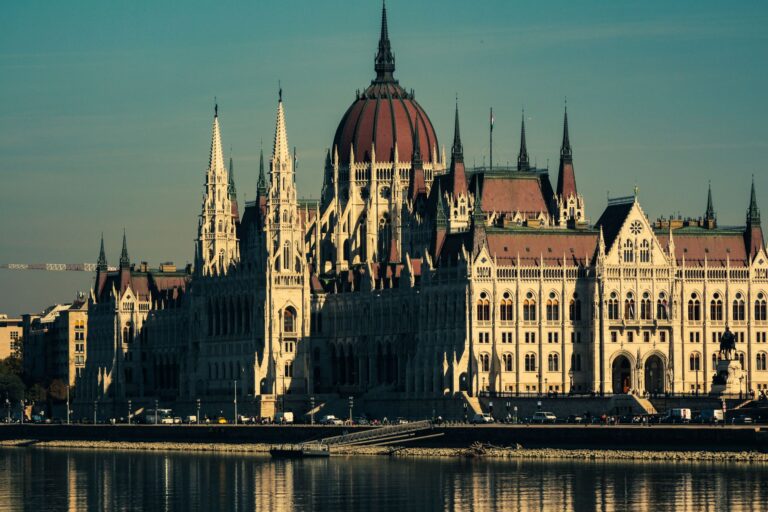
Photo: Incze Sándor Zoltán / Pexels