


“Everyone Saw It Coming”: This $2.2 Billion Jet Deal With China Shatters Bangladesh’s Military Balance (and India Is Watching Closely)
 By
Adam Kovács
By
Adam Kovács
| IN A NUTSHELL |
|
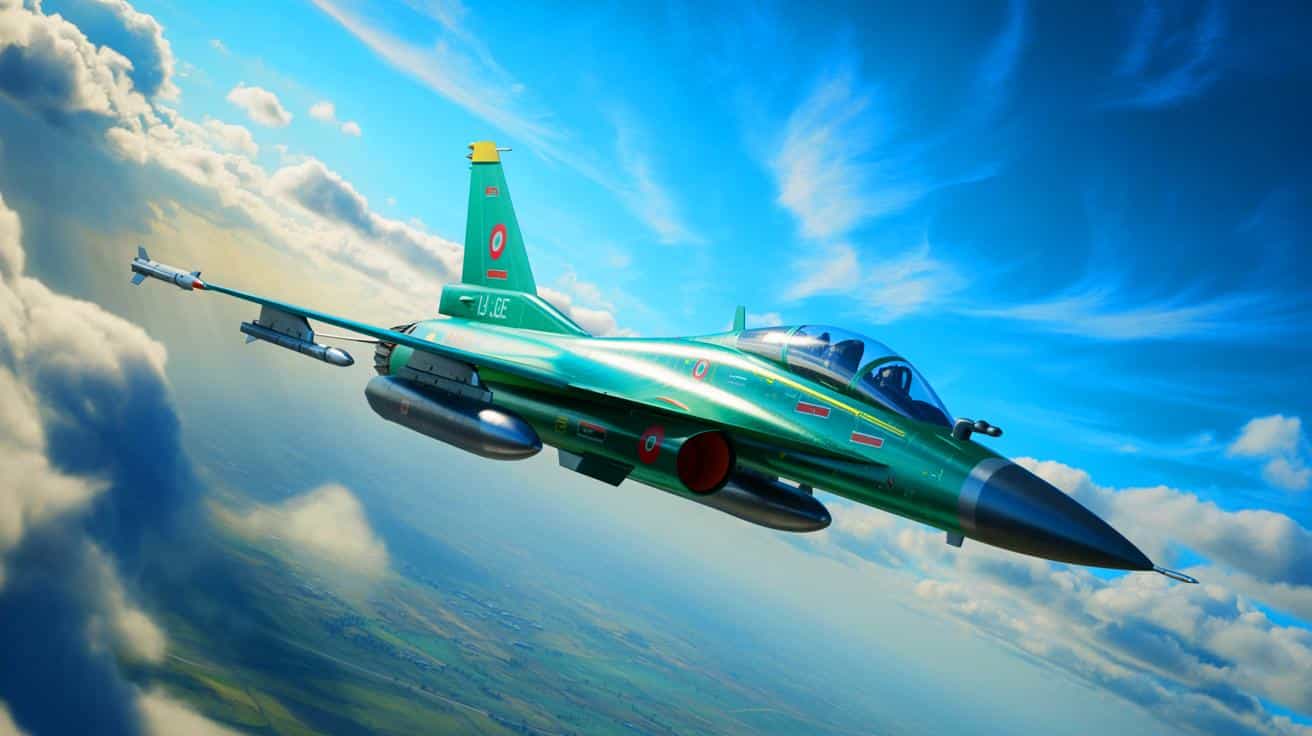
Bangladesh is on the brink of a significant transformation in its air defense capabilities. The nation is considering procuring the Chinese-manufactured J-10CE fighter jets, a 4.5-generation multirole aircraft. This decision aligns with Bangladesh’s strategic goals under its Forces Goal 2030 modernization plan. The move, announced by Air Chief Marshal Hasan Mahmood Khan, has sparked global interest. If finalized, Bangladesh would join China and Pakistan in operating this advanced fighter. The potential acquisition comes with a hefty price tag, estimated at $2.2 billion, covering aircraft, training, and support over a decade. This decision carries significant geopolitical implications, especially concerning Bangladesh’s relations with its neighboring countries and Western powers.
Bangladesh’s Strategic Air Defense Plans
Bangladesh is strategically positioned between India and Myanmar, making air defense a critical component of its national security. The country’s airspace is constrained, necessitating advanced defense capabilities. The Bangladesh Air Force (BAF) currently relies on an outdated fleet, including Chinese-built F-7s and Russian MiG-29s. These aircraft have proven to be accident-prone, with a recent crash involving an F-7 resulting in 36 fatalities. The acquisition of modern fighter jets is urgent to safeguard Bangladesh’s airspace and littoral territories in the Bay of Bengal.
The proposed purchase of J-10CE fighters from China aims to address this urgent need. Bangladesh’s interim government has granted in-principle approval for the procurement, which also includes new surface-to-air missiles and long-range radars. This comprehensive upgrade would significantly enhance the country’s defense capabilities. However, the purchase still requires approval from an inter-ministerial committee led by Air Chief Marshal Khan, and negotiations with Chinese officials are ongoing.
Financial Implications of the Fighter Jet Purchase
The financial commitment for Bangladesh’s air defense upgrade is substantial. The Chief Adviser’s office estimates the cost of acquiring up to 20 J-10CE jets by 2027 at $1.2 billion. Additional expenses for training, spares, and support bring the total to $2.2 billion. This investment is planned to be spread over a decade, with payments continuing until the mid-2030s. The financial implications are significant for Bangladesh, a developing nation, but the perceived benefits in terms of enhanced national security and military capabilities are deemed worth the cost.
Here is a table outlining the estimated costs involved in the procurement:
| Item | Cost ($ million) |
|---|---|
| Aircraft Purchase | 1,200 |
| Training and Spares | 1,000 |
| Total Estimated Investment | 2,200 |
Geopolitical Considerations and Regional Dynamics
Bangladesh’s potential procurement of J-10CE fighters has significant geopolitical implications. The decision could alter the balance of power in South Asia, particularly with India, which shares borders with Bangladesh. The J-10CE is lauded for its advanced capabilities, including active electronically scanned array (AESA) radar and beyond-visual-range missiles like the PL-15E. These features would revolutionize Bangladesh’s combat capabilities, enhancing its defense posture significantly.
However, this move may strain Bangladesh’s relations with Western countries, particularly the United States, given China’s role as the aircraft supplier. Bangladesh is already a significant user of Chinese military equipment, including tanks and submarines. The consideration of Chinese fighters over Western alternatives like the Eurofighter Typhoon, which was also evaluated by the BAF, underscores Bangladesh’s strategic alignment with China. This decision comes in the wake of increased publicity surrounding Pakistani J-10CEs’ performance against Indian fighters, highlighting the aircraft’s proven capabilities.
Expert Opinions on the J-10CE Acquisition
Experts have weighed in on Bangladesh’s potential acquisition of the J-10CE. Brendan Mulvaney, director of the China Aerospace Studies Institute, noted that the J-10CE is “a modern and fairly capable aircraft, the best one that China exports.” He emphasized that the aircraft’s performance in the Indo-Pakistan conflict demonstrated its modernity and capability, making it a formidable force beyond China’s borders. The J-10CE’s export versions are designed to meet international standards, making them attractive to countries like Bangladesh seeking to modernize their air force.
Mulvaney’s assessment aligns with Bangladesh’s strategic goals under its Forces Goal 2030 plan. The modernization effort aims to transform the BAF into a more capable and technologically advanced force. The potential acquisition of J-10CE fighters is a pivotal step in achieving this vision, providing Bangladesh with a competitive edge in regional air defense.
As Bangladesh considers this significant defense acquisition, questions remain about the long-term implications for its regional and global relationships. Will Bangladesh’s strategic alignment with China affect its ties with Western countries, or can it balance these relationships effectively? The outcome of this procurement decision will likely shape the future of Bangladesh’s defense strategy and its position in the regional power dynamics.