



“They’ve Built the Next Nuclear Deterrent”: The U.S. Unveils the AGM-181A LRSO Missile to Replace Its Aging Cruise Arsenal
 By
Adam Kovács
By
Adam Kovács
| IN A NUTSHELL |
|
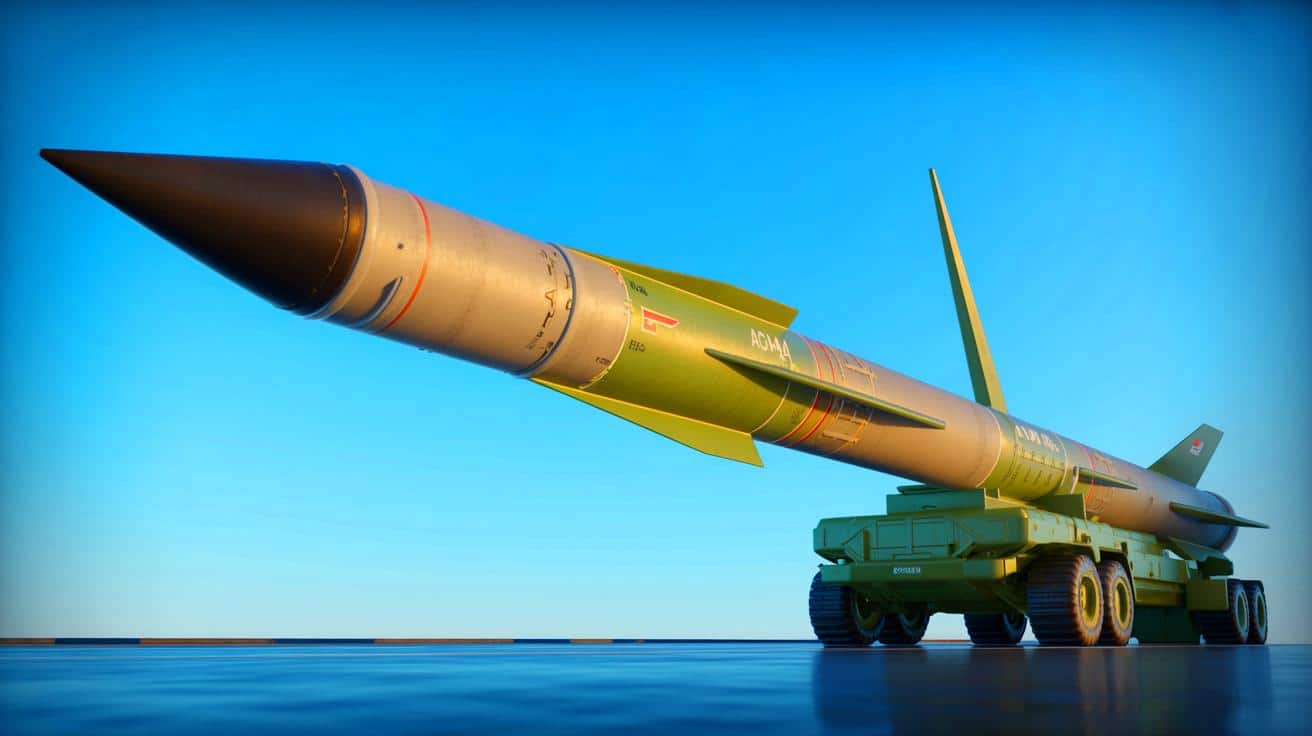
In a dramatic step toward modernizing its nuclear deterrent capabilities, the United States Air Force has unveiled the AGM-181A Long-Range Standoff (LRSO) missile. This cutting-edge technology is poised to replace the aging AGM-86B Air-Launched Cruise Missile, which has been a staple of the U.S. military arsenal since the 1980s. As geopolitical tensions and technological advancements continue to reshape global military strategies, the introduction of the LRSO missile marks a significant shift in how the U.S. plans to maintain its strategic edge. This article delves into the historical context, technological advancements, and implications of this new development.
The Legacy of the B-52 Stratofortress and AGM-86B
The B-52 Stratofortress bomber, introduced in the 1950s, is a testament to the longevity and adaptability of military technology. Despite initial predictions of its obsolescence by the 1980s, the B-52 has remained in frontline service, thanks in part to the AGM-86B Air-Launched Cruise Missile. This missile transformed the B-52 from a conventional bomber into a strategic weapon platform capable of delivering nuclear payloads from a distance of over 1,300 nautical miles.
The AGM-86B, armed with a W80 nuclear warhead, allowed the B-52 to stay relevant by enabling it to perform its deterrent role without entering heavily defended airspace. However, over the decades, the missile and its supporting infrastructure have aged, leading to increased maintenance costs and diminishing effectiveness against modern defenses. As a result, the U.S. Air Force has sought to replace it with a more advanced solution.
Introducing the AGM-181A Long-Range Standoff Missile
The AGM-181A LRSO missile represents a leap forward in cruise missile technology. Developed by Raytheon Technologies, it is designed to be deployed from both the venerable B-52 and the newer B-21 Raider bomber. The LRSO is equipped with the latest W80 Mod 4 thermonuclear warhead, which offers a variable yield of five to 150 kilotons, and incorporates advanced safety and security features.
The missile’s propulsion comes from a Williams F107-WI-106 turbofan, enabling it to achieve a range of over 1,350 nautical miles at subsonic speeds. This expanded range, coupled with enhanced stealth capabilities, allows the LRSO to navigate hostile environments more effectively. The missile’s guidance system is also state-of-the-art, capable of operating in areas where GPS signals may be degraded or denied, and can autonomously adjust its flight path in response to threats.
Technological Advancements and Strategic Implications
The AGM-181A’s design includes a streamlined, trapezoidal fuselage, wedge-shaped nose, and angled tail section, all contributing to its enhanced stealth capabilities. The modular nature of the missile’s design promises ease of future upgrades, ensuring it remains relevant in an ever-evolving technological landscape. Additionally, its ability to operate independently of GPS signals makes it resilient against electronic warfare tactics.
These advancements not only enhance the missile’s operational effectiveness but also reflect a broader strategic shift in how the U.S. plans to maintain its nuclear deterrent. By investing in technologies that can adapt quickly to new threats, the U.S. is positioning itself to respond to emerging challenges with greater agility and precision. This modernization effort is not just about replacing old equipment; it’s about ensuring that the U.S. maintains a credible and reliable deterrent in a rapidly changing world.
Future Prospects and Challenges
The production of the AGM-181A is expected to begin by 2027, with service entry anticipated around 2030. The U.S. Air Force plans to procure over 1,000 missiles at an estimated cost of $16 billion, with an additional $7 billion allocated for 30 years of support. These figures underscore the significant investment required to maintain a robust nuclear deterrent.
However, the introduction of the LRSO missile also raises important questions about arms control and global security. As nations continue to upgrade their military capabilities, the risk of escalation and potential conflict increases. The challenge for policymakers will be to balance the need for security with efforts to promote stability and prevent an arms race. As the U.S. moves forward with these plans, how will it navigate the delicate balance between deterrence and diplomacy?
The unveiling of the AGM-181A Long-Range Standoff missile signifies a critical juncture in the evolution of U.S. military strategy. As this new technology prepares to take its place in the U.S. arsenal, it prompts important questions about the future of global security and the role of nuclear deterrence in maintaining peace. How will the international community respond to these developments, and what steps will be taken to ensure a secure and stable world for future generations?
Continue reading